
 Search Articles


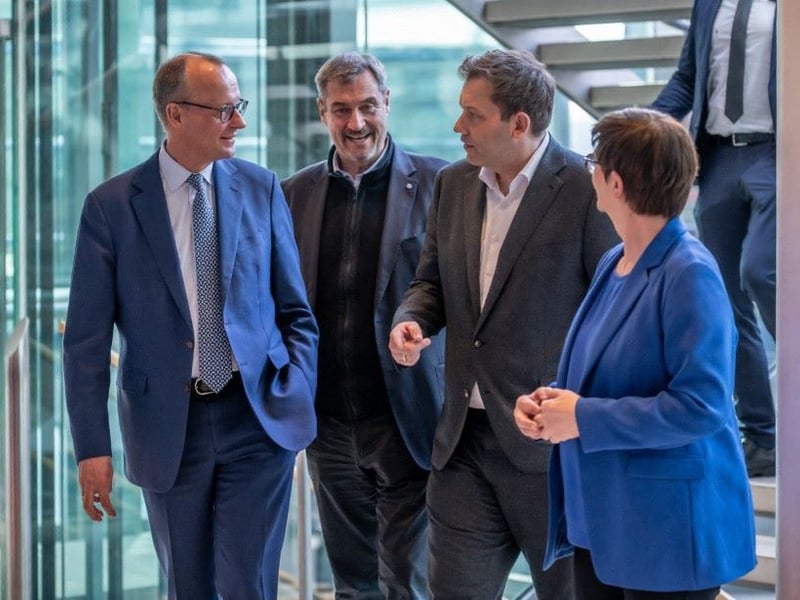
BERLIN (CN) — Germany’s oldest political party is in crisis. The incumbent Social Democrats’ 16.4% showing in February federal elections was its worst ever, 20 points lower than its postwar average.
Reinventing the party and reclaiming a frustrated voter base is bound to be a difficult project. Doing so while becoming junior partners in a coalition with cantankerous, conservative Friedrich Merz’s Christian Democrats will be an even bigger challenge.
“If no consequences result from this election outcome, then we’ll be making a massive mistake,” said party co-chair Lars Klingbeil on election night, pledging “renewal” for the party.
Punished at the polls for a failed government
Even if it was tough for party members to swallow, the Social Democrats’ miserable election outing wasn’t a surprise. The least popular chancellor on record, Olaf Scholz, didn’t exactly benefit from an incumbent’s boost and his party consistently polled dismally throughout the election.
“This was not the first campaign in seemingly dire circumstances for the Social Democrats, but the mood of the base — I’ve never experienced something like it. From the very beginning, everybody knew this wasn’t going to work out,” Nico Kaufmann, a Social Democrat representative in Berlin’s Charlottenburg-Wilmersdorf district council, told Courthouse News.
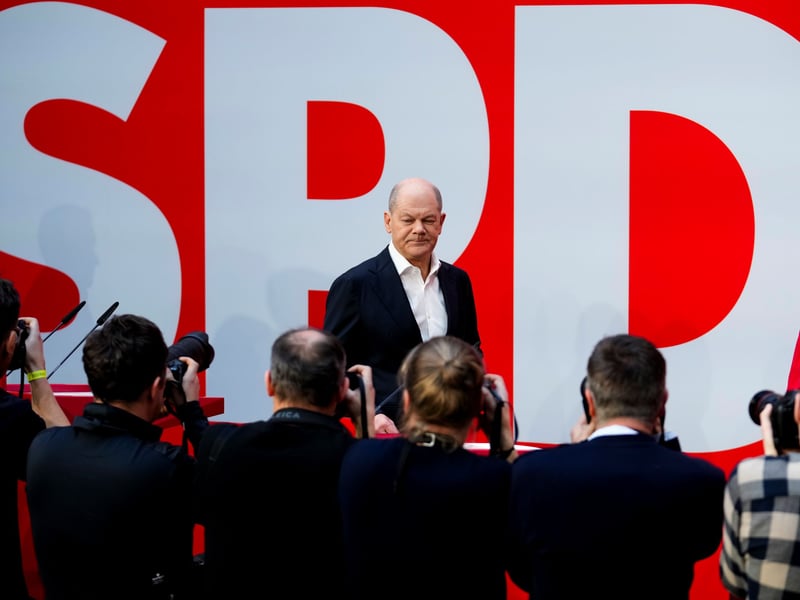
Helming an awkward three-way coalition with Greens and liberal Free Democrats did little to endear Scholz to the wider electorate. His government struggled with a litany of crises facing Germany — including the war in Ukraine, exploding energy costs and inflation, and a sluggish economy — while Germany’s frustrated, polarized voters resented the constant infighting that led to the coalition’s collapse.
Kaufmann argues that failure to deliver on progressive campaign promises and lighten the burden amidst a deepening economic crisis helped make the result inevitable. “You can try to justify why circumstances are so difficult for the party, but at the end of the day if people are feeling it in their wallets at the end of the month and you fail to fix these issues, then it’s logical that you lose trust,” he said.
A not-so-grand coalition
The Social Democrats are currently in negotiations with the Christian Democrats to form a centrist “Grand Coalition” government. While siding with their primary electoral opponents might be a tough sell for some supporters, the rise of the far-right Alternative for Germany has severely limited coalition options. The AfD eclipsed the Social Democrats for the first time ever, and a Grand Coalition is the only viable majority government without the far right, an option all centrist parties have ruled out.
“Christian Democrats and Social Democrats know that there is no alternative to this coalition government, and I think they are aware that this government has to be successful in terms of implementing structural changes,” Marc Debus, political scientist at the University of Mannheim, told Courthouse News.
“The immense conflicts within the outgoing coalition fueled support for the far right, as the perception of large segments of voters in Germany was that the government is incapable of solving important problems,” he continued.
Social and Christian Democrats have already collaborated on passing a massive spending bill aimed at boosting security and repairing Germany’s rusted-over infrastructure. The parties have also been frequent governing partners at the federal level. There have been four Grand Coalitions in German history, including three under Angela Merkel, with the Social Democrats always serving as junior partners.
Playing second fiddle has often hurt the party’s profile, and though the stakes are significantly higher given the confluence of crises and ascendant far right, some are hopeful that the Christian Democrat’s post-Merkel rightward shift might actually benefit the Social Democrats.
“The Christian Democrats under Friedrich Merz are very different than they were under Angela Merkel, which would make it quite a different Grand Coalition,” Catrina Schläger told Courthouse News. Schläger is a researcher with the Friedrich Ebert Foundation, a Social Democrat-affiliated think tank.
“Merkel was a moderating force and adopted a number of social democratic policies, which both pushed her party to the left on some issues and boxed the Social Democrats in to a degree. Contrasting against Merz might enable the Social Democrats to bring a bit more visibility to their core policies,” she said.
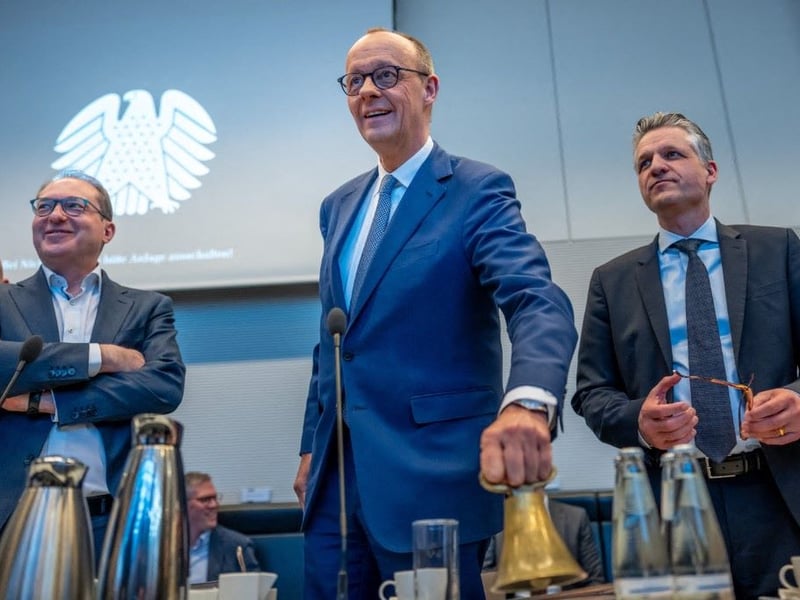
Merz’s pledge to cut social spending and flirtations with far-right immigration reform may make it easier for the Social Democrats to stand out, but it does make finding common ground somewhat elusive. Immigration and taxation have proven particularly sticky in coalition negotiations. Compromising on core issues might be necessary to build a government, but it’s unlikely to inspire either party’s diehard voters.
“Looking at the atmosphere in the party base, nobody, not even the conservative Social Democrats, really wants to be in this coalition, but pretty much everybody realizes there’s no other option,” said Kaufmann.
Becoming just another party?
Previous Grand Coalitions have accounted for a vast majority of votes but this time Germany’s once-mighty centrist parties only combined for just over half of the Bundestag’s seats. Further frustration with the Social Democrats threatens to permanently reduce them to one of many small parties in an increasingly fractured political landscape.
“Being a dependable governing partner to the Christian Democrats while also enacting the promised party renewal is going to be a difficult balancing act,” said Schläger.
For party members like Kaufmann, a commitment to left-leaning policies that used to be the party’s bread and butter has to remain a priority. “The incoming government will have to build back credibility by actually naming and addressing the issues that matter to people and demonstrating that you’re willing to work toward progressive goals and not preemptively giving up just because the coalition agreement you drew up says you won’t work on it,” he said.
“Restoring the state’s ability to get things done will be key,” said Schläger. “It’s likely easier said than done, but when you speak to people in Germany about their biggest problems, it often comes down to trains being late, difficulty in finding a spot at daycare for their kids, waiting ages for a doctors appointment or struggling to pay rent.”
Declining material conditions and chronic underinvestment in Germany’s physical and social infrastructure have proven fertile soil for the far right. This has been particularly true for workers, once unquestionably the Social Democrats’ voter base.
“As the Alternative for Germany morphed completely into an anti-immigrant far-right party, workers were significantly more likely to vote for them. And even workers who previously had affiliation or identification with the Social Democrats were more likely to vote for the Alternative for Germany than other parties,” Debus said.
Kaufmann thinks that a commitment to solving these everyday problems will help slow the Alternative for Germany’s growth. “When we talk about fixing democracy, often we mean setting up more educational programs in schools or having seminars telling people how important democracy is. It’s no use telling people how great democracy is; they have to feel it,” he said.
The Social Democrats have to thread the needle of delivering real gains for their former working class base to breathe new life into their struggling party while compromising with a deeply conservative coalition partner to restore faith in German government more broadly. If they can find a way to win policy gains without throwing the coalition into constant bickering, they could return to past success — and if not, the far right is eagerly waiting in the wings.
 Follow @braneck
Subscribe to our free newsletters
Our weekly newsletter Closing Arguments offers the latest about ongoing trials, major litigation and rulings in courthouses around the U.S. and the world, while the monthly Under the Lights dishes the legal dirt from Hollywood, sports, Big Tech and the arts.