
 Search Articles


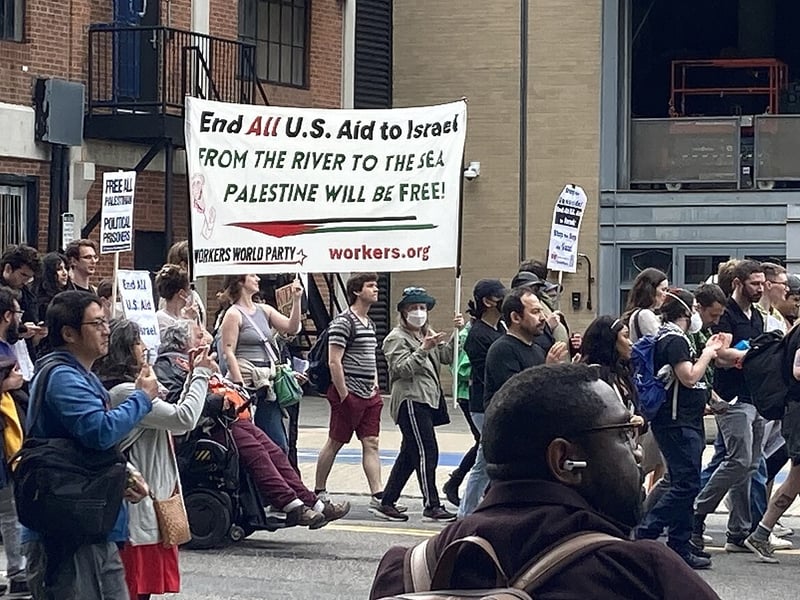
BOSTON (CN) — A group of Jewish students at the Massachusetts Institute of Technology told a First Circuit panel Monday that the university violated their civil rights by not protecting them from antisemitic campus protests. But the judges seemed wary at oral argument about giving courts too much veto power over campus disciplinary decisions.
The goal is “to only allow cases to come to court that rise to a certain level, so a court is not in the business of second-guessing or trying to decide if someone could have done a better job in hindsight,” said U.S. District Judge William Smith of Rhode Island, who was sitting by designation.
The presidents of Harvard, MIT and Columbia testified before Congress in December 2023 about their responses to the schools’ Gaza protests, and their comments were widely panned. The Harvard and Columbia presidents resigned soon afterward, but MIT’s president, Sally Kornbluth, survived.
According to the plaintiffs, Jewish students at MIT were prevented for months from accessing portions of campus, blocked from attending classes, physically intimidated, assaulted, ridiculed, doxed, subjected to anti-Jewish chants, and shunned and excluded from study groups. Activists disrupted classes, sent mass e-mails to students justifying the Hamas attack on Israel, vandalized a vigil for the attack victims and organized protests outside Jewish professors’ offices.
The plaintiffs claim that MIT permitted speakers on campus who fomented hostility toward Jewish students and allowed a hostile encampment for weeks outside the Hillel building.
A lower court judge described Kornbluth’s testimony before Congress as “hairsplitting and legalistic” and said that the university’s responses “proved ineffective” in stopping the harassment. Nevertheless, the judge dismissed the case, finding that the actions the university did take — suspending student protestors from non-academic activities and suspending one pro-Palestinian student group — were good enough that it couldn’t be held liable under a federal civil rights law that prohibits discrimination by programs receiving federal funds.
U.S. Circuit Judge William Kayatta said the students had to meet a high standard — that the school was “deliberately indifferent” or “clearly unreasonable” — and that was difficult to do here because many of the protests involved constitutionally protected speech.
“Ninety percent of your complaint says that speech made them feel uncomfortable,” Kayatta told the plaintiffs’ lawyer, Glenn Danas of the Clarkson law firm in Malibu, California. “Speech often makes people feel uncomfortable.”
Danas replied that the case didn’t involve just free speech but also harassment, vandalism and threats.
“Is calling for acts of violence something a university must stamp out?” Kayatta asked, and Danas said yes.
“What if the students had called for Israel to invade Gaza?” Kayatta asked, and Danas responded that that would also be a problem.
“What if, decades ago, students said that the U.S. should attack Afghanistan or Iraq?” Kayatta asked.
Danas argued that student calls for intifada were uniquely threatening to Jewish students. “Phrases on their face may appear neutral, but to the targeted group they have a specific meaning,” he said. “A noose has very particular connotations to African Americans.”
But Kayatta, a Barack Obama appointee, wasn’t moved. “Student uprisings on campus are hardly unique,” he said, citing Vietnam and the civil rights movement. “They’re often designed to break campus rules to get attention. You’re saying the law imposes a particular manner of dealing with those situations?”
Kayatta suggested that MIT’s response wasn’t perfect but it didn’t seem indifferent because the school had to strike a delicate balance between safety, education and students’ free-speech rights. “They don’t want to end up like Kent State.”
Arguing for MIT, Ishan Bhabha of Jenner & Block in Washington said that this case was unlike others where a school was held liable for money damages, such as where a school took no action after an employee raped a student.
But Danas said the damages here weren’t for personal injury but for “the loss of an education. A very expensive education, and they didn’t get it for some period of time.”
“This wasn’t a single incident,” he said. “This was months and months of students feeling unsafe going to lectures, going to certain parts of campus, unable to use their own property.”
Smith, a George W. Bush appointee, wondered at times whether the trial judge should have dismissed the case without allowing discovery as to the effectiveness of MIT’s disciplinary actions. But he also suggested that the facts as pled by the students didn’t rise to the level of other cases where a school was held liable.
“In other cases, students were barricaded, calling police, crying for help,” he said. “I don’t see anything analogous here.”
U.S. Circuit Judge Gustavo Gelpí, a Joe Biden appointee, was also on the panel but didn’t ask any questions.
Subscribe to our free newsletters
Our weekly newsletter Closing Arguments offers the latest about ongoing trials, major litigation and rulings in courthouses around the U.S. and the world, while the monthly Under the Lights dishes the legal dirt from Hollywood, sports, Big Tech and the arts.