Search Articles


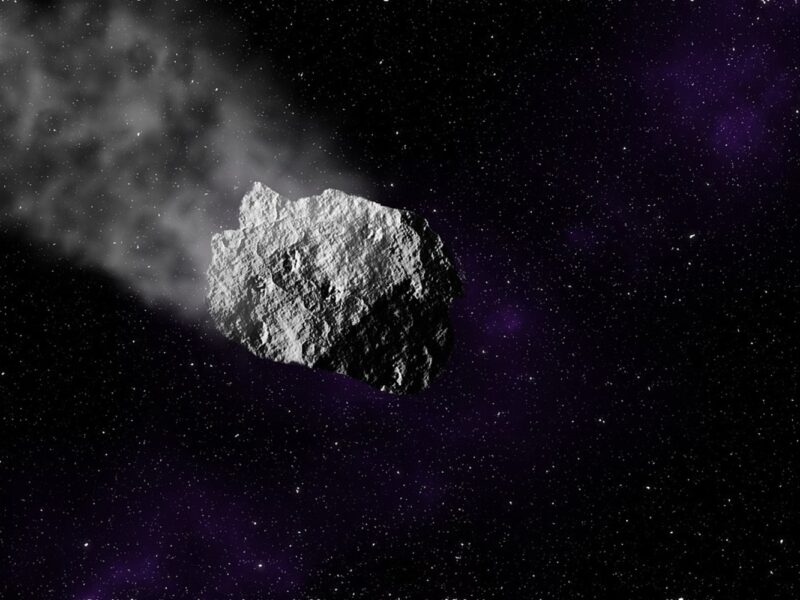
(CN) — Four billion years ago, Earth was not the stable planet scientists once imagined. It was a battered, half-molten world, pummeled repeatedly by asteroids that kept its crust too hot and weak to survive.
New research led by Curtin University and Queensland University of Technology suggests that repeated asteroid impacts were the primary force shaping early Earth, delaying formation of stable continents by injecting heat deep into the planet’s interior.
The findings were published Thursday in the journal Science in a study titled “Impact heating and the hidden Hadean.”
The study focuses on the Hadean, a geological era covering Earth’s first 500 million years. Scientists have debated why the geological record goes quiet that far back. The new research indicates the crust was simply too hot and unstable to preserve anything.
Using a statistical model of asteroid impacts in the early solar system, the team of scientists calculated how much heat those collisions would have pumped into Earth’s interior over time.
They concluded that for most of the Hadean, impact heating would have outpaced all of Earth’s internal heat sources combined, including radioactive decay, by at least an order of magnitude.
Lead author Professor Tim Johnson of Curtin University’s Frontier Institute for Geoscience Solutions said the findings challenge a common assumption about how large impacts work.
“There is a temptation to think of large impacts as short-lived events that scar a planet’s surface and then pass,” Johnson said. “But the early solar system was full of collisions, and the moon preserves that history in plain sight. Those impacts carried enormous amounts of energy, and that energy had to go somewhere.”
That energy went deep. Each major impact would have transferred enormous heat into Earth’s mantle, the thick layer of rock beneath the crust, causing it to rise, melt and push vast volumes of magma upward. The team calculated that throughout much of the Hadean, the crust was partially molten at depths of just two to three kilometers below the surface, shallower than scientists previously estimated.
“The extra heat from impacts would have kept much of the early crust weak and partially molten, making it difficult for rocks to survive,” Johnson said. “At the same time, those conditions would have helped produce more silica-rich crust, which later became the foundation of the continents.”
Co-lead author Professor Craig O’Neill of QUT said the effects of each impact extended beyond the initial collision, reshaping the planet’s interior for tens to hundreds of millions of years afterward.
“Our results suggest the early crust was thin and unstable for much of the Hadean, not a world with strong plates behaving in a familiar modern way,” O’Neill said. “Instead, impacts would have helped keep the crust hot, weak and mobile, while driving melting and recycling on a planetary scale for tens to hundreds of millions of years after the initial collision.”
Their findings also explain when and why that instability finally ended. Evidence from the moon shows that impact rates dropped sharply around 3.9 billion years ago. That timing lines up closely with when Earth’s geological record first shows signs of preserved continental crust.
Their study also notes that the oldest known rocks on Earth crystallized right around this boundary, suggesting that once the bombardment eased, the crust could finally cool, thicken and hold.
Johnson said the alignment is hard to dismiss as coincidence.
“It is apparent from the moon that, by around 3.9 billion years ago, the global effect of impact heating becomes much less important,” Johnson said. “Which is also around the time Earth begins to preserve continental crust. That seems unlikely to be a coincidence.”
Macquarie University also contributed to the research.
 Follow @JeremyYurow
Subscribe to our free newsletters
Our weekly newsletter Closing Arguments offers the latest about ongoing trials, major litigation and rulings in courthouses around the U.S. and the world, while the monthly Under the Lights dishes the legal dirt from Hollywood, sports, Big Tech and the arts.
Additional Reads
 How a bacterial survival strategy is changing medicine June 25, 2026