
 Search Articles


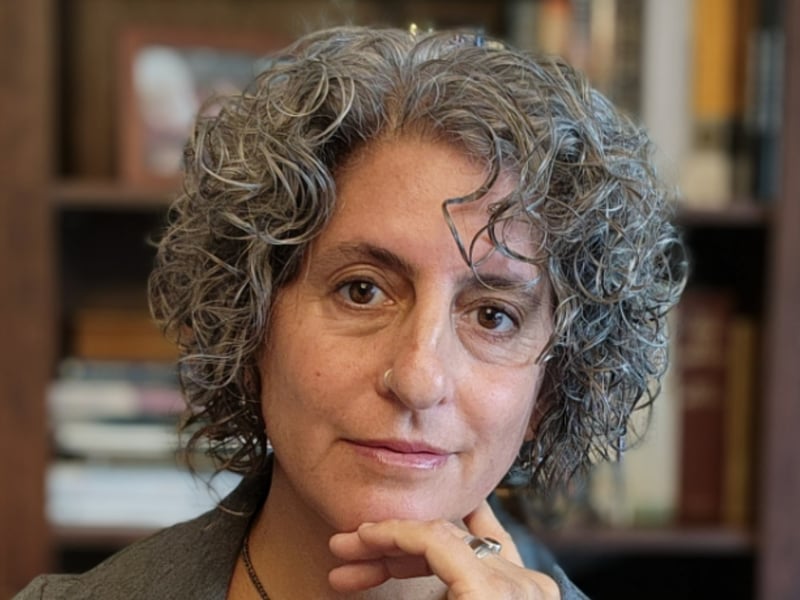
(CN) — Having interviewed hundreds of violent sex offenders face-to-face, forensic psychologist Samantha Stein said the most troubling are the ones who don’t care about their victims.
Those criminals, she said, enjoyed what they did and want more of it.
“There are some people that are born without the ability to have a normal level of empathy for others,” she said. “And what society should do with them is a great question.”
Fortunately, she said, most sex offenders are capable of empathy and can be treated so they will not re-offend.
“It’s seeing people work and change over time that gives me hope,” she said.
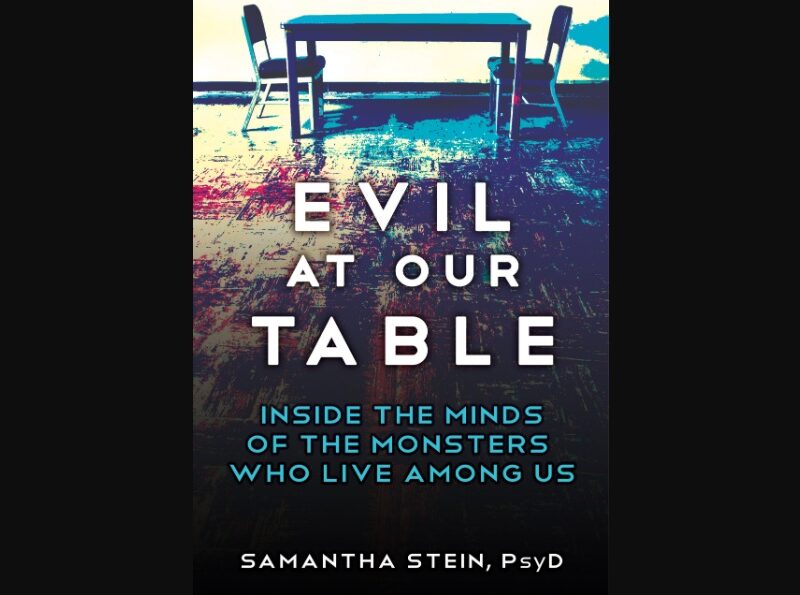
As she details in her book “Evil at Our Table: Inside the Minds of the Monsters Who Live Among Us," due for release in August from Kensington Publishing, Stein evaluated convicted sex offenders under California’s Sexually Violent Predator Act for 15 years. The law, approaching its 30th anniversary, requires convicted sex offenders be evaluated upon completion of their prison terms. If they are determined to meet the criteria as a sexually violent predator, or SVP, they are sent indefinitely to a psychiatric hospital for treatment.
Since Washington state became the first to adopt an SVP law in 1990, 20 others have passed SVP laws. California has the most SVPs.
The SVP population includes offenders (mostly men) who have committed shocking and brutal crimes that will scar victims for life. And while SVP laws keep them out of communities, their long detentions have been controversial.
According to a 2020 report from the California Sex Offender Management Board, one in four detainees had waited 10 years or more for a commitment proceeding to determine if they are eligible for release.
“That’s one of the questions that is really central to my book,” Stein said in an interview. “Where does the balance lie between public safety and civil liberties?”
Stein’s book offers a behind-the-scenes look at how evaluations are performed, with quotes from the offenders whose names have been changed. She also details how she labored over some of the borderline decisions and how she used art and meditation to decompress.
Stein initially began her career working with victims of sex crimes but began working with sex offenders in 1997. In her role of evaluating SVPs, she would interview inmates in prison as they were nearing parole.
Many of those inmates didn’t realize their parole date might not equate to freedom.
“The information comes as a shock to most men, so the moment can be unnerving for them, to say the least,” she wrote.
In California, multiple forensic experts prepare evaluations for each inmate, and their assessments are presented to judges and juries for final decisions. To meet the criteria, offenders must have committed a violent offense, must have a mental condition compelling them to commit future sex crimes and must be at a high risk to do so.
Typically, Stein wrote, around 450 offenders are held indefinitely for treatment — a tiny portion of the overall sex offender population. Initially, that treatment was performed at the Atascadero State Hospital, but now all SVPs are held at Coalinga State Hospital.
Because they include violent serial rapists and child molesters, the SVPs are politically easy targets. But they are also capable of change.
“It’s not that I’m on a crusade for everybody to love sex offenders,” said Stein, whose book offers examples of both offenders she recommended for release and offenders she recommended be detained. “But we can’t really talk about prevention if we’re not seeing them as human beings and thinking about how to help them and even recognize the potential sex offenses.”
Backing her point, Stein noted in her book that the recidivism rate for sex offenders is much lower than other convicted criminals. Treated sex offenders, in particular, were unlikely to reoffend — with about 7% committing offenses within three to five years. By contrast, 70% of people convicted of robbery were rearrested.
While much of the book is somewhat clinical, Stein does write with honesty and admits she enjoyed the work — even though it occasionally gave her nightmares.
“What’s a ‘normal’ reaction to interviewing a violent sex offender?’” she wrote. “My feelings are what anyone else’s might be, Sometimes there’s empathy, fascination, enjoyment, or fulfillment; often there’s horror, anger, and deep sadness.”
While the evaluations relied on scientific formulas, Stein said evaluators also brought their own life experiences to the reports.
“Things aren’t always as they seem on paper,” she said.
Many offenders were victims themselves, she said, and seeing an inmate express genuine empathy and remorse added sincerity to their claims of behavioral change. On the other hand, one predictor of future behavior, she acknowledges, is past behavior. And some rap sheets are loaded with horrific acts.
“You do want to keep people safe,” said Stein, a mother of three. “At a certain point, that’s when public safety starts outweighing civil liberties.”
Just as offenders are human, she said, so too are evaluators, and she acknowledges they might sometimes be attracted to the subjects.
“Even when I’m at my most professional, I can’t completely hide everything,” she wrote, “and some men who rape are charismatic and seductive. Initially I was afraid of these feelings. What would it say about me if I was attracted to ‘a rapist?’”
It wasn’t easy to write that rapists can be handsome, intelligent and kind, she said. But she included it in the book.
“I think that certainly people could read something like that and dismiss me as an expert or feel like I don’t have the boundaries that I should have,” she said.
But, she added, that humanity is also an asset.
“With time and practice, I’ve become comfortable discussing all matters sexual, even this,” she wrote. “In many ways, it’s just like any other feeling — to be observed and understood — albeit with clear and explicit boundaries.”
Stein no longer performs evaluations and has been focusing on more creative efforts, including writing and photography. But despite hearing so many dark stories, she hasn’t become jaded.
“I don’t think anyone can be in the field of psychology and not have some hope that people can change,” she said. ”Otherwise, why do we do it?”
Subscribe to our free newsletters
Our weekly newsletter Closing Arguments offers the latest about ongoing trials, major litigation and rulings in courthouses around the U.S. and the world, while the monthly Under the Lights dishes the legal dirt from Hollywood, sports, Big Tech and the arts.