
 Search Articles


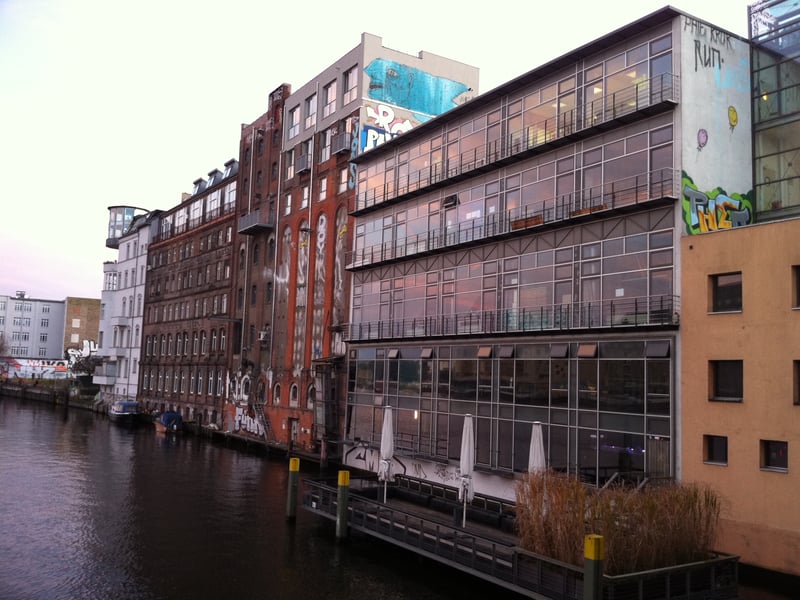
BERLIN (CN) — With an outdoor deck on the Spree River and a multistory glass facade, Watergate stands out in a city known for its venues.
It’s frequently been voted one of the world’s leading clubs — and yet despite the acclaim, it’s shutting down in January 2025 after 22 years. Citing financial difficulties and a prime location, staying open was “increasingly becoming a balancing act with an uncertain future,” the club said in a statement.
“The days when Berlin was flooded with club-loving visitors are over,” the club stated. “The scene is fighting for survival.”
Watergate is just one of a slew of prominent Berlin clubs that’s either already closed or plans to. These places — often dedicated to electronic music — have become a part of Berlin’s identity.
But while venues like Watergate will likely remain an important part of the city, the club scene today looks very different than it did just 10 years ago. Rising rents, coupled with disruptions of the pandemic, have made Germany’s capital increasingly pricey, threatening its grassroots musicians and venues.
“Berlin never loved money,” said DJ Claptrap, who moved from Mumbai to Berlin in 2014 because of its music scene. “It was more about freedom and expression, and that’s why the artists were attracted to the city.”
From the outside, they’re often unassuming. Lengthy lines snaking up to a half-hidden door or strobe lights flashing from a second-story window are sometimes the only indication of what lies within.
Other times, there’s no question you’ve found a club: Muffled bass rumbles through walls before you even spot a line. What unites Berlin’s club scene (besides notoriously choosy bouncers) is its variety. Some clubs open up into carnivalesque outdoor gardens. Others, founded in the shells of old industrial buildings, still feel that way.
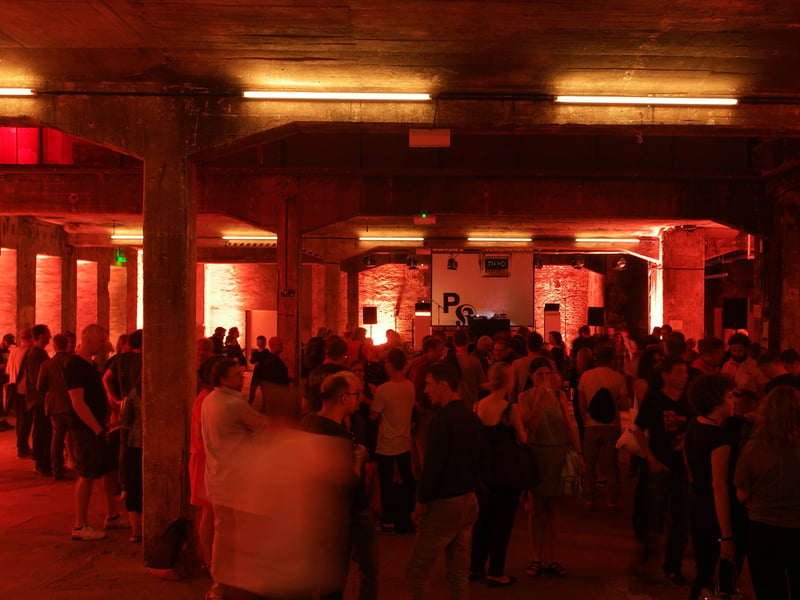
With this thriving scene has come a devoted fan base of clubbers. “I think the techno scene itself is very open and hedonistic,” Bas, a techno fan who’s been clubbing in Berlin for more than a decade, said.
No mandated closing time enables clubs to stay open all weekend if they wish. Twenty-four-hour public transit on weekends also helps keep parties raging as long as clubgoers can hold on.
“I can remember visiting Munich a couple years after moving to Berlin and going out on a Friday night,” Bas said. “There was an amazing DJ — but the place was just empty. That would never happen in Berlin, because the party just goes on and on here.”
“Berlin’s always been connected to the party,” Max, another clubgoer, agreed in an interview. “Even when I didn’t live here, that was the reason to come to Berlin.”
According to Max, the city’s relaxed enforcement helps ensure round-the-clock and over-the-top fun. “The drug policy in the clubs is so different to anything outside of Berlin,” he said. “Whatever happens in Berlin club toilets stays there. In other cities, you have to worry about undercover police.”
A postindustrial playground grows up
The unique conditions that created Berlin’s club scene can be traced to the fall of the Berlin Wall. Huge swaths of former East Berlin were left abandoned, as people moved out and state-run industries were sold off or left to rust.
The abundance of abandoned space, coupled with a fervent DIY mindset, saw parties spring up all over the city. Many once-abandoned spaces morphed into clubs, setting the vibe for Berlin’s now-famous nightlife.
“There were a lot of empty spaces, industrial wastelands [and] old factories that were reused for club culture,” said Emiko Gejic, a board member of Clubcommission Berlin, a group advocating for the city’s club culture. That “created a rough, industrial style that is very Berlin."
“There were a lot of illegal raves in the city,” Gejic added. “That created a style of people just making spaces according to their own needs. It’s a very free and very alternative scene.”
These clubs — from world-famous institutions like Berghain to smaller underground outfits — lent Germany’s capital a gritty, cool reputation and lots of cultural capital. In the words of the Berlin Senate Department for Culture in a written statement to Courthouse News, “Berlin’s clubs are the heart of the city,” bringing in around 3 million tourists every year.
But the boom in Berlin club tourism hasn’t been all good. As throngs of thrill-seeking tourists arrive on budget airline pilgrimages, they’ve brought hype and growing financial stakes to a scene that has long eschewed commercialization.
“Accessibility to music has never been easier, and there’s so much more music being pumped out,” said Claptrap, the DJ. “At the same time, we’re having a massive crisis from a venue point of view, with lots of clubs closing.”
Then came the pandemic, which like tourism affected Berlin’s club scene in ambivalent ways. According to Claptrap, it provided many musicians with an opportunity to experiment and focus on their craft. But in the aftermath, a wave of inflation made actually going out to clubs significantly more pricey.
“The scene has changed,” said Gejic of Clubcommission. “It’s gotten more commercial — and it’s more expensive.”
Twenty euros used to be enough for an entire night out. Now, it barely covers the cost of getting into the city’s most prominent locations, including the soon-to-close Watergate. That’s led younger partiers to seek out other venues or just go out less.
“I can remember when club-hopping was a thing,” said Max, the clubgoer. “You’d go to one club at the beginning of the night, stay there four [or] five hours and then move somewhere else.”
“With clubs getting more expensive, those days are over,” he continued. “You have to be a bit more selective and can’t party as much. You look for certain events, and maybe that’s the one time you go out for the month.”
According to Gejic, the pandemic also likely intensified existing generational trends.
“It shifted young people’s interests and how they spend time together,” she said. “It made digital culture much more important for younger generations — and the scene is a very, very analog space, where for instance taking pictures is frequently not allowed.”
Couple that with other factors — fewer cheap flights, an increasingly polished reputation — and it’s all piled onto challenges facing Berlin’s techno venues. As Berlin’s Department for Culture puts it: “The effects of the pandemic are still clearly noticeable in the economic plans and development opportunities of Berlin’s clubs.”
Berlin’s affordability crisis reaches the dance floor
The city offered public funding for clubs in the wake of the pandemic, including hundreds of thousands of euros for Clubcommission-led initiatives. But clubs are still reeling from two years of lost revenue, as well as rents that have continued to rise.
While DJ Claptrap laments the financial sting of going out, he sees the financial pressure on the other side of the turntables.
“If we rent out a club, it’s literally 4,000 euros for one night,” he said. “Just to make that back, you need to bring in a couple hundred people and charge them 20 euros at the door. And that’s before you even pay the DJ.”
The financial pressures highlight a long-brewing crisis in Berlin that goes well beyond clubs. All the empty real estate after the fall of the Berlin Wall didn’t just provide space for techno heads — it also helped lower housing costs throughout the city, making it a uniquely affordable European capital. But years of below-market costs have also given Berlin some of thefastest-rising housing prices in the world. While still relatively cheap compared to other European global cities like London or Paris, rents in Berlin doubled in the decadebetween 2009 and 2019 and have only kept climbing.
Berlin’s club venues — the former power plants, warehouses, factories and even swimming pools of East Germany — illustrated the city’s freewheeling development after the Cold War.
Some 35 years later, as many become office buildings and luxury housing, some see the latest changes as a warning sign about Berlin’s future.
“The city is getting denser and more difficult for everyone,” Gejic said. “There’s less living space and less cultural space. Creating new music projects now is almost impossible.”
The changes don’t just affect venues and musicians, Gejic argued. Instead, she said a variety of other industries will face knock-down effects, from tourism to hospitality and restaurants. She argued that even Berlin’s start-up scene — a common culprit blamed for gentrification — is reliant on the cool factor of Berlin’s clubs to lure workers who could earn more elsewhere.
“What politicians and city planners maybe don’t realize is that the reason people want to come here is because it’s different,” Gejic said. “Making it just like every other city in Europe or the Global North won’t be good.”
“Berlin isn’t Rome, Paris or London," she added. “It’s not very beautiful from the outside. Berlin was always interesting from within, once you dived in and got to know it.”
For decades, low rents gave Berlin a gritty yet glamorous reputation, helping motivate throngs of young immigrants to come here. Skyrocketing costs have put Berlin’s identity in flux — and clubs are the canaries in the coal mine.
Even as Berlin changes, DJ Claptrap remains hopeful Berlin’s club scene is too intrinsic to the city to really go away. “I think the clubs will more or less stay the same,” he said. The question, then, becomes what will happen to Berlin’s club clientele. “It’s really expensive to go out now — but people who can afford it will continue to party regularly.”
 Follow @braneck
Subscribe to our free newsletters
Our weekly newsletter Closing Arguments offers the latest about ongoing trials, major litigation and rulings in courthouses around the U.S. and the world, while the monthly Under the Lights dishes the legal dirt from Hollywood, sports, Big Tech and the arts.