
 Search Articles


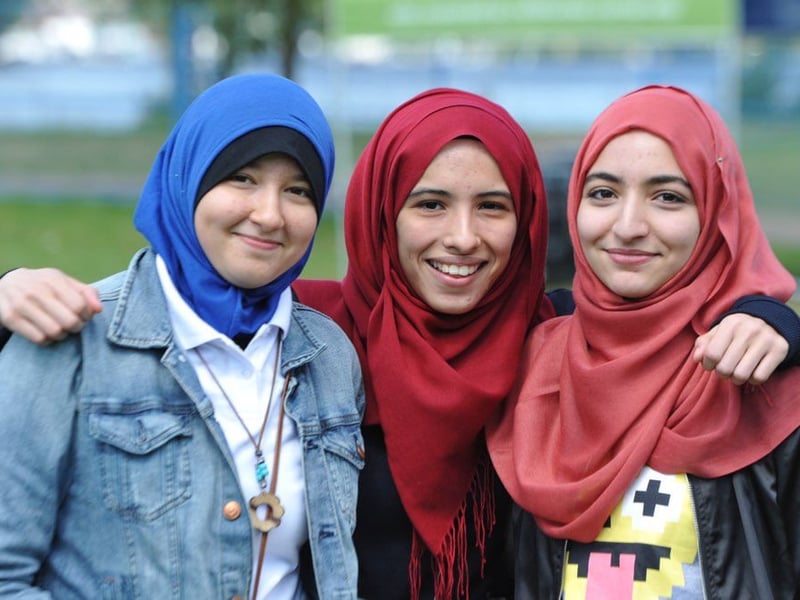
MARSEILLE, France (CN) — In modern French politics, little is certain. But there is one constant: The debate over the veil — the headscarf that Muslim women might wear in various forms — will always resurface.
With the presidential election approaching in 2027 and the contenders not yet set, the hot-button issue has popped up again.
Experts say the veil is not only used as a political tool but also falsely presented as un-French and anti-feminist.
“Each time, they look for a new angle, a new way to reach women who cover their hair,” Agnès De Féo, a sociologist and documentarist who has studied the veil for decades, told Courthouse News. “And systematically, I don’t know how they do it, but they will find a new angle of attack.”
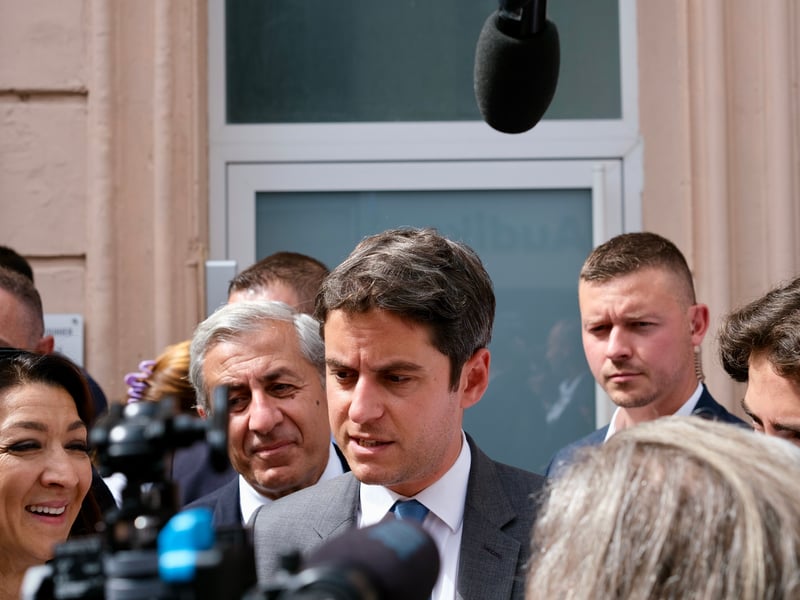
Former Prime Minister Gabriel Attalrecently reignited the debate when he suggested that girls under 15 should be banned from wearing the veil in public, in a proposal by his centrist Renaissance party, founded by President Emmanuel Macron. Macron is barred from running for a third term.
The party said the hijab, which covers the hair, ears and neck but leaves the face open, “seriously undermines gender equality and the protection of children” and proposed implementing a “crime for coercion against parents who force their underage daughters to wear the veil.”
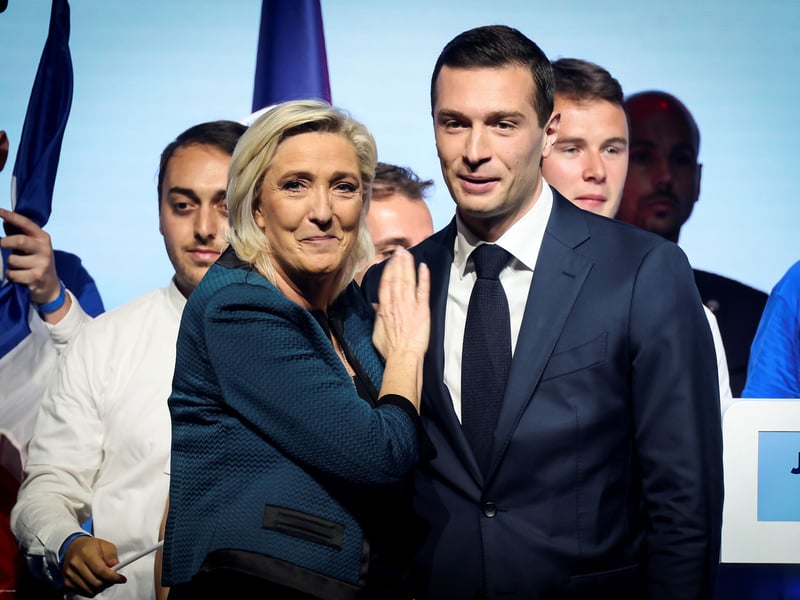
The proposal sparked reactions across the political spectrum. Extreme-right National Rally leader Jordan Bardella shared an old video in which Attal warned something similar might happen if the extreme-right rose to power; the leftwing rising star Raphaël Glucksmann said the proposal “feeds the stigmatization” of Muslims. Manuel Bompard, a prominent figure of the controversial far-left France Unbowed, said the idea was “pathetic.”
The move leaves many wondering if Attal leveraged this debate to appeal to far-right voters, who have unprecedented, growing power in France. Marine Le Pen, the figurehead of the National Rally, or RN, has polled well but is appealing a ban on running for office after her conviction in a fake jobs scheme. Attal is another de facto contender.
“In the runup to the 2027 presidential election, where we don’t yet know who will be the candidate and how things will evolve, he decided that his discourse should be a more right-wing discourse,” Alain Policar, an associate researcher at the Center for Political Research at Sciences Po, told Courthouse News. “He had a rather center-right image… now they believe that to win the election, you have to win the National Rally electorate, so to have a discourse that pleases the hard right and the far right.”
The French public is open and sometimes enthusiastic to the idea of bans. One March poll found 69% of people in favor of forbidding the veil in public spaces, including 56% of left-leaning voters, and 82% on the right.
The politicization of head coverings began in 1989, when three teenage Muslim girls were kicked out of a middle school in Creil, a town roughly 25 miles north of Paris, for refusing to take off their veils.
The rationale was rooted in secularism, known in France as laïcité. In state-sponsored institutions, employers cannot show any outward sign of religious affiliation; this could be a veil, a Catholic cross necklace, or a Jewish kippah, for example. But the Council of State, France’s highest administrative court, ruled that the students wearing the headscarf did not interfere with the secularist principle.
But then things changed.
“There is a law that was passed in March 2004 that addresses middle and high school students, and prohibits signs of religion,” Policar said. “In principle, it doesn’t only concern the veil — in reality, it only concerns the veil.”
And since then, the debate has endlessly cycled through subsequent governments.
Face coverings, including the burqa, were banned in 2010.
In August 2023, as education minister, Attal banned Muslim girls from wearing loose-fitting robes known as abayas in public schools, claiming it was “an Islamic garment that violates state rules and regulations.” A court upheld the restriction.
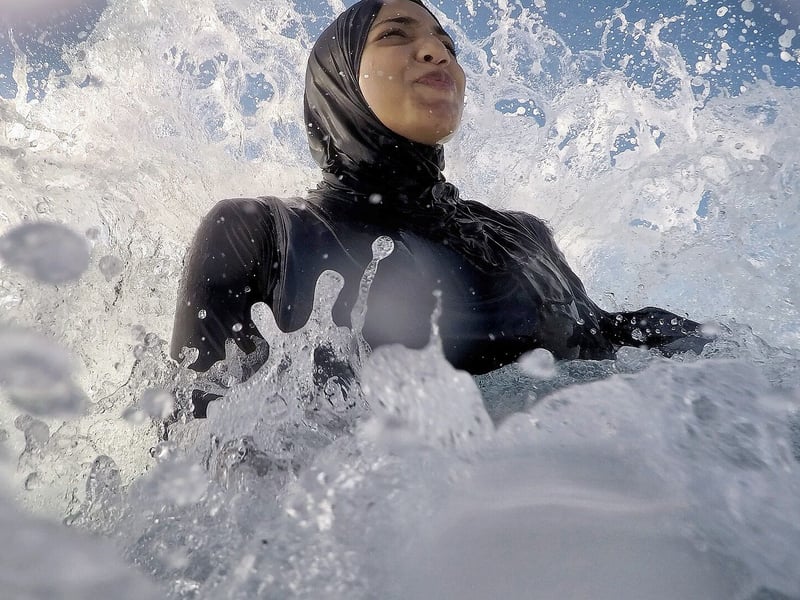
There have been debates over what should be allowed in universities, with Interior Minister Bruno Retailleau in May proposing a ban on the hijab in institutions of higher learning; whether parents accompanying their children to school should be banned from wearing the veil; and the ongoing “burkini” debate — videos of policemen fining women in full-coverage swimwear on the beach sparked outrage over the state’s authority to order women to take off their clothes.
“It’s a desire of the French to put all women on an equal footing and to see them offer their bodies to visibility,” De Féo said. “You see that their bodies are visible and can be available — a woman who wears the veil is no longer at the disposal of men, she no longer functions on the mode of seduction.”
This ties into one of the two prominent arguments surrounding the veil, which both claim to be feminist yet contradict each other.
The first says that women should have the right to wear whatever they want; this is freedom of expression, and it’s their choice. The second says that these women are “trapped,” need to be “liberated” and ultimately even if they think it’s their choice, they’re trapped in a sort of Stockholm-syndrome-like mentality that needs to be rewired.
“The veil is politicized for a very simple reason and it very quickly became the main argument — the defense of women’s rights,” Policar said. “The veil was analyzed very quickly as a sign of women’s subservience to the power of men … from the moment it appeared politically as a sign of subservience, in the name of gender equality, many women, including many feminists, decided to fight it.”
But that idea can be misplaced, according to De Féo, who has found that many feminists championing the removal of the veil are using their own cultural lens to address the issue.
“People don’t bother to understand, and they have preconceived notions about women who wear the veil,” she said. “They are so deeply committed to a colonialist approach, to a superior approach, that they will say ‘no, a woman must behave this way.’”
Last week, a woman was waiting for the tramline at Marseille’s central Belsunce station. She wore a bright orange veil, and asked to withhold her name.
“It’s been a long time since I’ve been wearing it, maybe 10 years, and it was my choice,” she told Courthouse News before hurriedly boarding. “I feel good in it, I feel at ease — no one has ever bothered me about it at work or elsewhere.”
De Féo argues that politicians have equated the veil to a symbol that runs counter to the typical image of French culture.
“The French are deeply convinced that the veil is something negative, and also for [politicians], it’s a sign of non-assimilation and communitarianism,” she said. “When in fact, in concerns a lot of people in France; everyone has their own way of defining themselves, but we don’t accept it for Muslims, and especially Muslim women … . It’s an identity that is not accepted in France.”
 Follow @lilyradz
Subscribe to our free newsletters
Our weekly newsletter Closing Arguments offers the latest about ongoing trials, major litigation and rulings in courthouses around the U.S. and the world, while the monthly Under the Lights dishes the legal dirt from Hollywood, sports, Big Tech and the arts.