
 Search Articles


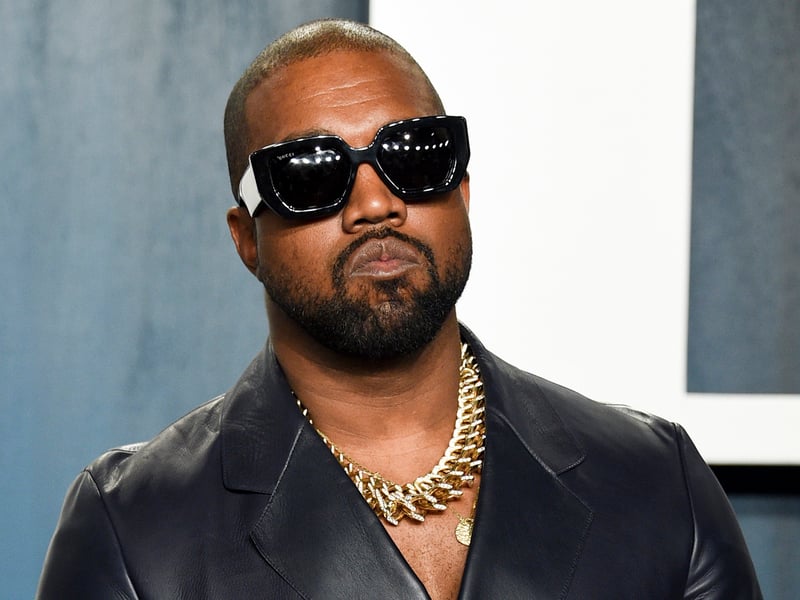
LOS ANGELES (CN) — Ye, the hip-hop artist formerly known as Kanye West, has failed to win quick dismissal of a former marketing specialist’s lawsuit on the grounds that he is an artist.
The controversial rapper had argued that his numerous antisemitic and misogynous texts to that person were somehow protected artistic expression.
But Los Angeles County Superior Court Judge Theresa Traber on Friday tentatively denied Ye’s anti-SLAPP motion to strike discrimination, harassment, retaliation and other claims from the plaintiff, a Jewish woman who is only identified as Jane Doe in court filings. That woman says she was fired by Ye last year after she complained about his behavior.
Ye’s arguments that the communications were protected speech was frivolous, Traber ruled. She said Doe’s attorneys were entitled to recover their fees from Ye for having to fight the motion.
“What is most astounding and frivolous,” Traber said at a hearing in downtown LA, “is to say that firing this person is artistic expression.”
The judge didn’t issue a final ruling at the end of the hearing. Instead, she took the motion under submission and said her decision would be forthcoming.
Ye’s attorney, Andrew Cherkasky, told the judge that he thought she was biased for not considering evidence of Ye’s status as a cultural icon, as put forth by Milo Yiannopoulos, a far-right firebrand who was Ye’s chief of staff at the time Doe worked for him.
“Ye was, and remains, in a constant state of performance and artistic creation,” Yiannopoulos said in his declaration in support of Ye’s anti-SLAPP motion. “His public statements, social media communications, marketing materials, text messages, artistic outputs, and internal communications were all understood to be aspects of his ongoing artistic expression. […] He does not simply produce art, but wholly embodies his creations, ideas, personas and philosophies in every aspect of his life.”
Traber, however, said this evidence was extremely broad-brush and failed to connect Ye’s comments — made in a private workplace context — to a wider public marketplace of ideas in which speech might be more protected.
She rejected the suggestion that she was biased or that she should recuse herself from the case.
“Under defendants’ construction of ‘protected activity,’ any suit for employment discrimination, no matter how egregious the conduct alleged, could be subject to a special motion to strike so long as the defendant claims an artistic or expressive vision motivated his conduct,” the judge said in her tentative ruling. “The court refuses to adopt such a construction.”
Still, Cherkasky suggested that Doe wasn’t an ordinary employee but, as Ye’s marketing specialist, was instead part of his artistic expression.
“She’s conduit of his art,” the lawyer argued.
California’s anti-SLAPP statute is meant for defendants to relatively quickly seek dismissal of lawsuits that are merely intended to censor constitutionally protected free speech. The acronym SLAPP stands for “strategic lawsuit against public participation.”
To prevail on an anti-SLAPP motion, the defendant must show that the speech or expression in question is in fact protected activity, insofar as it pertains to an issue of public interest.
In her lawsuit, Doe accuses Ye of conducting “a calculated campaign to threaten and psychologically torment Jewish people around him.”
“I Am A Nazi,” Ye texted one of Doe’s coworkers after Doe suggested that he condemn Nazism.
Later in her tenure, Ye texted her: “Welcome to the first day of working for Hitler.” In later text messages, Ye also said: “Hail Hitler,” “You Ugly as Fuck," “You stupid ass corny bitch,” “You Piece of Shit,” “Fuck You Bitch,” and “Now sue me you corny ass bitch.”
“Ye waged a relentless and deliberate campaign of antisemitism and misogyny against my client,” Doe’s attorney, Carney Shegerian of Los Angeles-based Shegerian & Associates, said earlier this year. “His appalling treatment of women and fixation on Nazism, evident in abusive texts where he repeatedly calls himself Hitler, expose his motives. We need to stop excusing Ye’s behavior.”
Ye, once among the most famous and successful recording artists and fashion moguls in the world, has since become much better known for his toxic comments about women and Jews. That’s to say nothing of his unorthodox politics, including a fixation with Nazis.
Some chalk his erratic behavior up to a diagnosis with bipolar disorder. Others say that it is merely an excuse for wanton bigotry. And at least for the purposes of this lawsuit, Ye has tried and failed to argue that he was just making art.
 Follow @edpettersson
Subscribe to our free newsletters
Our weekly newsletter Closing Arguments offers the latest about ongoing trials, major litigation and rulings in courthouses around the U.S. and the world, while the monthly Under the Lights dishes the legal dirt from Hollywood, sports, Big Tech and the arts.