Search Articles


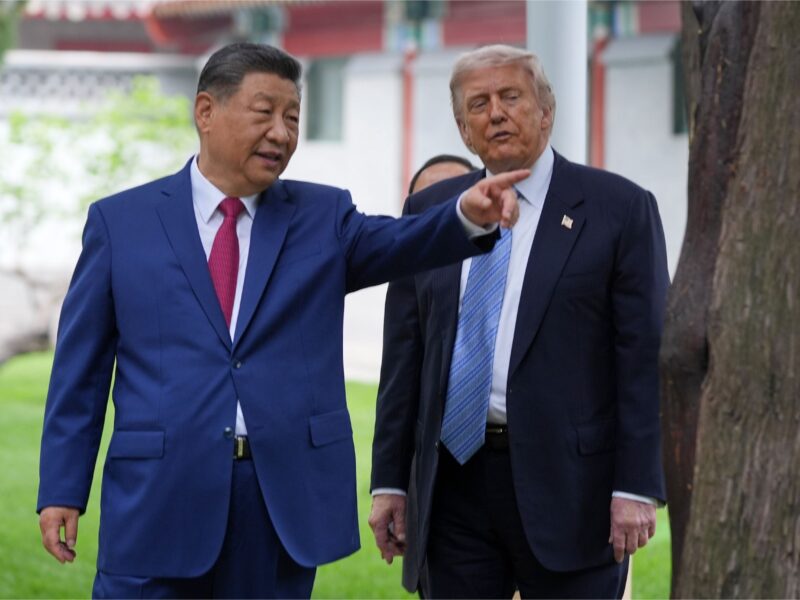
WASHINGTON (CN) — President Donald Trump on Thursday declared an “election security nightmare,” pointing to declassified reports showing that the Chinese government accessed the personal information of millions of Americans, including voter data.
But while the president claimed his administration had provided “irrefutable” evidence of Chinese meddling in the 2020 presidential election and called for a swath of measures aimed at cracking down on U.S. voting procedures, the documents unveiled by the White House showed information collection activities from Beijing that were already known to the intelligence community.
Speaking during a primetime address Thursday night, Trump claimed that the U.S. election system falls “catastrophically short” of standards for security and integrity. The documents published by his administration, he added, revealed “the largest compromise of election data in history,” totaling 220 million U.S. voter files.
“Our purpose in disclosing this information is not to weaken confidence in elections, but to earn that confidence by confronting vulnerabilities and correcting them very, very quickly,” said Trump.
According to one heavily redacted report from an unnamed intelligence agency, made public by the White House, the Chinese government obtained voter registration data from 18 states, including the names, birth dates, home mailing addresses and political party affiliations of people in the election system. Another report said that Beijing planned to use this data for “public opinion analysis” on U.S. elections.
A third intelligence assessment published by the Trump administration laid out some of the 200 million voter records collected by the Chinese government — but the report lists 2017 as the latest date for which hackers obtained such information. The survey also rounded up data breaches from an array of other sources, such as emails, compromised websites and social media.
Still, Trump argued that the information shared by the White House amounted to a “colossal security breach,” and claimed that its existence had been covered up by the “deep state” who were set on preventing him from returning to office in 2020.
“They wanted to make it sound like your president wasn’t so hot, when actually your president had done a great job — and they did everything possible to do exactly that.”
But U.S. intelligence agencies have long known about Chinese information-gathering activities.
In a 2021 report published by the National Intelligence Council, the intelligence community assessed that China “probably” collected information on election-related targets and topics during the 2020 election cycle, citing “longstanding efforts to gather information on U.S. voters and public opinion; political parties, candidates and their staffs; and senior government officials.”
“We assess Beijing did not interfere with election infrastructure, including vote tabulation or the transmission of election results,” the intelligence report said.
Trump, for his part, pointed to evidence of Chinese information collection and access to voter data as he refreshed calls for a major crackdown on U.S. voting infrastructure. He said the Homeland Security Department has reviewed “vulnerabilities” in electronic voting systems and that the White House was in the process of informing Congress and state officials about those issues.
“If you look at voting today, it’s in such bad shape in so many states, and we are committing to fix it,” he said.
Trump also claimed that his administration had discovered “significant evidence of fraud” in state elections and nodded to what he said was a plot by former Venezuelan President Nicolas Maduro to electronically rig elections in his own country in 2020 — an incident the president appeared to suggest, without solid evidence, could be recreated in the U.S.
“This intelligence underscores why we must take urgent action to ensure that our own system can never ever be hacked or compromised like it was in the past,” he said.
The president added that he’d instructed DHS to notify states about noncitizens on their voter rolls and to direct them to remove “all ineligible voters” from state election databases. And Trump ended his remarks with yet another call on Congress to pass his marquee voter ID legislation.
“Addressing this crisis of election security demands that Congress must pass the Save America Act,” said Trump.
The president’s pet legislation would, among other things, require voters to provide photo identification and proof of U.S. citizenship and would effectively end mail-in voting, which Trump has called “corrupt.”
Though the bill has passed in the House, it’s languished in the Senate where it lacks the required votes. The president has repeatedly demanded Republican leadership change Senate rules to get the Save Act approved, but so far top lawmakers have resisted.
“To all Americans, I ask you to pick up your phone tomorrow, call your representatives in the House and Senate and demand they pass the Save America Act without delay,” Trump said.
Experts largely agree that Trump legitimately lost the 2020 presidential election to former President Joe Biden, despite his claims that the contest was “rigged” and his own efforts to overturn the results which culminated in the Jan. 6, 2021, Capitol riot.
Nevertheless, the current president has spent much of his second term relitigating the 2020 election, making election integrity a central issue of his administration’s agenda.
 Follow @BenjaminSWeiss
Subscribe to our free newsletters
Our weekly newsletter Closing Arguments offers the latest about ongoing trials, major litigation and rulings in courthouses around the U.S. and the world, while the monthly Under the Lights dishes the legal dirt from Hollywood, sports, Big Tech and the arts.