Search Articles


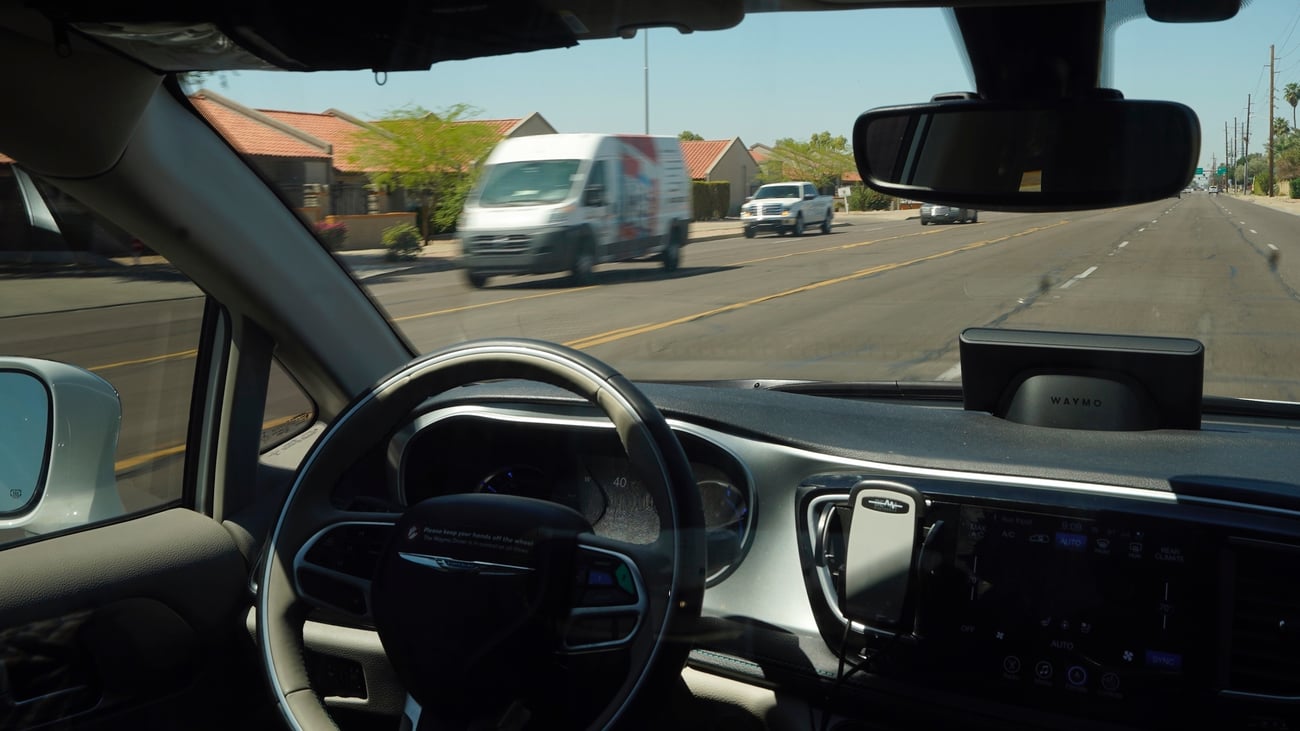
(CN) — Researchers have developed a light-sensing electronic component that adjusts to changing brightness much like the human eye, a breakthrough that could help self-driving cars and robots navigate more reliably in mixed lighting conditions.
The study, published Tuesday in the journal Nature Communications, describes a new type of “photomemristor” — a device that can both detect light and store information. The technology was co-led by Larry Cheng, an engineering professor at Penn State.
Current camera systems used in self-driving vehicles and advanced robotics can struggle when bright and dark areas appear in the same scene, such as headlights against a dark roadway at night. Conventional light-sensitive memory resistors are generally tuned for a fixed lighting environment, making it harder for them to maintain accuracy when conditions rapidly change.
The researchers sought to address that limitation by borrowing a strategy from human vision. In the eye, rod and cone cells work together to help people see across a wide range of lighting conditions. Rod cells are especially important in dim environments, while cone cells help maintain visual detail in brighter settings.
To mimic that adaptability, the team designed a photomemristor using titanium oxide and a conductive polymer known as PEDOT:PSS. The device responds to light by changing how much water the polymer absorbs from the surrounding air.
In darker conditions, the material takes up water; in brighter conditions, it dries out. Those shifts alter the device’s sensitivity, researchers say, allowing it to automatically adjust to changing illumination.
“This key design difference allows us to dynamically adapt to changing light conditions, compared to traditional systems that are usually developed for one static scenario,” Cheng said in a press release.
In laboratory tests, the photomemristors accurately detected different ultraviolet light intensities and maintained consistent performance even when humidity levels varied. Each device measured about half a millimeter across.
The researchers also built a basic machine-vision system by combining a 4-by-4 array of the photomemristors with a neural network. They challenged the system to identify a letter displayed against backgrounds with varying brightness levels, simulating the kind of visual contrast encountered in real-world environments.
After seven training cycles, the system correctly identified the letter pattern more than 95% of the time in mixed-light conditions.
“Our eyes are more adaptive to differing lighting conditions, but that adjustment can take 20 to 30 minutes to fully complete,” Cheng said. “These photomemristors can adapt to lighting conditions much faster than the human eye, while still capturing detailed information about the external environment.”
The researchers said future work will focus on expanding the technology into systems that can process both visual and touch-based information. Potential applications include autonomous vehicles, industrial robots and, eventually, artificial vision systems designed to assist people with visual impairments.
The team has filed a provisional patent application related to the technology.
Subscribe to our free newsletters
Our weekly newsletter Closing Arguments offers the latest about ongoing trials, major litigation and rulings in courthouses around the U.S. and the world, while the monthly Under the Lights dishes the legal dirt from Hollywood, sports, Big Tech and the arts.