
 Search Articles


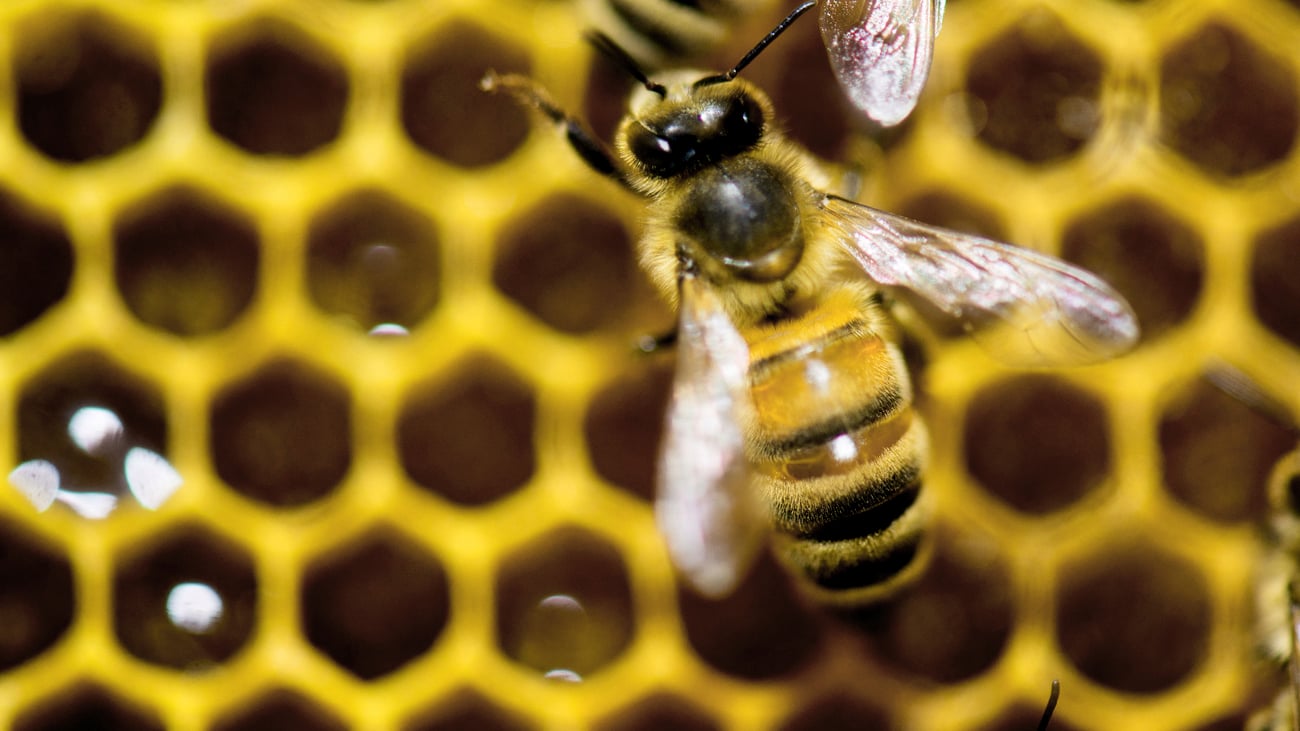
(CN) — When it comes to bee nutrition, not all pollen is created equal. A recent study led by Oxford University found that honeybees change how much they eat in order achieve a proper nutrient balance.
While honeybees use nectar from flowers for sugar, pollen is their main source of protein. But the study, published Wednesday in the journal Current Biology, found that many individual flowers do not contain all of the essential amino acids (the building blocks of protein) that bees need to thrive.
“Although pollen is often assumed to be a near-perfect food for bees, it is the male gamete of plants and, unlike nectar, it is rarely produced solely as a reward for pollinators,” lead researcher Geraldine Wright, a professor in Oxford’s Department of Biology, said in a statement. “This creates a conflict of interest between the plant and the pollinator.”
To compensate for this, the researchers found, bees will alter how much pollen they consume in order to ensure a proper balance of essential amino acids.
The researchers examined the essential amino acid profiles of honeybee tissue and compared that with the profiles of 99 UK flowering plant species. They then created artificial diets to replicate either the mix of essential amino acids found in honeybee tissue or the amino acid profiles found in different pollen sources, which they then fed to newly emerged worker bees in controlled lab experiments.
These experiments showed most of the pollen sources tested were a poor match for the amino acid makeup of bee tissues and that bees fed diets with amino acid profiles that more closely matched their tissue composition ate more, gained more body mass and consumed a more protein-rich diet.
Suspecting this difference was linked to histidine, an essential amino acid bees need in only small amounts, the researchers fed bees artificial diets with either high or low ratios of histidine compared to branched-chain amino acids that are important for bee growth and development. The results showed that bees ate less food overall when histidine was relatively high, which the researchers suggest may indicate a feedback mechanism that prevents toxic effects from overconsuming certain amino acids.
The researchers also analyzed bee bread, a substance bees use to feed their young. Bee bread is made from pollen collected from a variety of flowers. It is then consumed by nurse bees, which convert nutrients from the pollen into glandular secretions that are fed to larvae.
The researchers found bee bread has an essential amino acid profile that is better balanced than that of most individual pollen sources. Royal jelly, a secretion fed to queen bee larvae, was found to be even better, closely matching the amino acid makeup of bee tissues. This suggests the mixing and processing of pollen helps honeybees to overcome the nutritional limitations of individual pollen sources.
However, other types of bees, such as bumble bees and solitary bees, feed pollen directly to their young and thus may struggle to obtain sufficient nutrients for themselves and their larvae if their environment lacks a sufficient diversity of flowering plants. This has important implications for pollinator-promotion schemes, the researchers say.
“Our results suggest that planting for pollinators should not only focus on providing flowers throughout the season, but also on ensuring a diversity of pollen sources,” Wright said. “A varied diet may be essential for bees to obtain the right balance of nutrients.”
Subscribe to our free newsletters
Our weekly newsletter Closing Arguments offers the latest about ongoing trials, major litigation and rulings in courthouses around the U.S. and the world, while the monthly Under the Lights dishes the legal dirt from Hollywood, sports, Big Tech and the arts.
Additional Reads


 Alaska tribes fight controversial gold mine project June 16, 2026