
 Search Articles


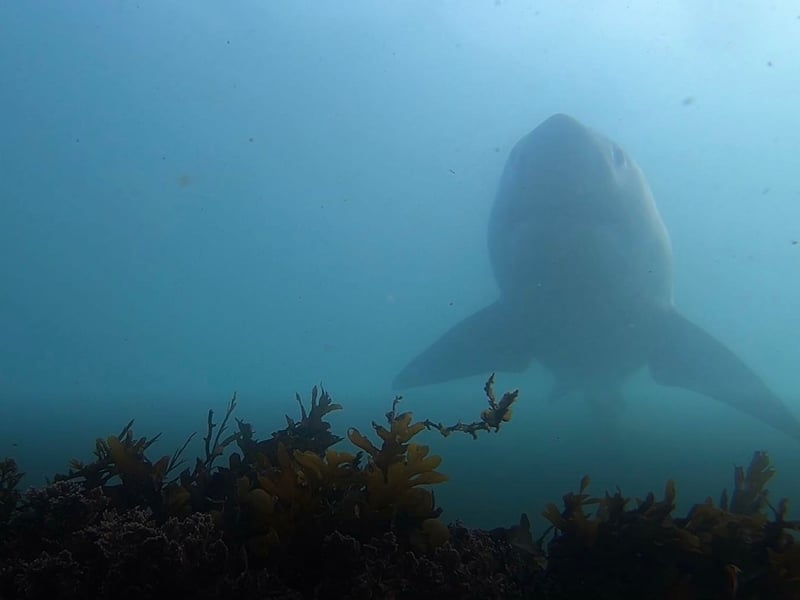
SAN LUIS OBISPO, Calif. (CN) — As Carlos Gauna trailed a sizeable white shark with his drone, he was startled to see the apex predator methodically head directly toward four young swimmers near the Southern California shore.
Hoping to alert the swimmers from his position two miles away, Gauna lowered and raised the drone multiple times. But two of the swimmers simply smiled and waved at the drone, unaware of the great white under the surface, 15 feet away and closing in.
“I don’t often get nervous filming, but for some reason, this time I did,” Gauna narrates in his dramatic video, posted on his popular website TheMalibuArtist.
Just as the scene seemed headed for a horror movie moment, the shark abruptly turned and swam away from the crowd.
“I truly believe the sharks know what a human is, and I think those big older ones understand we’re not food,” Gauna told Courthouse News. “And 99% of the time, they’re not going to go after us.”
While sharks and humans have always shared space in the ocean, the advent of drone technology has revealed such interactions like never before, providing not only dramatic footage but also valuable scientific research about shark behavior.
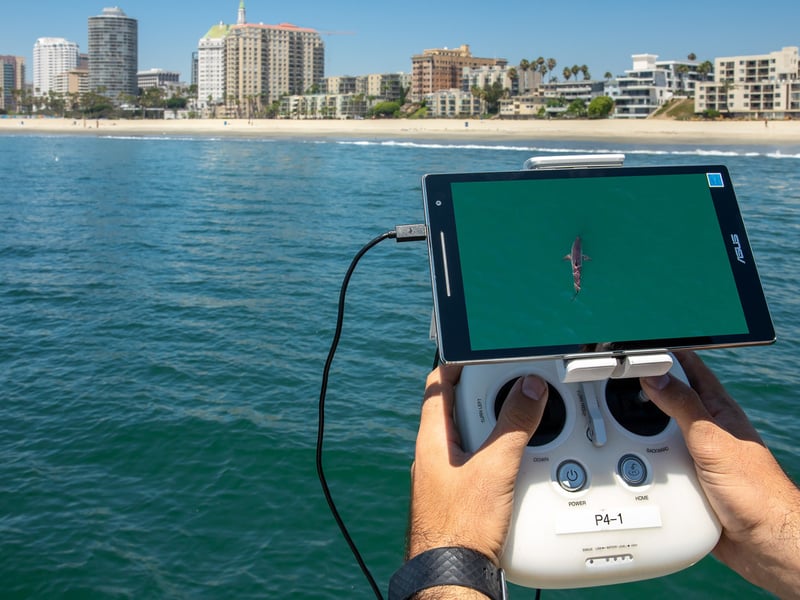
“It was a game changer for us,” said Chris Lowe, a marine biology professor and director of the Shark Lab at California State University Long Beach.
In 2023, the lab published a study in the Public Library of Science that detailed more than 1,500 drone surveys from 2019 to 2021, observing 26 different Southern California beaches. During those observations, the study noted, water users came into contact with sharks in aggregation sites on 97% of the days.
The Shark Lab uses a variety of tools for research, including tracking technology, autonomous underwater vehicles, boats and more. But a small fleet of drones has allowed them to visually see sharks in ways they never could have before.
In the past, Lowe said, aerial footage of sharks typically came from helicopters, which were expensive to rent, not as maneuverable and disruptive to sharks, which could alter behavior.
“The drones are so small and lightweight that they really have minimal impact on the animal,” he said.
The drones researchers use are the same as hobbyists, he said. And even the non-scientific drone pilots, he said, can capture fantastic footage.
Gauna, who has licensed his footage for various TV shows, has captured stunning footage of whales, dolphins and sea lions. But his clear, detailed, up-close shark footage has been especially gripping.
His footage has captured some intriguing moments: pods of dolphins banding together and swimming directly at great whites. Sea lions chasing a great white from behind. And, of course, all the close encounters with humans.
In one video, a thick 15-foot shark approaches a 13-foot fishing boat as one of the two fishermen casually films the shark with his phone. In another, a much larger boat speeding along the ocean collides with a great white, causing a major wound to its tail area. And in one surreal scene, a great white approaches a standup paddleboarder wearing an inflatable dinosaur outfit.
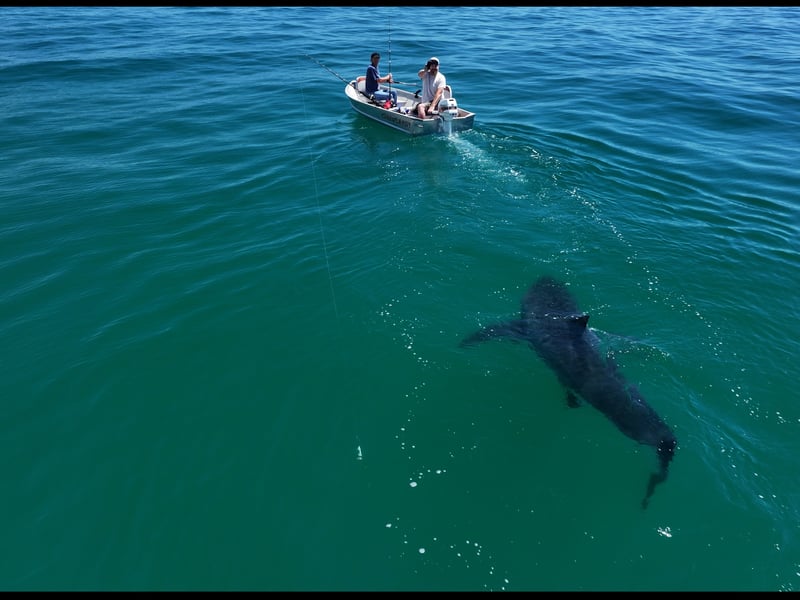
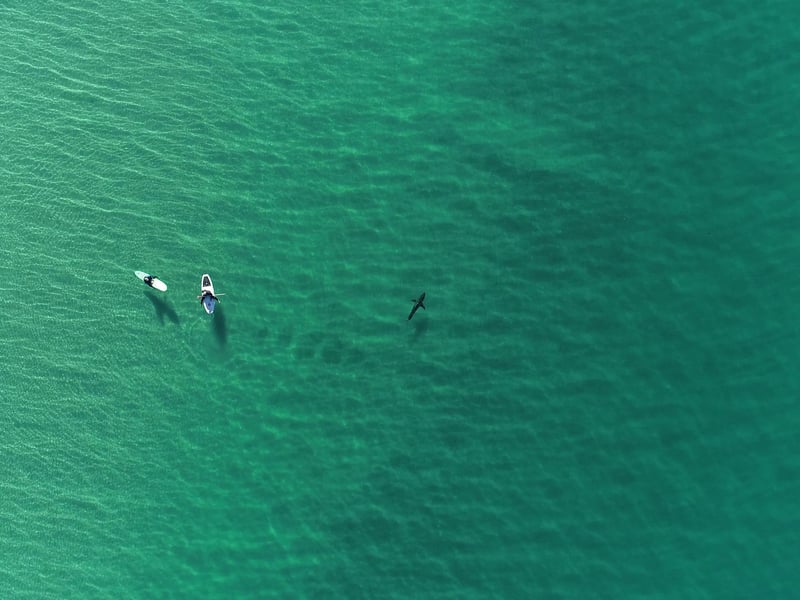
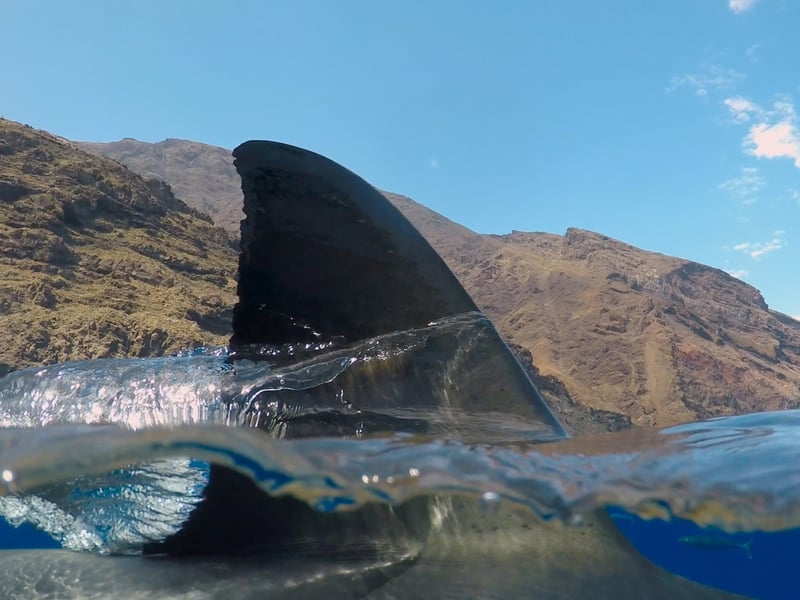
Sharks on the hunt. (Left photo courtesy Carlos Gauna; right photo courtesy CSULB Shark Lab)
“I started noticing behavioral aspects and the tendencies of the sharks around people and around other species,” Gauna said. “And I started asking myself, ‘How much of this stuff is known?’”
Gauna has shared video with marine scientists, and Lowe has used some of his footage to teach students. But while drone videos show lots of behavior, it’s just one element of shark research.
“We don’t want to lead people to believe something that we haven’t verified scientifically,” Lowe said.
If a drone captures an interesting shark behavior, that doesn’t mean they always act that way, Lowe said. Also, drones can’t detect sharks when they swim deep, which might be crucial to learning more about their behavior.
While Gauna has collaborated with scientists on papers, his videos include a disclaimer — “I’m NOT a marine biologist” — which advises viewers to verify facts with scientific sources.
Gauna is not the only one who has captured drone footage of sharks.
In San Luis Obispo County, surfers in Oceano and Pismo Beach know if they see a drone outside the lineup, there’s probably a shark in their midst because they’ve seen drone footage posted by David Steiner, depicting sharks near wave riders.
Steiner, a surfer himself, didn’t respond to interview requests through Instagram, but he told the San Luis Obispo Tribune this year that watching his own videos has helped ease his fears.
“I started really watching what they were doing, and they were just ignoring surfers completely,” Steiner said. “That kind of helps my mentality with staying in the water.”
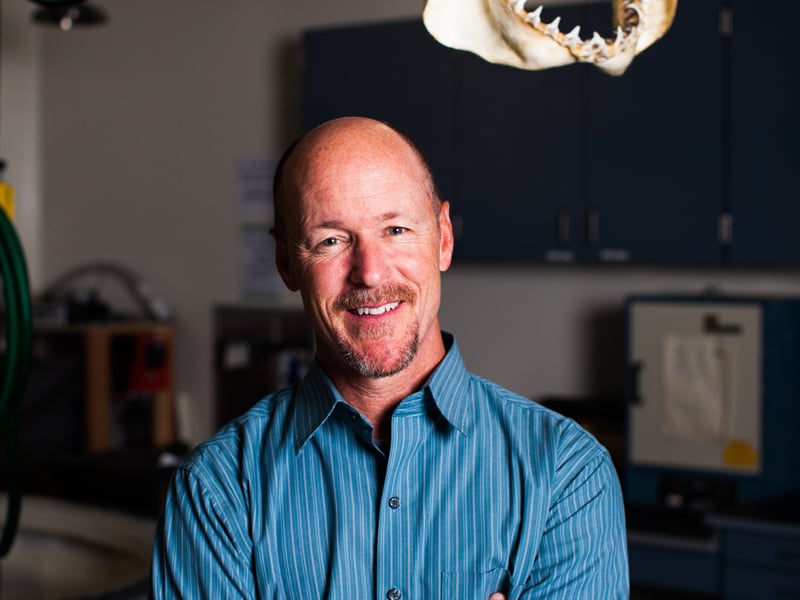
Footage of great whites swimming near humans, seemingly uninterested, might help the public’s perception, Lowe recently told an audience in San Luis Obispo during a talk titled “White sharks: Learning to live with the marine predator we have been taught to fear.”
“People’s impressions of sharks usually come from ‘Jaws,’” he told a packed library event room.
Drone footage has been known to capture up to 40 sharks in one area, Lowe told the crowd. Juvenile white sharks, which are common in Southern California, spend more than 50 percent of their time within 110 yards of the surf line, according to his research.
Due to protections of sharks and their food sources, their great white population has increased. Yet shark attacks on humans are still rare.
For Gauna, the prevalence of sharks has been revealing, but so too have the peaceful interactions with humans. That can help change the perception of sharks as the toothy predator always on the hunt.
“I’m not a marine biologist, but I do spend a hell a lot of time with sharks, five to six days a week,” Gauna said.
Gauna holds a bachelor’s degree in history and a master’s in public relations. He began his career taking school portraits in Oklahoma and Texas. Then he transitioned to shooting storms and weddings before eventually moving to California, where he initially began shooting video of marine wildlife for fun.
When the pandemic occurred and wedding work decreased, he began dedicating more time to his hobby — eventually focusing on sharks. As he began to witness more behavior and encounters, Gauna started sharing some of his footage with scientists while also posting videos for the public.
“The online audience was falling in love with it,” he said. “They were intrigued as well, so I kind of took everybody on a journey with me.”
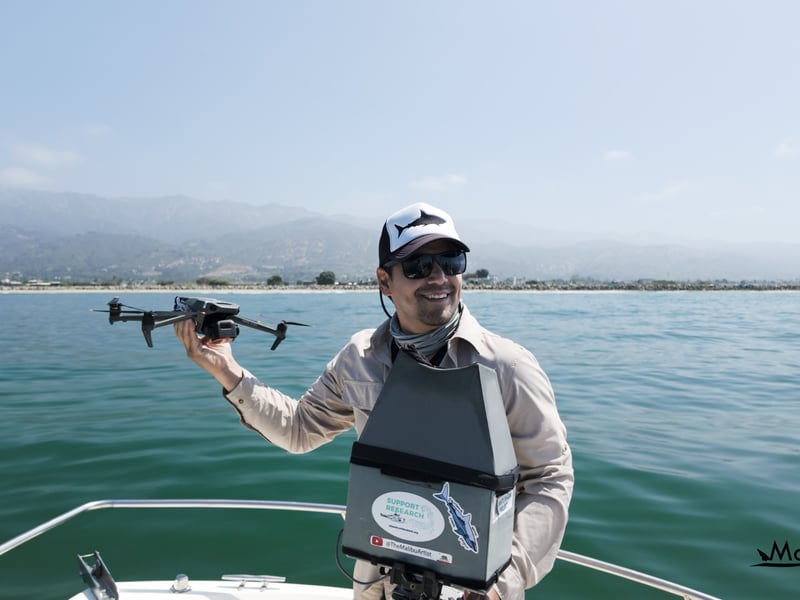
Eventually, Gauna made a career of his TheMalibuArtist enterprise through sponsorships, ad revenue and licensing. Now a full-time shark observer, he typically spends several hours at the beach each day, looking for the big predators.
That can require patience and persistence. But it comes easier with experience, Gauna said.
“There are a lot of areas where I find a shark within minutes,” he said.
This year, the Netflix documentary “Shark Whisperer” detailed how shark conservationist and diver Ocean Ramsey has interacted with sharks, often showing no fear in the face of large great whites. But Lowe said the continued interaction Ramsey has with the same sharks might alter their behavior, which could give others overconfidence.
“Our job should be observing these animals from a distance, always giving them healthy space," Lowe said.
Drones, on the other hand, allow researchers and observers to see how the creatures naturally react to things they encounter, including humans.
“That’s one of the cool things about drones,” Gauna said. “They’ve kid of revolutionized our ability to see the world.”
Subscribe to our free newsletters
Our weekly newsletter Closing Arguments offers the latest about ongoing trials, major litigation and rulings in courthouses around the U.S. and the world, while the monthly Under the Lights dishes the legal dirt from Hollywood, sports, Big Tech and the arts.