
 Search Articles


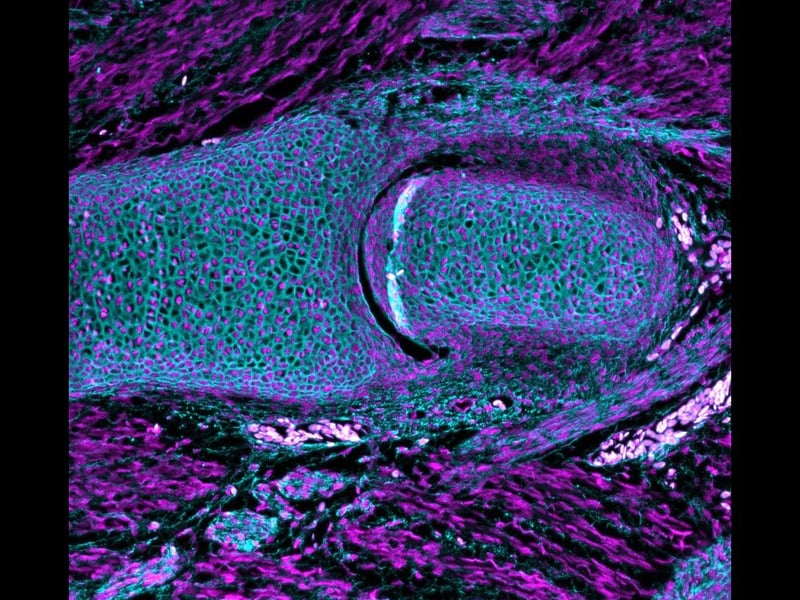
(CN) — Neelima Sharma, a researcher from the University of Chicago, wants you to know that we all have something in common with ancient fish: our knees, hips and elbows.
Synovial joints originated millions of years ago in jawed vertebrates, explained Sharma, a researcher at the University of Chicago. In a paper published Tuesday in PLOS Biology, she and her colleagues revealed details about the evolution of these critical, lubricated structures that allow animals to move precisely.
The joints provide mobility that regular fused joints can’t. The question is, where did they come from? Sharma and her colleagues Yara Haridy and Neil Shubin believe that the answers lie in ancient fish.
Jawed vertebrates known as gnathostomes appear to be the first creatures with the synovial joints, according to Shubin. These joint cavities can be seen in cartilaginous fish such as skates or sharks. However, when the researchers studied jawless fish such as lampreys and the hagfish, not a single synovial joint cavity was present in the fish.
Haridy, another member of the research team, said understanding the history of these joints relies on more than just fossils: The molecular markers, proteins and genes found in the joint formations showed major similarities between modern fish and land vertebrates.
The researchers used antibodies to identify and label proteins and tissue. In time, this had revealed that skates express CD44 and aggrecan, meaning that without this, joints would have no lubrication.**** CD44 is a cell surface receptor that binds itself to the hyaluronic acid, which is key to the synovial fluid. Aggrecan is a proteoglycan that helps retain water and helps with maintaining the structure of cartilage.
That ultimately means that a human’s ability to squat or even shake hands with another person ties into the origin of ancient fish.
Importantly, synovial joints don’t always form on their own; muscle activity is key. When the team paralyzed the skate embryos, they discovered that where there’s no movement, there’s no joint cavity. This aligns with research that shows how mechanical forces are crucial for normal joint formation found in zebrafish and mammals.
To back up their findings, the researchers went back into the earlier findings of fossils. Shubin, who has spent years tracing back the origins of vertebrate anatomy, points to the antiarch placoderms; an extinct fish with armor. The first real cavitated and moving joints are right here. While using high-resolution imaging, the researchers reconstructed these fossil joints, in return finding clear evidence of articulation.
Sharma said understanding the origins of synovial joints could possibly provide insight to modern day joint problems and diseases. She and her colleagues will continue research deep into the origins of vertebrate movement.
Subscribe to our free newsletters
Our weekly newsletter Closing Arguments offers the latest about ongoing trials, major litigation and rulings in courthouses around the U.S. and the world, while the monthly Under the Lights dishes the legal dirt from Hollywood, sports, Big Tech and the arts.