Search Articles


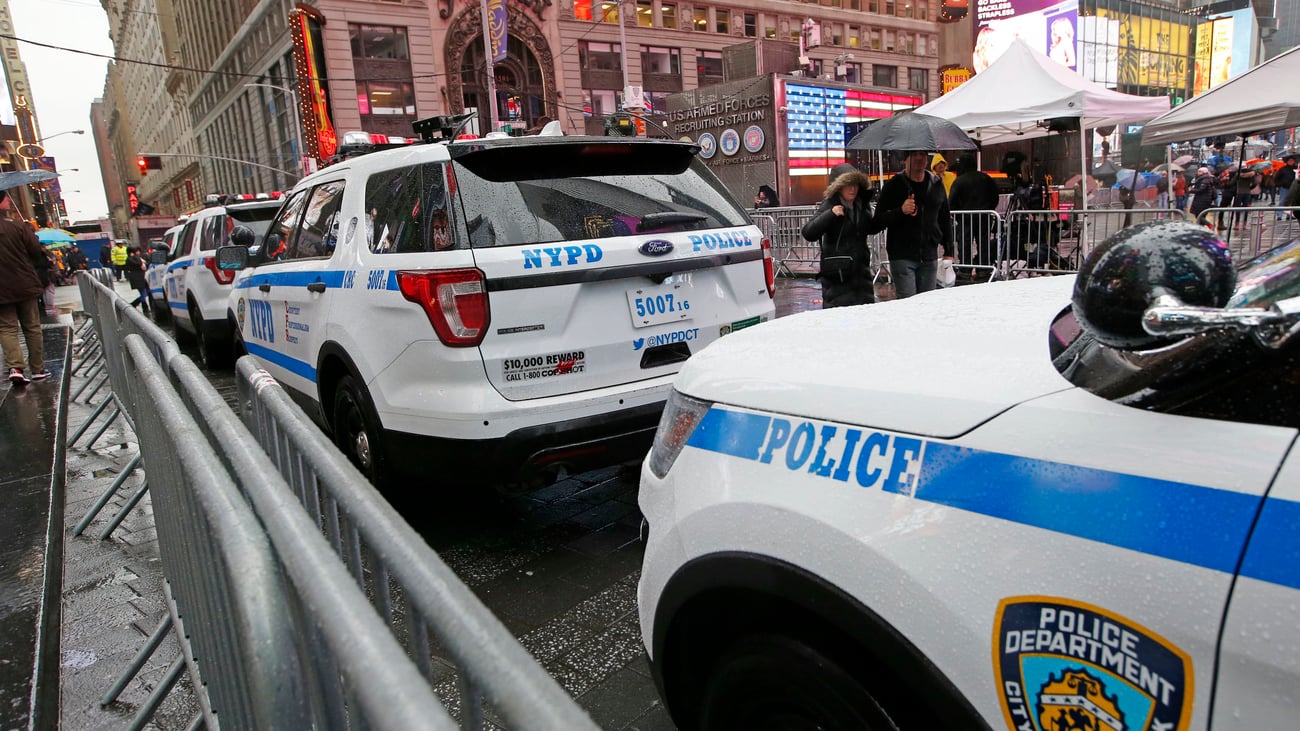
MANHATTAN (CN) — The New York City Law Department asked a federal judge to toss out a civil complaint brought by the city’s largest police union over claims an independent police watchdog is releasing records prejudicial to officers.
The Police Benevolent Association, the largest of New York City’s five police unions, accused the city’s Civilian Complaint Review Board in an April complaint of violating officers’ constitutional due process rights by publicly releasing “the most inflammatory, stigmatizing and life-altering unsubstantiated accusations.” The union says posting disciplinary complaints on a public online database in perpetuity causes long-lasting damage to officers’ reputations.
The union says the review board recently replaced long-standing language for case dispositions — “Unsubstantiated” and “Exonerated” — with labels, like “Unable to Determine,” “Unable to Investigate,” or “Within NYPD Guidelines,” which the union claims do not clearly show whether a matter has been closed or if the officer has been cleared of wrongdoing.
The union says in its complaint it wants to curb the review board’s “indiscriminate policy” of disclosing stigmatizing unsubstantiated complaints of sexual assault and rape, racial bias or profiling, and false official statements, with officer-identifying information.
The city argues in its motion to dismiss, filed after court hours on Friday evening, that the records at issue solely show verifiable facts.
“There is no falsity because the records, which simply reflect the filing of a civilian complaint, the type of allegations it raised, and CCRB’s classification and disposition of that complaint, are true, accurate, and verifiable statements,” city lawyers wrote in the motion.
The city also argues the complaint should be dismissed under the doctrine of res judicata, which bars litigants from bringing claims already decided in another court, pointing to a prior case in the Southern District of New York from 2020.
In that case, U.S. District Judge Katherine Polk Failla denied a preliminary injunction to block the release of New York City police and firefighter misconduct records following the repeal of state law 50-a. The Barack Obama appointee’s ruling was later affirmed by the Second Circuit, the city notes, before the unions voluntarily dismissed their complaint.
The city further argues the reputational damage purported by the union has so far been speculative, without any examples of an officer who applied for a job, was denied, and was told that but for the information on the 50-a.org website, they would have been hired.
“Plaintiffs’ entire case is hypothetical — some hypothetical future employer may refer to the 50-a Database, may find the records and CCRB dispositions confusing and misleading, and may decide against hiring that officer based on that information on the 50-a Database,” the city wrote in the motion.
The union maintains that to protect officers’ due process rights, the review board should be required to redact personal identifying information if it disseminates stigmatizing unsubstantiated complaints, or use a neutral characterization for such accusations.
The union’s opposition to the city’s motion dismiss is due Aug. 19, 2026.
The Police Benevolent Association has long accused the city’s Civilian Complaint Review Board of serving what it views as partisan, anti-police activists.
“CCRB is so thoroughly infected with anti-police bias that it refuses to comply with even the most basic requirements of fairness and due process under the law,” New York Police Benevolent Association President Patrick Hendry said in announcement when the suit was initially filed. “While the agency intentionally destroys officers’ careers and reputations every single day, it doesn’t even bother notify them before tarnishing their names forever with false accusations.”
During a pretrial conference in Manhattan federal court Tuesday, attorney Matthew Christopher, from Daly Spencer Fane LLP, said the union intends to open discovery into who the review board is disclosing records to and whether there is any surreptitious “joint effort” to publish accusations with officer-identifying details.
Such disciplinary records of police, firefighters and prison officers were previously shielded from public disclosure without a court order by the state civil rights law section 50-a, until the state repealed it in June 2020. The move was part of major accountability reforms after widespread local and national protests sparked by the killing of George Floyd by a Minneapolis police officer.
Shortly after, then-Mayor Bill de Blasio ordered a massive database of disciplinary records on NYPD police officers to be published online through the Civilian Complaint Review Board.
The 15-member CCRB comprises five seats appointed by the mayor, five appointed by the City Council, three designated by the police commissioner, and one appointed by the public advocate; the chair is jointly appointed by the mayor and City Council.
During the pretrial conference last week, attorneys for both sides told Magistrate Judge Katharine Parker it was premature to begin any separate settlement discussions.
 Follow @jruss_jruss
Subscribe to our free newsletters
Our weekly newsletter Closing Arguments offers the latest about ongoing trials, major litigation and rulings in courthouses around the U.S. and the world, while the monthly Under the Lights dishes the legal dirt from Hollywood, sports, Big Tech and the arts.