Search Articles


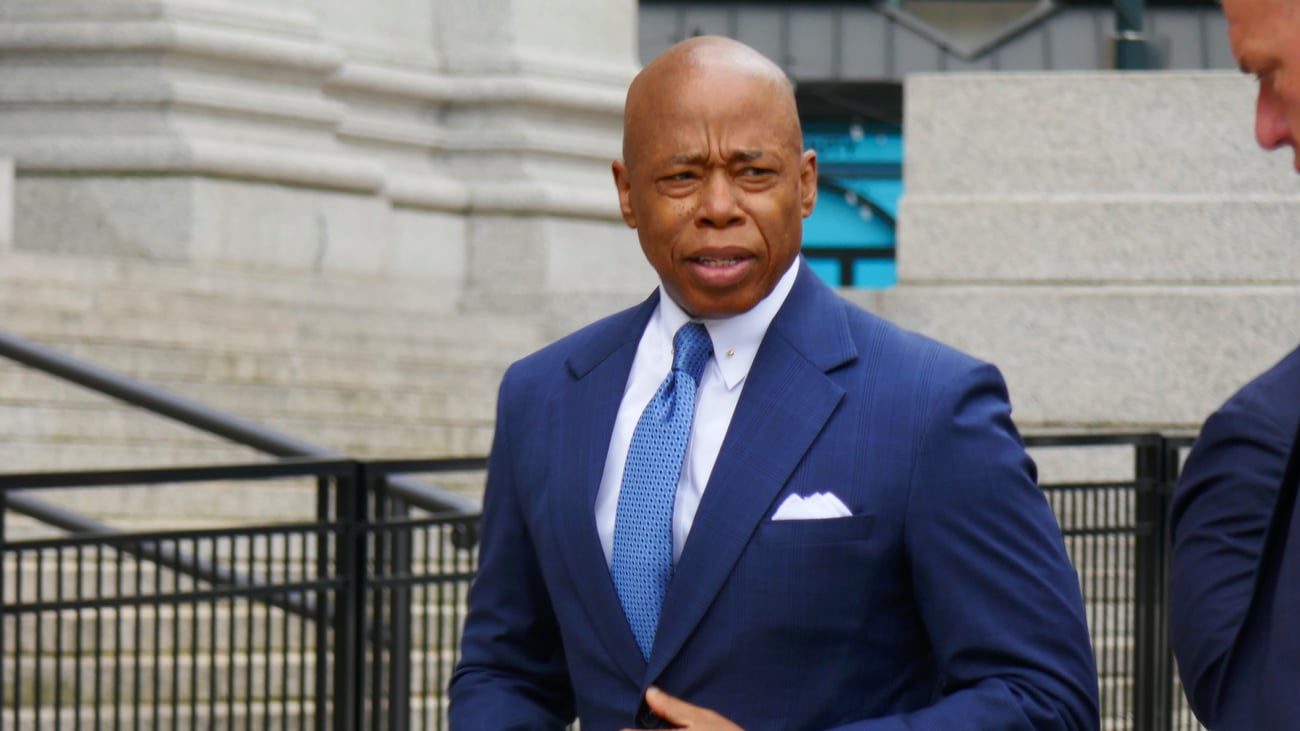
MANHATTAN (CN) — The city-funded legal defense for former New York City Mayor Eric Adams is up in the air, with the city arguing Wednesday that taxpayers shouldn’t be on the hook for “what is essentially a private dispute” between Adams and his sexual assault accuser.
Lawyers for the New York City Law Department told a state judge that Adams should fend for himself in the matter, in which Adams is accused of demanding oral sex from a then-colleague at the New York City Transit Police Department in 1993 and ejaculating on her leg.
“There is no reason why the taxpayer should pay for the defense in this case,” city attorney Maxwell Leighton said.
The city’s law department noted its intention to drop Adams as a client in March. It sent him a letter, citing new findings that he was not acting within the scope of his employment with the city at the time of the accused conduct and was therefore ineligible for city representation.
That determination was made less than three months after the city swore in a new mayor, Zohran Mamdani, who appointed longtime public interest attorney Steven Banks as corporation counsel. Banks ultimately made the call, the city claims.
“I want to stress, the determination made by the corporation counsel was not political in nature,” Leighton assured the judge Wednesday. “His evaluation was independent of any and all politics.”
But New York Supreme Court Justice Brendan Lantry wanted to know what had changed between now and 2023, when the suit was initially brought against the then-mayor.
“Why such a delay?” asked the judge, adding Adams’s accuser was deposed over a year ago.
Leighton agreed it was merely a “fresh set of eyes” that led the city to the new conclusion.
Adams’ private counsel, who argued for keeping city-funded representation, claimed otherwise. Alan Samuel Futerfas said the result is “exactly the political decision” that is barred by legal precedent.
“You can’t just show up and say, ‘I’m creating efficiencies. I’m deciding differently,’” Futerfas said.
Additionally, the city’s announcement that it was looking to stop representing Adams in this case created a “huge conflict,” Futerfas said. Even if the judge rules in Adams’s favor and mandates the law department to defend him, Adams would then be stuck with representation that does not want to do so.
Futerfas criticized the department and Banks for stating this publicly, rather than behind a sealed docket entry, arguing it has given credence to the claims of Adams’ accuser.
“They still have an obligation to represent him zealously,” Futerfas said.
As a result, Futerfas said Adams will now be pushing for the city to fund the ex-mayor’s private legal defense instead — a potentially pricey prospect, since Adams has retained the services of top New York City law firm Quinn Emanuel Urquhart & Sullivan.
Lantry didn’t immediately rule on the issue, but assured the parties that he will come to a decision “as soon as possible.” It is unclear whether a ruling will come before the next conference in this case, set for April 30.
Neither Adams nor his accuser Lorna Beach-Mathura attended Wednesday’s proceedings.
Beach-Mathura, now suing via a trustee after filing for bankruptcy in 2024, claims Adams “demand[ed] a quid pro quo sexual favor” in exchange for helping her get a promotion at the city’s transit police department more than three decades ago.
In her 26-page complaint, she claims Adams offered to drive her home from work one night so they can talk about her job prospects. She obliged, but instead of driving her home, Adams drove her to a vacant parking lot, where Beach-Mathura says Adams began masturbating and making sexual demands.
Adams has vehemently denied the accusations, and has indicated he’s unwilling to settle the lawsuit.
Beach-Mathura sued under the Adult Survivors Act, a 2022 state law that gave New Yorkers a year to file sexual assault claims that otherwise fell outside the statute of limitations.
 Follow @Uebey
 Follow @uebey.bsky.social
Subscribe to our free newsletters
Our weekly newsletter Closing Arguments offers the latest about ongoing trials, major litigation and rulings in courthouses around the U.S. and the world, while the monthly Under the Lights dishes the legal dirt from Hollywood, sports, Big Tech and the arts.
Additional Reads
 Orbán gone, pipeline fixed: EU unlocks $105B for Ukraine April 22, 2026