Search Articles


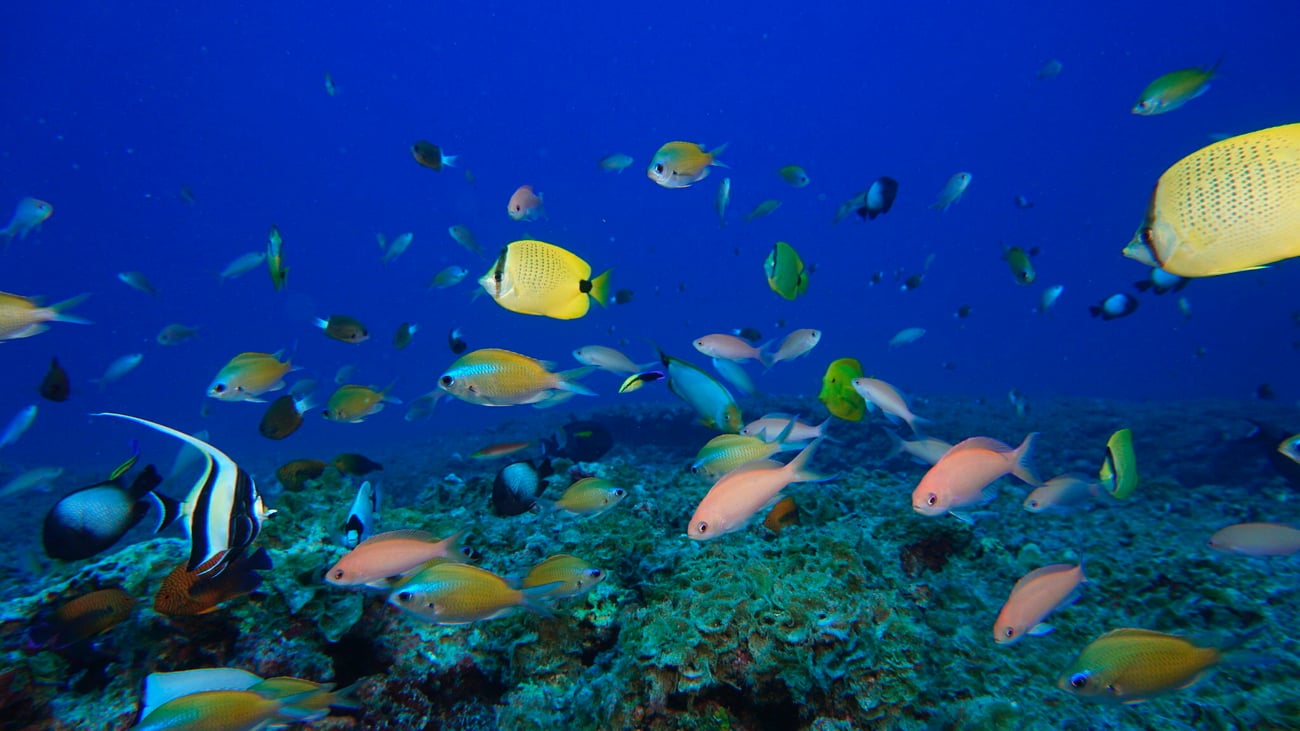
(CN) — The time after the extinction of the dinosaurs is widely known as the “Age of Mammals,” but recently unearthed fossils from an ancient site in Egypt suggest it was a time of great diversification among ocean fish species as well.
In a study published Wednesday in the journal Science Advances, researchers from Mansoura University in Egypt, KU Leuven in Belgium and the University of Michigan analyzed the findings from Qreiya 3 Lagerstätte, an unspoiled fossil site in Egypt’s Eastern Desert dated to approximately 62 million years ago.
The site revealed hundreds of marine fish fossils, including ray-finned fishes from the earliest time in the Paleocene Epoch, specifically the Danian Age, 66 to about 62 million years ago.
Many of the species excavated belong to a group called percomorphs, with tuna, flounder and mackerel as examples of modern-day relatives. Ancestors of moonfishes, jacks, pipefishes and snake mackerels also were found.
“What surprised us most was not just how many fishes the site preserves, but how familiar the community looks in broad outline,” Sanaa El-Sayed, the lead study author and a researcher at Mansoura University’s Vertebrate Paleontology Center said in a statement. “Instead of a fauna still dominated by holdovers from the Cretaceous, we found an assemblage already structured around groups that would later come to dominate the oceans.”
The fossil site is now seen as one of the most intact representations of marine fish life from the Danian Age.
After the extinction of the dinosaurs due to a major asteroid impact on the Yucatán Peninsula — the most commonly held scientific theory on what is called the Cretaceous–Paleogene (K–Pg) extinction event — the rise of mammals has been well-documented throughout the world. For fish and marine life, sites like Qreiya 3 remain somewhat elusive.
“As the only offshore Danian skeletal assemblage, it captures an ecosystem comparable to that of some Cretaceous sites while offering a critical perspective on recovery in tropical regions far removed from the Chicxulub impact site,” the researchers said in the study. ****
There are a few other factors that make Qreiya 3 unique. Most other fossil fish sites from the Danian age are from shallow settings, but the site in the Egyptian desert was at an estimated paleodepth of 150 to 250 meters, making it a deep-sea climate. Many of the soft tissues of the fish remain, partially due to a warming interval that possibly preserved the specimens while under low-oxygen conditions near the sea floor.
What the site revealed, according to the researchers, is that marine fish created communities and ecosystems within four million years of the massive die-off that ended the Cretaceous period, much earlier than previously thought.
And, in some ways, those fish communities looked a lot like the complex and diverse sea ecosystems of today. Yet, some of the large predators common in the Cretaceous were absent from the site, another clarifying clue to how the early modern oceans looked.
“This study is an initial synthesis from a much broader research effort. Many important specimens are still under preparation and study, and we expect this site to continue transforming our understanding of how modern marine fish faunas became established in the wake of the K–Pg extinction,” Hesham Sallam, a professor of vertebrate paleontology at Mansoura University and a co-author of the study, said in a statement.
“What we are publishing now is only the beginning of the story."
Subscribe to our free newsletters
Our weekly newsletter Closing Arguments offers the latest about ongoing trials, major litigation and rulings in courthouses around the U.S. and the world, while the monthly Under the Lights dishes the legal dirt from Hollywood, sports, Big Tech and the arts.