Search Articles


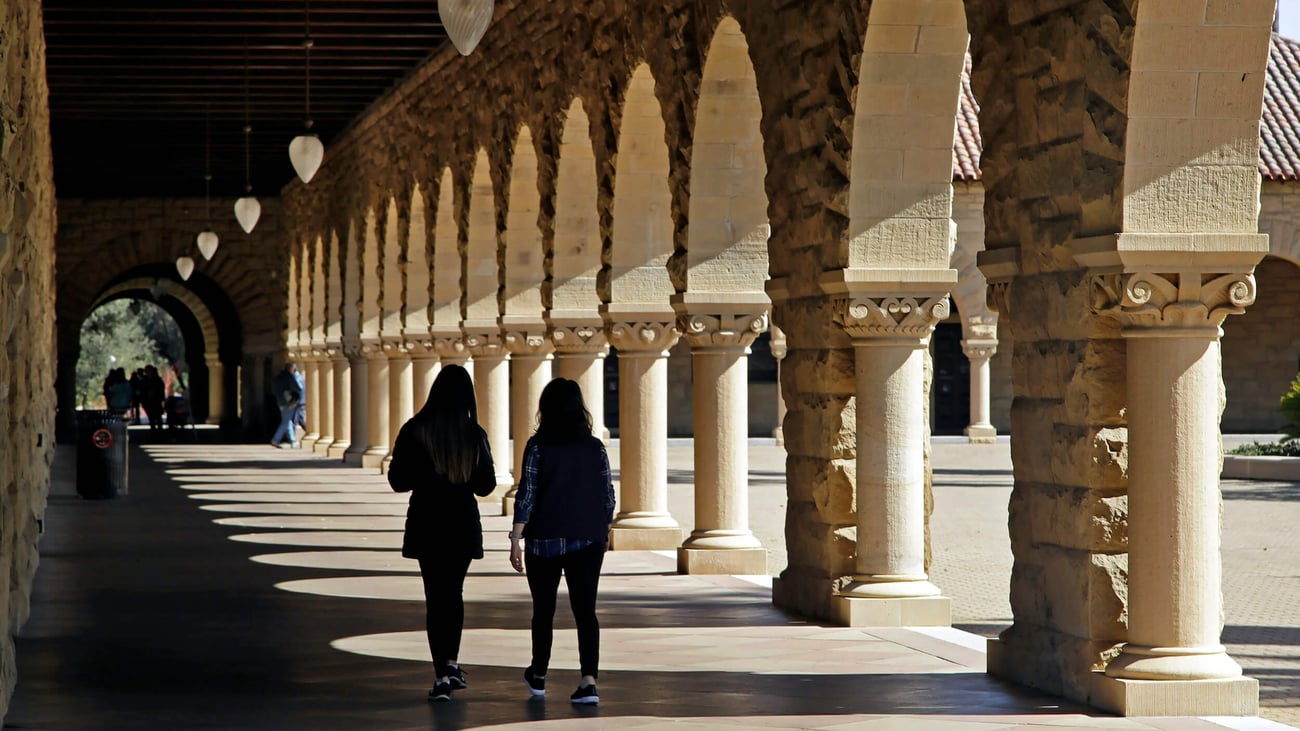
SAN JOSE, Calif. (CN) — A federal judge questioned Wednesday whether to grant The Stanford Daily newspaper and two of its unnamed international writers sweeping declaratory relief relating to possible visa revocations and other punishments due to the students’ reporting on or expressions of support for Palestine.
During a one-day bench trial, U.S. District Judge Noël Wise frequently noted her concern over the structure and procedure of the case, which led to a rare proceeding where both parties asked Wise to decide the trial based on the transcript — the testimony and underlying exhibits only — of another case, the American Association of University Professors v. Rubio, without calling any other witnesses or the plaintiffs to testify.
“This feels messy and convoluted, in some ways,” Wise, a Joe Biden appointee, said before a court recess. “And it’s a critically important issue.”
In the American Association of University Professors case, U.S. District Judge William Young, a Ronald Regan appointee, ruled in January the government acted unconstitutionally through its policy of arresting, detaining, and deporting noncitizen students and faculty who engaged in protected pro-Palestinian speech.
However, the attorneys for both parties in the case at hand Wednesday told the judge that Young’s ruling isn’t what she should look to decide the legal issues at play, and the transcript of the other case should only be used to provide details and context.
In their complaint, the plaintiffs say the Immigration and Nationality Act allows the secretary of state to deport noncitizens, without judicial review, if their speech is determined to have compromised foreign policy interests. The publication and student journalists say the provision of the act that allows this is unlawful on its face and as applied to them based on their speech related to Palestine.
Plaintiffs’ attorney Conor Fitzpatrick, a lawyer with the Foundation for Individual Rights and Expression, said the statute allows for violations of First Amendment rights of noncitizens based solely on the secretary of state’s discretion and viewpoint. The Stanford Daily and its international students are asking the court, in part, to declare all constitutionally protected speech, including but not limited to op-eds or commentary on Palestine, is actually protected.
Fitzpatrick noted Wise could rule specifically to his clients or more broadly — essentially invalidating it — as it only began to be enforced under the Trump administration through immigration actions in response lawful speech.
“Our position is anytime someone’s opinion is a ‘but, for’ cause to revoke a visa or render removal, that is unconstitutional, full stop,” said Fitzpatrick.
Assistant U.S. Attorney Kelsey Helland said the statute needed to remain in place and was tailored specifically by Congress to address issues “we cannot spell out in advance,” saying there are instances in which it is plausible that national security and foreign policy interests trump First Amendment rights.
“Congress could not have drafted this in a narrower way,” said Helland. “It covered potential bases while setting up a framework. It didn’t want to limit it at the front end,” he noted, saying the determination by the secretary of state creates a check in ’the back end’ of how the statute could be enforced while “maintaining and vindicating national security interests.”
On Jan. 16, Wise issued an order denying a motion to dismiss the case, saying the statute chilled speech and The Stanford Daily was entitled to relief, including blocking Secretary of State Marco Rubio and Homeland Security Secretary Markwayne Mullin from revoking visas or initiating deportation over protected speech. However, the 2025 Supreme Court ruling Trump v. CASA restricted the ability of federal courts to issue nationwide injunctions that completely halt the enforcement of federal policies.
Fitzpatrick pointed to two other cases to illustrate how the statute in question targets noncitizens who protest using protected speech. The government detained Columbia University graduate student graduate student Mahmoud Khalil, after he protested for Palestinian rights. His case is currently in legal limbo, after an appeals court reversed a lower court’s decision determining his arrest was unconstitutional. In another case relating to the statute, Tufts University student Rümeysa Öztürk, from Turkey, was detained and had her visa revoked after writing an op-ed critical of the school’s response to the Israel-Hamas war.
Helland said the secretary of state determines removal of noncitizens on a case-by-case basis, because protected speech includes “the nature of the speech and speaker depending on a sliding scale of rights, based on the speaker’s relationship with the U.S.”
He also said the plaintiffs’ Fifth Amendment and vagueness claims cannot stand, because it is important for the federal government “to paint with a broader brush” regarding immigration policy.
Wise appeared skeptical of the government’s position of not needing to put noncitizens on notice about what kind of speech will get them in hot water.
“So, you don’t know until someone gets prosecuted?” she asked.
After several hours of back-and-forth between Wise and both attorneys, she asked for a proposed order from each side, saying “there are some things that have left me uncertain.” She did not indicate where she currently stands on the plaintiffs’ claims. She did, however, acknowledge Fitzpatrick and Helland’s work as “excellent lawyering.”
“Both are well versed on the issues and the law,” she said. “It’s a pleasure to listen to.”
Subscribe to our free newsletters
Our weekly newsletter Closing Arguments offers the latest about ongoing trials, major litigation and rulings in courthouses around the U.S. and the world, while the monthly Under the Lights dishes the legal dirt from Hollywood, sports, Big Tech and the arts.