
 Search Articles



(CN) — When a producer asked Ashley Newhouse if she would be willing to talk about her sister’s murder for a true crime show on the Oxygen network, she was understandably reluctant. The thought of sharing something so personal and painful on a public platform made her feel vulnerable and overwhelmed.
“I was concerned about how Rachel’s story would be portrayed and whether it might retraumatize my family,” Newhouse said by email. “But ultimately, I decided to do it because I knew the importance of telling her story accurately and truthfully. It was an opportunity to bring attention to the dangers of early parole for violent criminals, something my sister’s tragic case highlights. I wanted to use the platform to advocate for other victims and prevent future tragedies.”
As a reporter who covered the case, I too was asked to talk for the cameras, and I also had reservations. Would the show over-sensationalize what was already a sensational case? How would the show affect the families of the victims? And, self-servingly, would this harm my reputation as a “serious journalist?”
I’ve actually appeared on multiple true crime shows on Oxygen, Investigation Discovery and the E! Channel. But, as I told the students in a journalism class I taught this winter, I’m always conflicted about doing them.
And it turns out I’m not the only one to speak to journalism students about this.
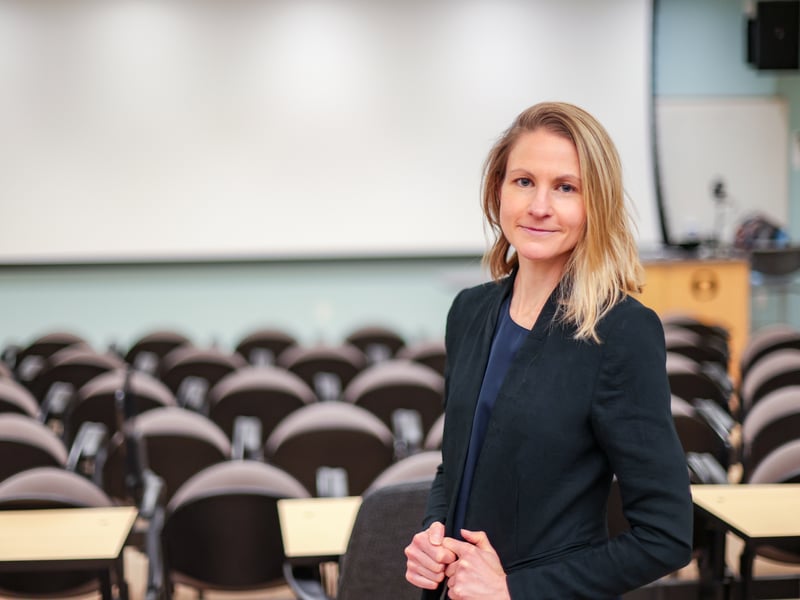
“Many of my female students, they’re fans of true crime, and they tell me about the stuff they watch,” said Whitney Phillips, a professor of digital platforms and ethics at the University of Oregon’s School of Journalism and Communication. “But most of all, it’s what their moms watch.”
While many of Phillips’ students watch true crime, her J-397 media ethics course explores why they watch them — and whether that’s a good thing.
Phillips’ account of female students watching true crime is anecdotal, but research shows that women in particular are drawn to the genre. According to a 2024YouGov survey, 61% of women and 52% of men in the United States said they watch true crime shows about murder. According to Comcast Advertising, 64% of those who watch true crime network Investigation Discovery are women, compared to 36% men.
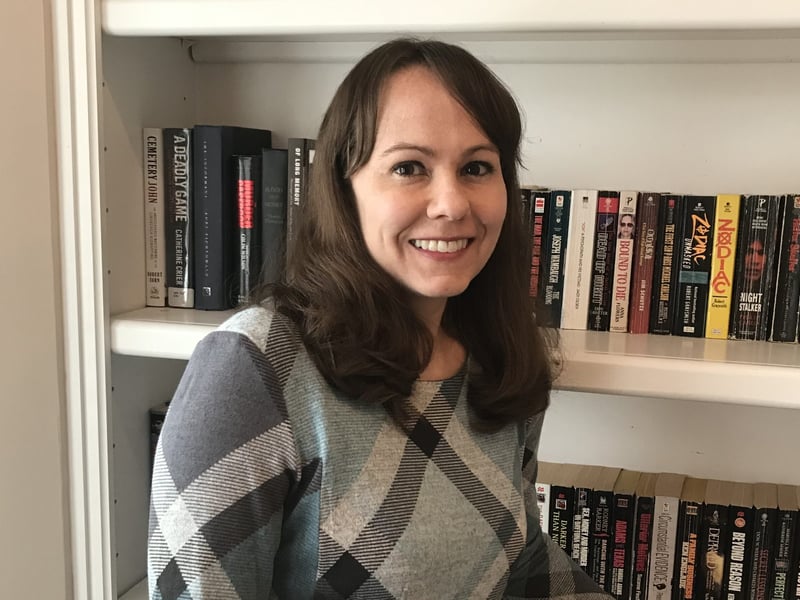
Given that men overwhelmingly tend to commit more violence, women’s interest in true crime inspired Amanda Vicary, associate professor of psychology at Illinois Wesleyan University, to research the topic. And she didn’t have to look far to find a fan.
“My mother gave me a true crime book when I was 12 — ‘The Woodchipper Murder,’” she said. “And I just became super interested in it, and I’ve been reading true crime ever since.”
Vicary wanted to explore why she, her mother and other women would be interested in true crime stories.“Why is it that women seem to be into this?” said Vicary, who has also appeared on true crime shows. “Because it’s weird, right? Why in the world are people listening to these podcasts before they go to sleep at night?”
Both Phillips and Vicary agree that the first impactful true crime story was Truman Capote’s 1966 nonfiction novel “In Cold Blood,” about the murder of a family in rural Kansas in the 1950s.
The crime was especially shocking, Phillips said, because it happened in a place not associated with violent crime — a small Midwestern town.
“Capote was sort of thinking that this is like the inversion of the American dream,” she said. “It spoke to the now-almost cliched model of ‘Things like that don’t happen in places like this.’”
While books had long been the most popular medium for true crime stories, podcasts and TV shows eventually jumped on the bandwagon. The “Serial” podcast launched a true-crime wave in that medium. In the first 10 days after Netflix posted “Tiger King: Murder, Mayhem and Madness,” 34 million unique viewers tuned in. And Investigation Discovery, which airs true crime nonstop, is available to 69 million households
“Not everyone’s going to pick up a paperback book and read it, or read a 300-page book on their Kindle,” Vicary said. “I believe there’s something innate in all of us that is drawn to this content, and now there’s a way for everyone to consume it, whether they’re readers or they listen to podcasts or they like to watch stuff on TV.”
While Vicary’s research dealt with women who read true crime books, the reasoning could easily be applied to TV shows and podcasts, she said.
Specifically, her research showed that women want to learn why people become killers — and, more importantly, how they can avoid becoming victims, whether it be of a random crime or a blind date gone horribly wrong.
“Even though the odds of it happening are extremely thin, when you have that fear it makes sense that even subconsciously you’ve be looking for ways to prevent something like that from happening to you,” she said.
For that reason, women tend to identify more with crime stories where women are victims, she said.
According to YouGov’s research, the majority of true crime viewers, 63%, said they watched the shows because it made them safety conscious. Fifty-four percent said they watch it because it improves their understanding of the criminal justice system, and 51% said it increases empathy for victims.
But there is a another, more simple reason, Phillips said.
“Clearly women watch these media in order to learn something about survival, but a lot of women watch these media also to relax,” she said.
While Phillips doesn’t judge those who watch the genre, she does suggest watching them in a thoughtful way, considering the potential ethical implications.
A focus on white female victims, she said, might suggest other victims aren’t as worthy of empathy or coverage. And some shows have offered promotional products for sale, she said, which commoditizes violent crime.
“It encourages people to flatten the worst experience of someone’s life into content,” she said.
Phillips, who has researched online trolling, said true crime chats can quickly become dark, leading to the harassment of survivors, distasteful jokes or false accusations that can defame people and interfere with police investigations.
“Our information system has grown increasingly unwieldy,” she said.
On the flip side, some podcasts and shows have been credited with helping vindicate the wrongly accused and helping law enforcement crack unsolved crimes.
“I think you can definitely do true crime ethically,” Vicary said.
For survivors who appear on the shows, true crime shows can offer an opportunity to memorialize their loved ones.
“I wanted to share Rachel’s true spirit — who she was beyond the headlines and the tragedy,” Newhouse said. “She was more than a victim; she was a beloved sister, daughter, and friend with a life full of potential.”
In 1998, Rachel Newhouse, a 20-year-old student at California Polytechnic University in the Central Coast town of San Luis Obispo, was violently abducted and murdered while walking home from a local establishment. The perpetrator, Rex Krebs, was a recently paroled serial sex offender who had served 10 years in prison. Four months after Rachel Newhouse vanished, Krebs abducted and killed Aundria Crawford, a 20-year-old Cuesta College student.
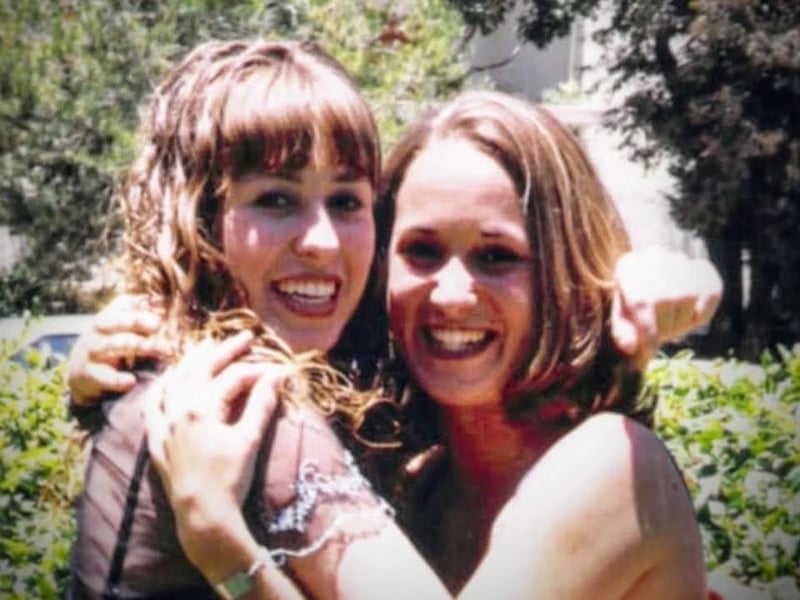
A parole agent’s intuition and initiative eventually led detectives to Krebs, who was convicted and sentenced to death in 2001.
While the case has been featured on numerous shows, Ashley Newhouse said she wants viewers to know more about her older sister — which is why she agreed to be interviewed for “Buried in the Backyard,” the first time she had spoken publicly about the case.
“Sharing her story was cathartic because it allowed me to honor her memory in a way that keeps her alive in people’s hearts, not just as a crime statistic,” she said.
While many of her memories were cut from the final edit, she found value in informing viewers about allowing predators back on the street.
“Also to warn women to be cautious wherever they go and to make wise choices always,” said Newhouse, who successfully lobbied San Luis Obispo to add more security cameras in the area where her sister was attacked. “Opening up about Rachel also connected me with others who have suffered similar losses, creating a sense of community and shared hope for justice.”
When the “Buried in the Backyard” producer contacted me, I cringed at the name of the show, which sounded exploitative. But I agreed to do it when I heard Rachel’s sister was onboard. If it was important to her, I thought, maybe I could help tell the story in a responsible, ethical manner.
After the show aired, Ashley connected with me, and I learned more about the profound impact violent crime has on victims’ survivors years after the crime.
Surprisingly, I also learned, Ashley watches true crime shows.
“For me personally, true crime is deeply connected to seeking truth and justice, especially given my sister Rachel’s story and the impact of violence on families,” she said. “Beyond that, I also love true crime because I’m drawn to mystery — I love trying to piece together the story, and there’s something satisfying when the perpetrator is finally found and justice is served. It’s not just about fascination — it’s about honoring victims and advocating for change.”
Subscribe to our free newsletters
Our weekly newsletter Closing Arguments offers the latest about ongoing trials, major litigation and rulings in courthouses around the U.S. and the world, while the monthly Under the Lights dishes the legal dirt from Hollywood, sports, Big Tech and the arts.