Search Articles


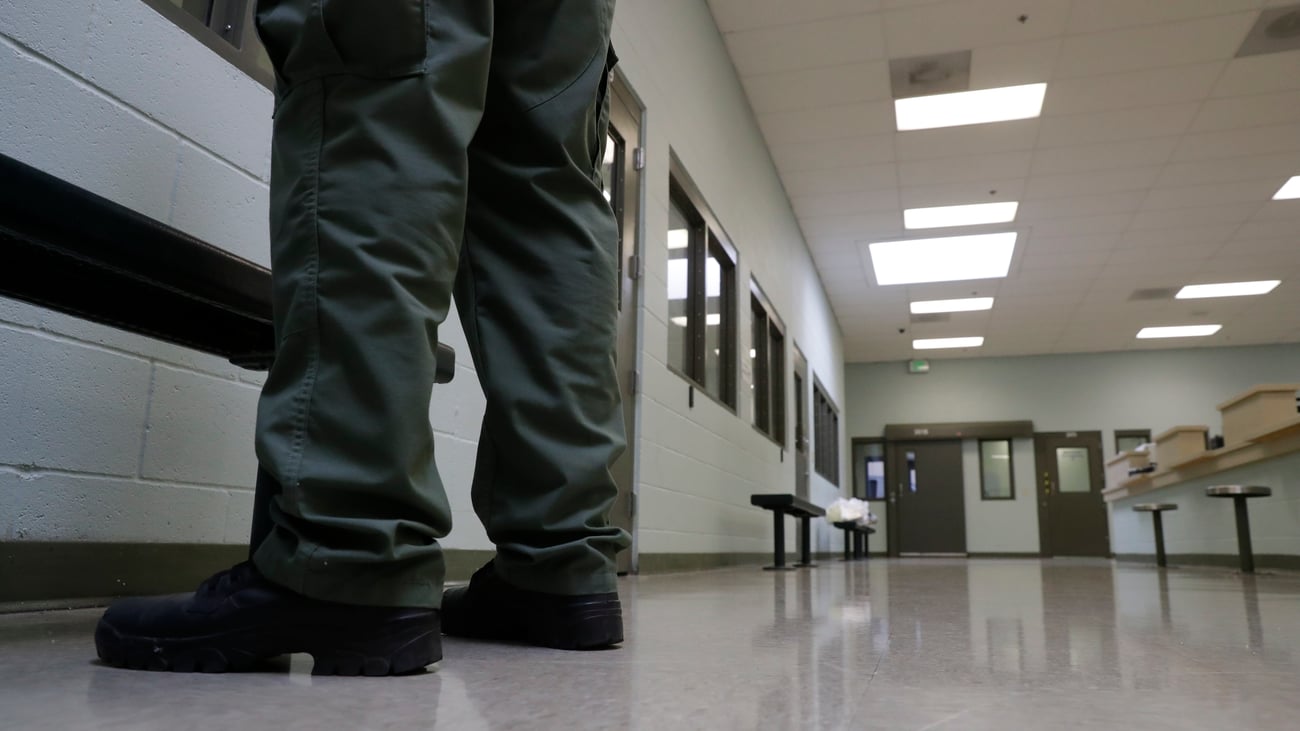
(CN) — Detainees asked a federal judge on Friday to order a privately-owned federal immigration facility in the desert town of Adelanto, California, to immediately improve conditions.
The plaintiffs in the class action say the roughly 1,500 people held at the detention center “are mistreated and denied basic human dignity.” According to the plaintiffs in their January complaint, “disease and illness are rampant, mold grows on the walls and detained individuals are denied sufficient food, clean drinking water, proper medical care and disability accommodations.”
U.S. District Judge Sunshine Sykes denied an initial request for a preliminary injunction in April, largely on procedural grounds. A plaintiffs’ attorney said the second request was modest and easier to enforce, dropping demands that the facility’s operator, GEO Group, maintain specific staffing levels.
“We’ve focused on constitutional outcomes, rather than directives,” Belinda Escobosa, an attorney with Public Counsel, told the judge. “It leaves the defendants discretion on how to achieve compliance.”
The new motion still seeks sweeping changes at the Adelanto facility, including a “functional system of healthcare,” adequate food and drinking water, “basic sanitation and access to hygiene supplies like toothbrushes,” reasonable accommodations for people with disabilities, privacy while using showers and toilets and an end to the “imposition of solitary confinement as punishment for peaceful protest.”
The federal government argues those issues are largely the responsibility of GEO Group, the publicly traded private prison company that operates the facility. The plaintiffs contend the government remains responsible for ensuring detainees are treated humanely.
“That’s the central question with respect to this case,” said Escobosa. “Once the government decides to detain people, the Constitution imposes affirmative obligations that cannot be contracted to a private contractor.”
Sykes pressed Pushkal Mishra, an attorney with the U.S. Justice Department, on the issue of responsibility.
“Once the government brings in a third party, then they can just wash their hands of constitutional violations?” she asked the attorney.
“Not at all, your honor,” Mishra said. “The government is not doing nothing. The government is doing a whole lot.” For example, he said, “The water contamination has been dealt with.” However, he was quick to add, “The government’s actions don’t rise to the level of punitive intent.”
Escobosa cited two recent cases of detainees who were denied basic medical care. In May, a woman with a major eye infection was unable to receive treatment. Another woman who dislocated her shoulder was screaming in pain. A guard told her there was nothing to be done. Those, she said, were just two examples of constitutional violations occurring daily.
“GEO cannot just torture people,” Escobosa said. “The logical ending to the defendants’ argument is, that’s not our responsibility.”
Again, Mishra insisted, “The government has done far more to make sure that it has met its constitutional obligations,” but added, “the focus of redressability has to be GEO, the operator.”
Sykes did not rule on the motion or indicate how she would rule, although she appeared increasingly dissatisfied with Mishra’s arguments.
“What is the federal government’s responsibility if a third party still doesn’t provide adequate care?” asked Sykes.
Mishra said there were “contractual levers,” and that the government had taken its rating of the Adelanto facility “down a notch.”
 Follow @hillelaron
Subscribe to our free newsletters
Our weekly newsletter Closing Arguments offers the latest about ongoing trials, major litigation and rulings in courthouses around the U.S. and the world, while the monthly Under the Lights dishes the legal dirt from Hollywood, sports, Big Tech and the arts.