Search Articles


ATLANTA (CN) — An 11th Circuit panel on Friday considered whether the Sunshine State can resume its constitutional challenge to the federal government’s use of private accreditation agencies in approving public colleges and universities as eligible institutions for financial aid.
Florida officials accuse accrediting agencies of “gatekeeping” billions of dollars in federal funding by independently setting education standards. They argue the accreditors are unlawfully exercising government power by determining which institutions qualify for financial aid.
Arguing on Florida’s behalf, Chief Deputy Solicitor General Nathan Forrester urged the Atlanta-based appeals court to reverse the state’s dismissed lawsuit challenging the Higher Education Act, which requires schools to be accredited for students to receive federal aid. Students may receive federal financial assistance only if they attend an accredited institution.
The federal government argues Congress may delegate authority to private groups to develop educational standards. Justice Department attorney Steven Hazel said Friday that Congress “did not want to be in the business of federalizing educational quality” but still needed a way to ensure taxpayer dollars go to “quality institutions.”
But Forrester said the law gives accreditors “immense” authority with little federal oversight and argued Congress cannot delegate such power to private entities.
“If people outside government could wield the government’s power, then the government’s promised accountability to the people would be an illusion,” Forrester said, quoting the Fifth Circuit’s 2022 ruling in National Horsemen’s Benevolent and Protective Assn. v. Black. He argued the arrangement violates several clauses of the U.S. Constitution, including the spending clause, appointments clause and private nondelegation doctrine.
“The Constitution is at times inconvenient,” Forrester said. “It requires an accountability mechanism for the exercise of sovereign authority and that accountability mechanism is simply absent here.”
The state says accreditors should be federal officers appointed by the president and confirmed by the Senate.
Hazel urged the panel to uphold the lower court’s decision dismissing the case and cautioned against the possible consequences of another outcome.
“A ruling in Florida’s favor might well force Congress to choose between not having quality standards for this money at all and having to federalize quality,” Hazel said. “Neither seem like particularly good options for Congress.”
U.S. District Judge Jacqueline Becerra deemed the federal government’s reliance on private accreditors constitutional in deciding to dismiss the case.
“The state’s argument… collapses what the private agencies do (accredit postsecondary institutions) with what the federal government does with that information (use it along with various other factors to make decisions as to what institutions are eligible),” Becerra ruled. “The two functions are not the same.”
The decision was a blow to Florida Governor Ron DeSantis’s campaign against college accreditors.
DeSantis signed SB 7044 in 2022, requiring Florida’s 40 public colleges and universities to change accreditors every 10 years. Schools may choose from among 61 recognized accrediting agencies.
The law’s passage came after tensions between the state and the Southern Association of Colleges and Schools Commission on Colleges, which accredits all of Florida’s public institutions.
Florida says the agency threatened Florida State University’s accreditation after the school considered naming the state’s education commissioner as university president. The accreditor also investigated the University of Florida from 2021 to 2022 after it barred three professors from testifying against the state in a voting rights case.
The accreditor ultimately found the university had not exerted undue political influence.
Still, DeSantis has accused accrediting agencies of holding colleges and universities hostage. He said Florida’s lawsuit seeks to “strip private, unaccountable accreditors of their authority to stand in the way of Florida’s higher education reforms.”
U.S. Circuit Judge Nancy Abudu questioned on Friday whether the court should strike down an entire law just “because it’s inconvenient.”
“Florida doesn’t have to take the money right? There are institutions that have decided because we want to have more autonomy over our program… we’re not going to accept any federal funds. Organizations do that, schools do that,” Abudu, an appointee of Joe Biden, said.
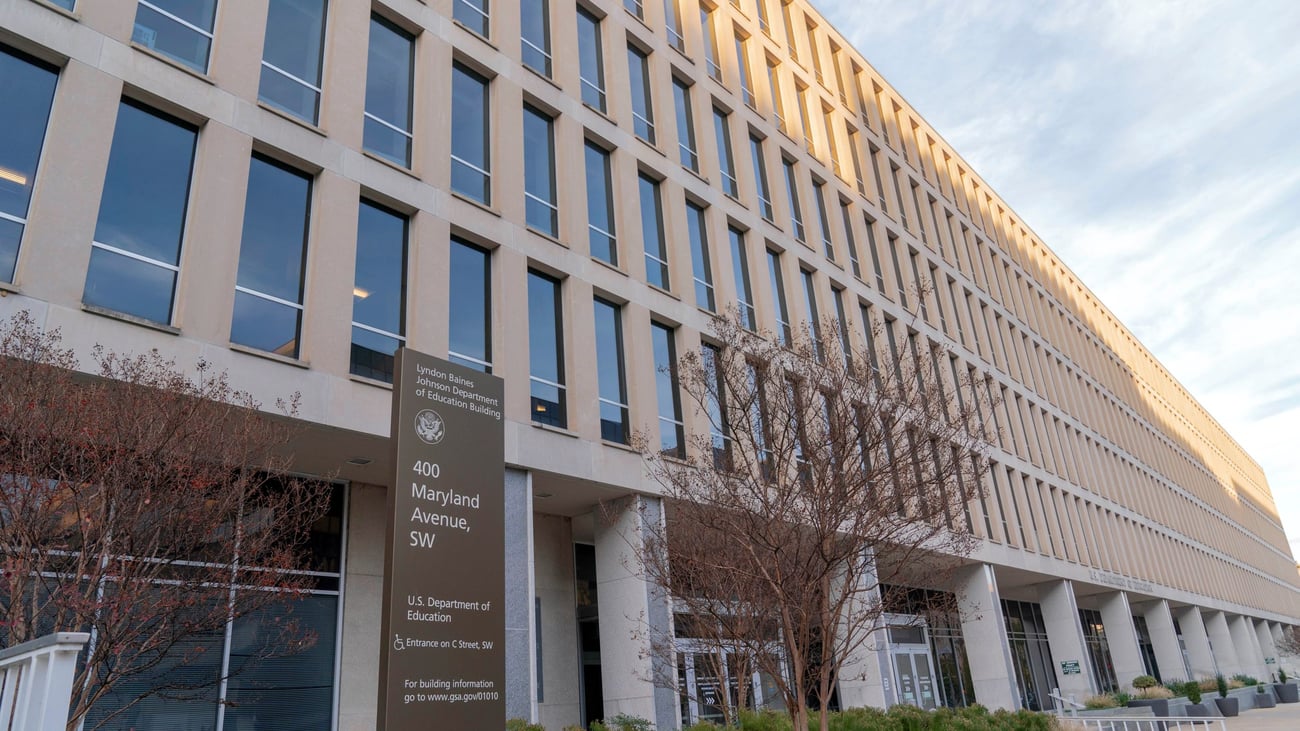
The judge went on to point out that the state can appeal accreditation decisions to the U.S. Department of Education.
Chief U.S. Circuit Judge William Pryor also seemed swayed by some of the federal government’s arguments, agreeing that accreditors do not determine a university’s eligibility for funds.
“They just decide whether you can hold yourself out as satisfying certain kinds of standards,” the George W. Bush appointee said.
The panel was rounded out by U.S. Circuit Judge Andrew Brasher, an appointee of Donald Trump. The judges did not indicate when they will issue a decision.
 Follow @KaylaGoggin_CNS
Subscribe to our free newsletters
Our weekly newsletter Closing Arguments offers the latest about ongoing trials, major litigation and rulings in courthouses around the U.S. and the world, while the monthly Under the Lights dishes the legal dirt from Hollywood, sports, Big Tech and the arts.
Additional Reads
 No more off-roading at Oceano Dunes April 10, 2026