
 Search Articles


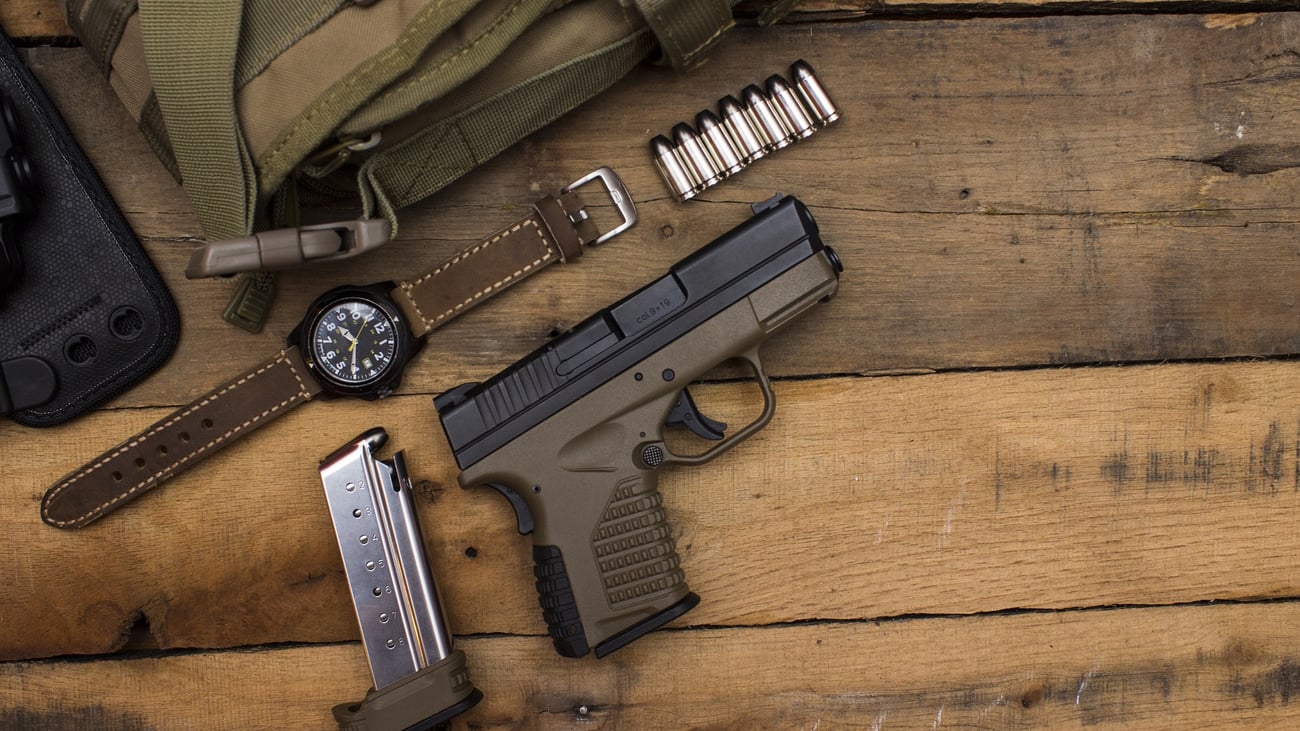
WEST PALM BEACH, Fla. (CN) — A Florida appeals court panel on Wednesday ruled the state’s ban on 18- to 20-year-olds carrying concealed firearms violates the Second Amendment.
In the 18-page decision on a law Florida’s attorney general vowed not to defend, the appellate court found restricting the right to self-defense by age violates “the plain text of the Constitution.”
“Restricting 18- to 20-year-olds — members of the same ‘political community’ as other law-abiding adults — from rights to self-defense would make the Second Amendment a ‘second-class’ right,” Judge Spencer D. Levine of the Fourth District Court of Appeals wrote.
Levine was joined in the decision by Chief Judge Jeffrey T. Kuntz and Judge Shannon K. Shaw.
The case stems from the 2024 arrest of Jaylen Eubanks, who was 18 at the time, for improper exhibition of a firearm and carrying a concealed firearm. Eubanks attempted to dismiss the concealed carry charge, but the trial court ruled the age restrictions — passed by the Florida Legislature in 2023 in the wake of the Parkland mass school shooting — were constitutional.
Eubanks pled no contest to the charges and reserved the right to appeal.
In February, Florida Attorney General James Uthmeier declined to defend the law. In response, the Broward County State Attorney’s Office asked the appellate court to allow an amicus brief to argue for upholding the law.
“Given the impact of gun crimes in the state of Florida — including the Feb. 14, 2018, mass shooting at Marjory Stoneman Douglas High School in Parkland in our community, which resulted in the tragic murders of 17 children and adults and severe injuries to 17 individuals who survived — we respectfully disagree with the position taken by the Office of the Attorney General,” Broward State Attorney Harold F. Pryor said in a statement at the time.
The appellate decision cited a handful of U.S. Supreme Court and federal court decisions, including the landmark U.S. Supreme Court case N.Y. State Rifle & Pistol Association v. Bruen and a 2024 federal appeals court decision that struck down Minnesota’s age restrictions on concealed carry.
“Eighteen- to 20-year-olds can defend the country without restriction but can only utilize their Second Amendment right to self-defense with severe restrictions,” wrote Levine. “This burden on law-abiding 18- to 20-year-olds’ right to public carry — and specifically here concealed carry — which is not applicable to any other adults, is a burden that is facially unconstitutional as to 18- to 20-year-olds.”
Thomas Cottone, the public defender for Eubanks, said the ruling was “even better than I had hoped.”
“This will help in other motions I will file in other gun-related cases,” said Cottone, now in private practice. “There is some language in this order that will help with that.”
In particular, Cottone said he is working on the constitutional defense of convictions of firearm possession by a felon in which the underlying charge is nonviolent.
Florida’s attorney general also praised the court’s decision.
“In another win for the unalienable rights of Floridians, the 4th DCA agreed with our position that Florida’s law banning adults under 21 from conceal carrying a firearm is unconstitutional,” Uthmeier wrote on X. “We will not seek further review and will work with the Florida Department of Agriculture and Consumer Services to implement the court’s order.”
Since his appointment in 2025, Uthmeier has sought to undermine gun laws previously championed by the state.
He spoke out against the state’s decades-old ban on the open carry of firearms until an appeals court struck down the law last year. The attorney general also came to a judgment agreement on a lawsuit brought by the National Rifle Association over the state’s three-day mandatory waiting period and sued the city of Jacksonville this year over a municipal registry of privately owned firearms.
 Follow @alexbpickett
Subscribe to our free newsletters
Our weekly newsletter Closing Arguments offers the latest about ongoing trials, major litigation and rulings in courthouses around the U.S. and the world, while the monthly Under the Lights dishes the legal dirt from Hollywood, sports, Big Tech and the arts.
Additional Reads


 Social Security theft convictions vacated June 17, 2026