
 Search Articles


BOSTON (CN) — In a case pitting contemporary surveillance technology against constitutional rights, the First Circuit offered little help Tuesday to criminal defendants who complained Massachusetts State Police had a policy of secretly recording conversations without a warrant and not turning over the evidence at trial.
“You should win,” U.S. Circuit Judge Kermit Lipez told the agency’s lawyer, Jeffrey Collins of Morgan Brown in Boston, at oral argument.
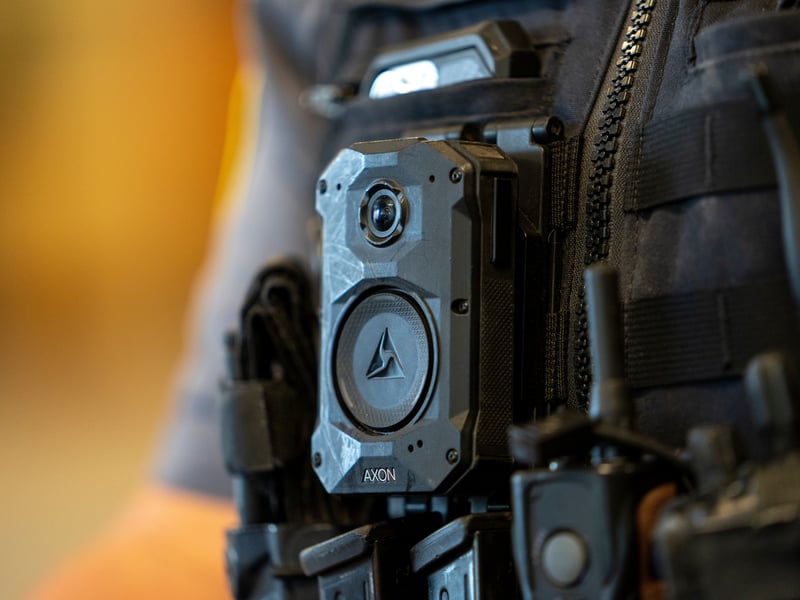
The case involved a Motorola product called “Mobile Body Bug” that lets police secretly record conversations with suspects, which Massachusetts State Police officers used in more than 180 cases without turning the information over to prosecutors or defendants. Four of the defendants brought a class action against the police, claiming the recordings violated their rights to due process and a fair trial as well as a state wiretap law.
“The true depth and scope of this has yet to be discovered,” the plaintiffs’ lawyer, Erik Bartenhagen, told the judges. “This was egregious conduct, and even after it was revealed they didn’t take responsibility or make changes.”
Bartenhagen accused the agency of a “pattern of obfuscation” including not responding to subpoenas.
He wanted an injunction against the practice. But all four of his clients had their charges dismissed, so it wasn’t clear that they had standing to sue because they couldn’t show any ongoing harm.
“Tell me what injury these people are suffering going forward,” demanded U.S. Circuit Judge Seth Aframe, a Joe Biden appointee.
Bartenhagen argued the police were entrapping people by asking them to buy drugs and then arresting them for agreeing, and that his clients could be entrapped again.
“I don’t understand that,” Aframe said. “We’re all subject to entrapment. That would be a very weird injunction, don’t engage in entrapment.”
He added: “It’s too speculative. What distinguishes your plaintiffs from any other person in the world?”
Bartenhagen appeared to claim anybody who could possibly be arrested would have standing to sue, but Lipez, a Bill Clinton appointee, said that approach “seems to turn the standing requirement on its head.”
“There’s a lot of law that says you can’t base an injury-in-fact claim on the possibility that you’ll engage in future criminal conduct,” Lipez added, noting there is “a pretty good policy argument” for not just assuming that people will break the law.
Collins picked up on this. “It’s all past tense,” he told the judges. “All the cases were dismissed. There’s no prospective injunctive relief to be had. There’s no ongoing violation of federal law to enjoin.”
U.S. District Judge Margaret Guzman, a Biden appointee, had refused to dismiss the case a year ago. But “Judge Guzman is trying to extend the Constitution in a way that hasn’t been done before,” Aframe observed.
“I’m not aware of that as a constitutional principle,” he added. “She’s taking a broader view of the Constitution than currently exists.”
Collins, who had requested time for rebuttal argument at the end, decided to waive it, apparently concluding that he was clearly winning and it was best to quit while he was ahead.
U.S. Circuit Judge Jeffrey Howard, a George W. Bush appointee, rounded out the panel. They did not indicate when they would rule.
Subscribe to our free newsletters
Our weekly newsletter Closing Arguments offers the latest about ongoing trials, major litigation and rulings in courthouses around the U.S. and the world, while the monthly Under the Lights dishes the legal dirt from Hollywood, sports, Big Tech and the arts.