
 Search Articles


(CN) — Fossil fuel investors claim they were handed shares in a new oil and gas company with $47 million of key assets, only for those same assets to be written down to zero.
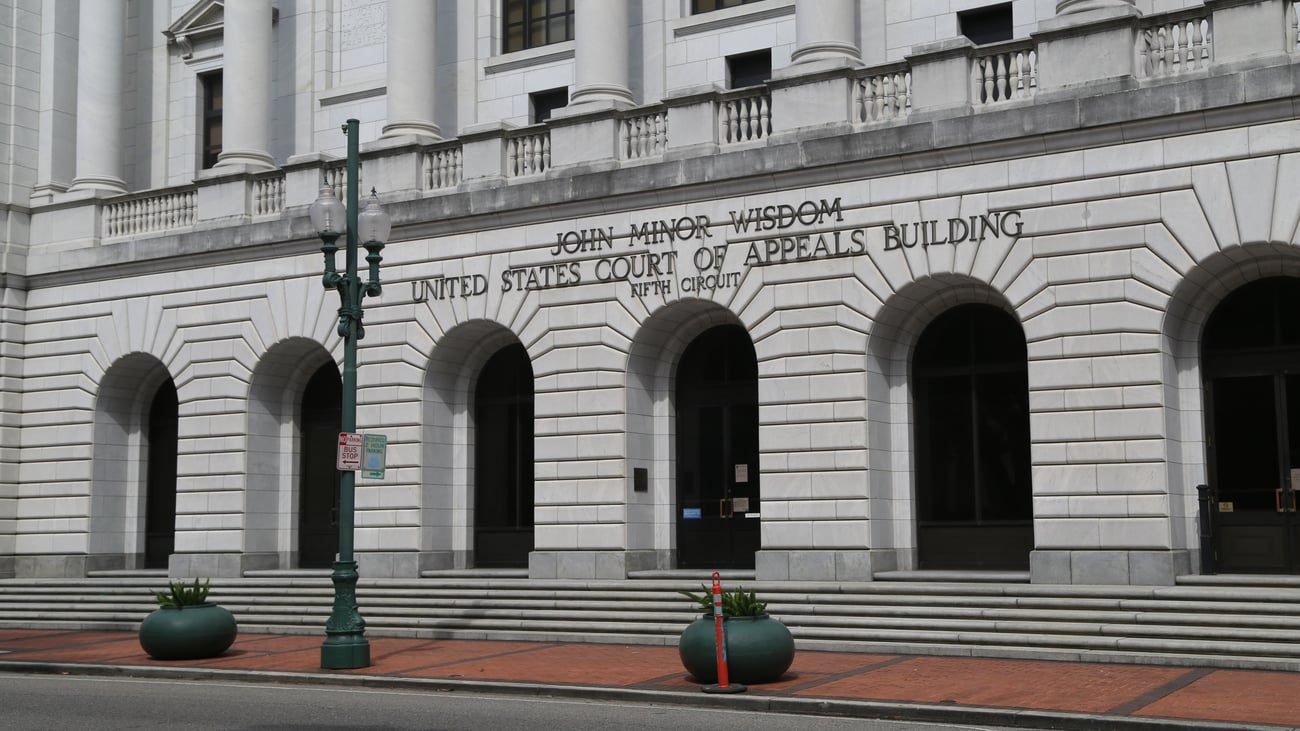
A three-judge panel for the Fifth Circuit heard arguments Monday afternoon on whether those shareholders ever “paid value” for the stock in the first place, a question that could determine whether they can sue under the 1933 Securities Act.
At issue is whether shareholders who received Next Bridge stock in a December 2022 distribution from Meta Materials “purchased” those shares for “value,” a threshold requirement.
A ruling in favor of the investors could expand the reach of liability in spin-off transactions, potentially exposing companies and executives to strict liability claims whenever shareholders receive new shares in a subsidiary. On the other hand, a ruling for Next Bridge would reinforce limits on who qualifies as a “purchaser” in corporate reorganizations.
Lead plaintiffs Todd Targgart, Mohammed Limon and Steven Martinez say Next Bridge’s registration statement falsely valued certain oil and gas assets when they were actually worthless. U.S. District Judge Mark Timothy Pittman, a Donald Trump appointee, dismissed the case at the pleading stage, ruling the automatic spin-off exchange involved no “value” given by shareholders and therefore no statutory standing.
Arguing for the investors, attorney Adam M. Apton told the panel the lower court erred.
“The shares acquired by my clients were received in exchange for shares held in a previous company,” Apton said. “They were required to tender their shares in order to receive the new shares in Next Bridge Hydrocarbons. Without that tender, there would be no case here.”
Apton repeatedly invoked court precedent and SEC Rule 145, which treats certain securities-for-securities exchanges as “sales.” He argued that multiple appellate decisions support treating the exchange as a purchase for value.
U.S. Circuit Judge Kurt D. Engelhardt pressed Apton on the mechanics of the transaction, asking specifically where the complaint claimed that preferred stock was canceled and shareholders were “dispossessed of their interests.” The Trump appointee pointed to the registration statement itself, which he said made clear the preferred shares were to be canceled. He also noted language describing the exchange as a “sale” for tax purposes.
The panel appeared particularly interested in whether the spin-off was truly an arm’s-length exchange or merely a bookkeeping change. Engelhardt asked: “Isn’t the point of the plaintiffs’ claim that a swap occurred? Isn’t that an exchange of value?”
Attorney LaDawn H. Nandrasy, arguing for the Next Bridge defendants, responded that the pool of underlying assets never changed. The oil and gas assets had already been transferred to Next Bridge months earlier, in June 2022. The spin-off, she said, was an automatic distribution under the terms of the preferred stock.
“Before the spin-off and after the spin-off, the plaintiffs held the exact same interest in this exact same pool of assets,” Nandrasy emphasized. She further argued there was no fundamental change in the shareholders’ proportionate ownership or bundle of rights, the key test for whether “value” was given.
U.S. Circuit Judge Carl E. Stewart described the case as involving a “fairly complex commercial set of dealings.” The Bill Clinton appointee voiced concern about the procedural posture, noting the case was dismissed on a Rule 12(b)(6) motion and wondering whether the lower court had jumped too quickly to the merits.
“This is dismissed at the 12(b) stage,” Stewart observed. “I’m one of those curmudgeons that, you know, when I see a 12(b) jettison, I’m like, you know, okay, take a good look.”
He asked Nandrasy whether the plaintiffs might be entitled to further factual development. Nandrasy replied that the critical facts, that shareholders’ proportionate interest in the identical pool of assets remained unchanged, “will never change” and are clear from the pleadings themselves.
The panel separately considered the claims against defendant John Brda, a former officer of a predecessor company who was never a director or officer of Next Bridge. Attorney Ryan Lantry argued Brda could not be a “statutory seller” because his social media posts did not constitute direct solicitations tied to the registration statement.
On rebuttal, Apton countered that modern electronic communications can qualify as promotional activity sufficient for seller liability, citing recent decisions from the Ninth and 11th Circuits.
The panel also included U.S. Circuit Judge Dana M. Douglas, an appointee of Joe Biden. The judges took the case under submission and said they would issue a decision as soon as possible.
 Follow @gabetynes
Subscribe to our free newsletters
Our weekly newsletter Closing Arguments offers the latest about ongoing trials, major litigation and rulings in courthouses around the U.S. and the world, while the monthly Under the Lights dishes the legal dirt from Hollywood, sports, Big Tech and the arts.
Additional Reads

 Fourth Circuit affirms SafeSport's role as Olympic watchdog April 27, 2026