
 Search Articles


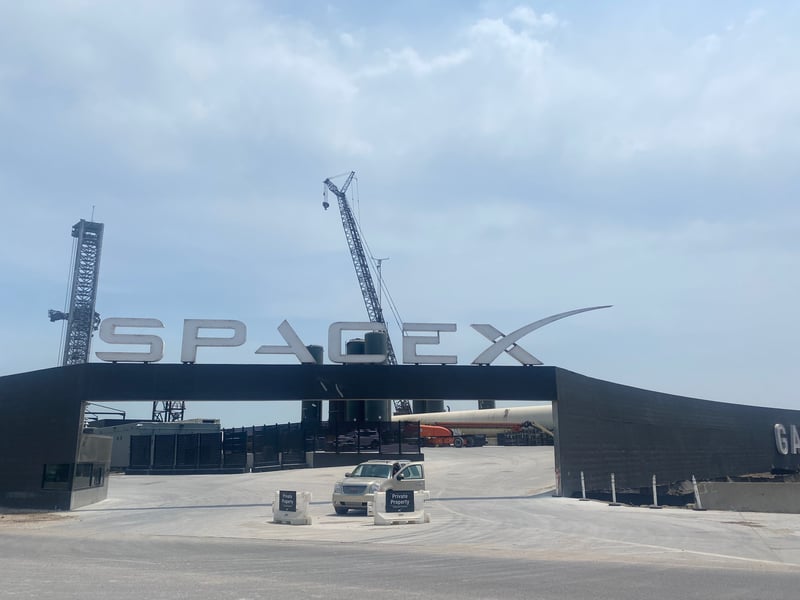
Texas (CN) — The U.S. Fish and Wildlife Service has proposed a land swap with SpaceX for hundreds of acres in two south Texas wildlife preserves.
Space Exploration Technologies Corp., one of the largest private companies in the space industry, has been making large land grabs in Texas for several years, with frequent pushback from local environmental activists, residents and Indigenous tribes. Since the company started work in the region in 2014, they have faced several lawsuits, including a major lawsuit in 2024 over its deal with the Texas Parks and Wildlife Department to acquire 43 acres of land in Boca Chica State Park for its new Starbase city project.
The proposed draft deal, announced Tuesday by the U.S. Fish and Wildlife Service, would see the government divest two parcels of land on the north bank of the Rio Grande, 712 acres in all, over to SpaceX. In exchange, the federal government would acquire one large parcel north of Laguna Larga and smaller parcels due south of Starbase, 692 acres in total, from SpaceX.
“The service’s purpose for the proposed action is to consolidate lands of the National Wildlife Refuge System in Cameron County, Texas, across a highly fragmented landscape of parcel ownership. The need for the proposed action is to reduce land use conflicts that impede the service’s mission to conserve species’ habitats, improve habitat protection, consolidate ownership, and simplify management of refuge lands as established through the National Wildlife Refuge System Administration Act (as amended),” the service writes in the “Purpose and Need” section of the draft deal.
But this deal has already faced significant pushback from environmentalist organizations that doubt the 1-for-1 land swap deal is fair for the government or for the animal species in the refuge.
“This bogus land exchange is a sweetheart deal for Elon Musk that will push critically endangered animals like ocelots and jaguarundi closer to the edge,” Ashley C. Nunes, public lands policy specialist at the Center for Biological Diversity, said in a statement to Courthouse News. “SpaceX has been acquiring land for its ‘Starbase’ industrial city for more than a decade now, devastating nearby wildlife refuges in the process. It’s deeply disturbing that the hundreds of earth-bound species who rely on these public lands are becoming collateral damage in the corporate space race.”
The Lower Rio Grande Valley National Wildlife Refuge, established in 1946, covers the final 275 miles of the Rio Grande river’s approach into the Gulf of Mexico. Various public-private partnerships across the 100,000 acres of the preserve serve to protect the many fish species that call the river valley home.
The nearby Laguna Atascosa National Wildlife Refuge, established in 1979, serves as a major nesting ground for hundreds of bird species and one of the last homes of dozens of mammal and reptile species, including the heavily endangered ocelot. The 110,000 acres of the coastal land preserve offer locals access to nature trails and some deer hunting opportunities while protecting the area’s biodiversity.
On page 11 of the draft, the government writes, “SpaceX and USFWS collaborated to develop a system for evaluating habitat quality within the Project Area using Biological Importance Scores (BIS) (Figure 2-2). BIS values were assigned to each parcel based on three criteria: habitat quality, refuge connectivity, and critical habitat, each scored on a scale of 1 to 5. The specific factors and scoring methodology are described in Table 2-1. Using this approach, the lands proposed for divestiture were classified as poor (497 acres) and medium quality (215 acres), while the lands proposed for acquisition were classified as high quality (692 acres)."
The two parcels SpaceX would get in the deal come from the center of the Rio Grande Valley Refuge south of State Highway 4, which is the main land route into its new Starbase city incorporated in 2025. As noted above, the BIS system jointly developed by SpaceX and the government determined these larger parcels to be “poor” or “medium” quality.
The larger parcel the federal government would receive from SpaceX falls under the Laguna Atascosa refuge, in an area known as Laguna Heights, while the rest of the smaller parcels are near Starbase above the northeastern edge of the Rio Grande Valley. Those are the parcels that the collaboratively developed BIS system determined were “high quality” habitats.
In a statement to Courthouse News, the service said, “The U.S. Fish and Wildlife Service has proposed this action to help create a more resilient landscape that, over the long term, provides more durable protection to natural resources, and aligns with the administration’s goals of strengthening American innovation, infrastructure, and economic competitiveness. An Environmental Assessment is an important step that discloses the environmental effects and helps determine next steps. The Service appreciates public input, which will help refine the proposal and inform our final decision.”
SpaceX has not yet provided comment to Courthouse News.
The U.S. Fish and Wildlife Service has a public comment period for the deal open until March 31.
Subscribe to our free newsletters
Our weekly newsletter Closing Arguments offers the latest about ongoing trials, major litigation and rulings in courthouses around the U.S. and the world, while the monthly Under the Lights dishes the legal dirt from Hollywood, sports, Big Tech and the arts.