
 Search Articles


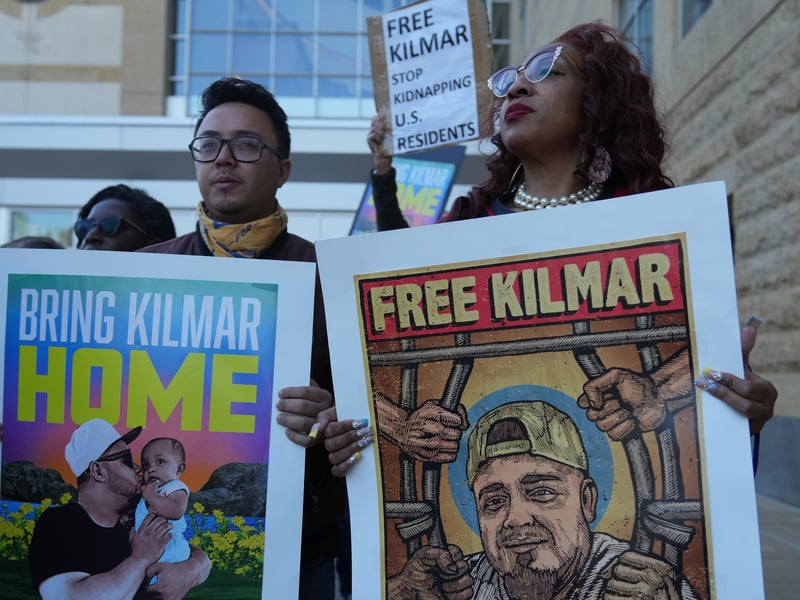
GREENBELT, Md. (CN) — The Justice Department walked back a plan to deport Kilmar Ábrego García to Liberia as soon as Oct. 31 at a hearing before U.S. District Judge Paula Xinis Monday, after a reminder that such a removal would violate her court order blocking the Maryland man’s removal.
Xinis scheduled Monday’s hearing to address the government’s notice filed late Friday night stating it had selected Liberia as the fourth African country it would try to deport Ábrego García to after he was wrongfully deported to El Salvador in March.
“Federal defendants have received diplomatic assurances regarding the treatment of third-country individuals removed to Liberia from the United States and are making the final necessary arrangements for petitioner’s arrival,” the Justice Department said in the Friday filing. “Defendants expect to be able to effectuate removal as soon as Oct. 31.”
The Barack Obama appointed judge appeared perplexed by the designation, as Ábrego García has repeatedly listed Costa Rica as a destination he would not challenge as he does not have the same fear of persecution that he’s stated regarding El Salvador and the Justice Department’s three prior African destinations.
Further, U.S. District Judge Waverly Crenshaw in the Middle District of Tennessee, the Obama appointee presiding over Ábrego García’s criminal case brought after he was returned from El Salvador in June, has scheduled an evidentiary hearing Nov. 4.
The evidentiary hearing, Xinis noted, is meant to address pretrial motions in preparation for a looming January trial over Ábrego García’s immigration-related human trafficking charges.
“You can’t have a trial if there’s no defendant,” Xinis said, finding it surprising the government had apparently not considered that fact, or had merely ignored it in favor of quickly deporting Ábrego García.
Justice Department attorney Drew Ensign acknowledged that removing Ábrego García to Liberia on Oct. 31 would violate Xinis’ injunction barring his removal from the continental United States and stated the government would continue to abide by it.
Justice Department officials previously listed Uganda, Eswatini and Ghana as potential destinations, based on apparent assurances from the nations that any immigrant sent there would not be subject to persecution while there and will not be handed over to their home country if they have a reasonable fear of persecution there.
Ghana’s foreign minister Sam Okudzeto Ablawka rejected the idea that Ábrego García could be deported there, stating on Oct. 10 that the nation made clear to the U.S. government that Ghana would only accept West African migrants, “purely on the grounds of African solidarity and humanitarian principles.”
Liberia announced Saturday that it would accept Ábrego García “on a strictly humanitarian and temporary basis, following a formal request from the government of the United States,” its government said in a statement.
In his response, Ábrego García’s attorney, Jonathan Cooper of Quinn Emanuel, slammed the Liberia designation as an unrealistic removal destination and another effort to punish Ábrego García rather than abide by his request to be removed to Costa Rica.
“Simply put, the statute creates an order of operations that allows the government to lawfully remove petitioner only to Costa Rica,” Cooper said. “If it is not removing him there, then it cannot lawfully remove him at all.”
Cooper said he and his colleagues have not received any indications or evidence from the government that it has made any effort to effectuate removal to Costa Rica, the only thing it had provided was Friday’s notice of Liberia’s designation.
“This confirms that another country designation does not demonstrate good faith efforts to effectuate removal or any realistic prospect thereof,” Cooper wrote.
As the hearing began, Simon Sandoval-Moshenberg, Ábrego García’s attorney of Murray Osorio, informed Xinis that U.S. Citizenship and Immigration Services officials were about to conduct a “credible fear interview” with his client regarding the Liberia designation.
Xinis quickly instructed Ensign to send word to USCIS that the interview cannot occur while Ábrego García’s attorneys were tied up in the proceeding, and to either delay the interview or the hearing.
She called the questionable timing “completely unacceptable” and “not fair play,” expressing frustration with the Justice Department and a lack of faith that the interview would be moved without a clear confirmation from Ensign.
Xinis ordered the parties to file a joint status update to determine further proceedings in the case, noting that she has yet to address Ábrego García’s claims that his due process rights have been violated throughout his ordeal.
 Follow @Ryan_Knappy
Subscribe to our free newsletters
Our weekly newsletter Closing Arguments offers the latest about ongoing trials, major litigation and rulings in courthouses around the U.S. and the world, while the monthly Under the Lights dishes the legal dirt from Hollywood, sports, Big Tech and the arts.