Search Articles



CHICAGO (CN) — Nearly a century and a half after millions flocked to Chicago’s Jackson Park for the World’s Fair, crowds swarmed the park’s marshy mainland Friday afternoon in celebration of a new presidential library.
After years of delays in fundraising and construction, former president Barack Obama officially opened his presidential library and museum to the public Juneteenth, although its opening ceremony was held the day before at the John Lewis Plaza.
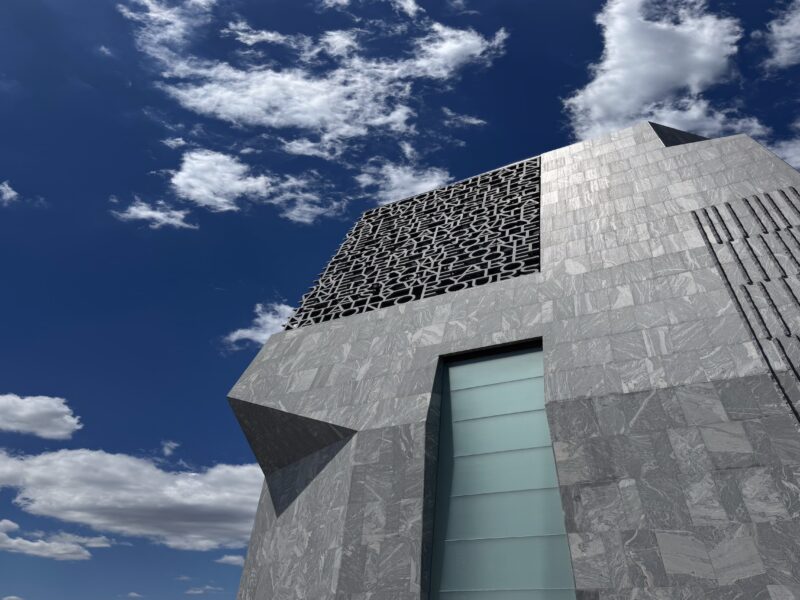
The civil rights icon’s namesake is the nexus of the Barack Obama Presidential Center, located at the intersection of Stony Island Avenue and 60th Street.
The former president maintained in his speech at Thursday’s opening ceremony that his presidential center was about “find[ing] a way to turn towards each other again, not further away.”
“We wanted it to be a vibrant, living, celebration of community, where we can learn together and share the joys of art and music and sport and play, because it’s in those moments that will remind them of our common humanity and strengthen the bonds of trust that not only make our lives richer, but make our democracy stronger,” the former president said at his speech.
The focus on coming together was the perspective many brought to the center’s first day of operation, including Kay Jernigan, who took a bus with 55 other people from Mississippi to see the new presidential center. She said only a few people from her group were actually able to get tickets to go inside of the museum because tickets sold out.
Tickets to the Barack Obama Presidential Center are sold out until November 30, but when they do become available again the general admission cost is $30 for adults, and $26 for adults who are Illinois residents.
Jernigan, a Broadview native, maintained that wasn’t a huge problem because the facility is nestled in 19.3 acres of the historic Jackson Park, which the Obama foundation further developed for the center. The museum itself is ticketed, but the space also features a public library, a playground, a community garden and an indoor basketball court.
She said she appreciated how the center is built into the already existing Jackson Park, but expressed frustration over how quickly the tickets sold out online and the line ramped up outside the center Friday morning. Jenigan noted that the crowds were more patient because it was Juneteenth, but joked that when she comes back in the fall, she won’t be as patient.
Aside from visitors, people who worked on the center’s development reiterated that its ethos was people power.
Catherine Hoffman, a producer who worked on a films shown in museum, said they focused on many of the former president’s policy accomplishments and the everyday Americans who inspired him.
Hoffman, a producer with Digifé, a Black-owned Chicago production company, said the focus on everyday people is evident not only from the films, but museum itself.
“Because the museum, it doesn’t start with the birth of Barack Obama. It starts with the birth of the nation, and it starts with the Constitution and it’s locked in contradictions, and then the museum moves the stories of all the people,” Hoffman said. “Basically, all the people who made sure that we the people meant all the people.”
Nerima Wako and Tessza Udvarhelyi, who both traveled to speak at a panel on global democracy at the presidential center, reiterated Hoffman’s characterization of the museum.
Wako, who traveled to Chicago from Nairobi, Kenya, said it was an emotional experience seeing so many people come together for the opening on Juneteenth. She said it sort of felt like she was home in Africa as she noticed a woman walking through Jackson Park carrying a Kenyan kiondo basket.
“It was a breath of fresh air for me,” she told Courthouse News, speaking about the center and it’s opening ceremony the day prior. “Just to see people as people, not ‘oh I’m a former leader’, and just that vulnerability for me is what I really liked from both of [Barack and Michelle Obama’s] speeches.”
Hungarian Deputy Mayor Udvarhelyi emphasized Wako’s perspective, but noted that she was resistant to give the facility her full approval after she heard about some neighborhood resistance to the development from a friend of hers who lived in the area.
“Apparently they have grown to like it,” Udvarhely said. “I love that it’s a public space. I mean, it’s full of public services so it’s basically not a private, exclusive thing. We went to the playground, which is amazing.”
While a popular attraction at the museum will almost assuredly be the gallery of the former first lady’s dresses, Udvarhely said she’s hopeful that the museum might make people fall in love with politics and the democratic process again.
Aside from the Obamas, Thursday’s opening ceremony featured famed figures ranging from celebrities like Oprah Winfrey and Tom Hanks — with musical performances from The Roots, Bruce Springsteen, Stevie Wonder and others — to politicians like Illinois Governor JB Pritzker, California Governor Gavin Newsom and even former German chancellor Angela Merkel.
Three former presidents — Joe Biden, George W. Bush and Bill Clinton — and their wives, including former Secretary of State Hillary Clinton, sat near the Obama family on stage behind a ballistic plexiglass shield.
 Follow @RosenCaitlyn
Subscribe to our free newsletters
Our weekly newsletter Closing Arguments offers the latest about ongoing trials, major litigation and rulings in courthouses around the U.S. and the world, while the monthly Under the Lights dishes the legal dirt from Hollywood, sports, Big Tech and the arts.