
 Search Articles


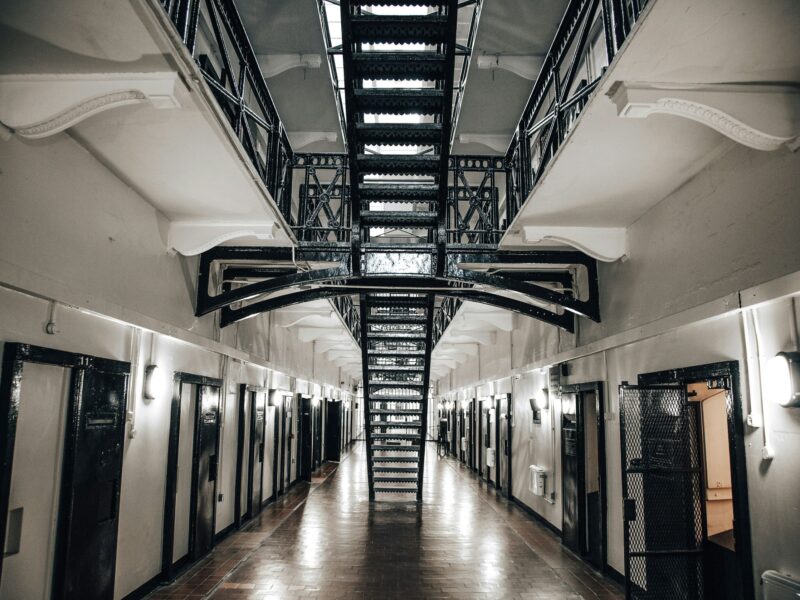
(CN) — Estonia’s prison smoking ban got a second life Tuesday after Europe’s top human rights court threw out the case before deciding whether the policy violates prisoners’ rights.
The European Court of Human Rights’ Grand Chamber struck out the challenge to the Baltic nation’s total smoking ban anywhere in prison, which prisoners had argued caused nicotine withdrawal and violated their right to private life and protection from inhuman treatment.
Instead, the judges ended the case on procedural grounds. One applicant, Rene Vainik, died during the Grand Chamber proceedings and no relative stepped in to continue his claim. The remaining two, Dmitri Tsajun and Nikolai Šmeljov, had long since been released from prison, were no longer represented by a lawyer and never responded after the court contacted them.
“For the court, the circumstances strongly support the conclusion that the two applicants in question do not intend to pursue their applications,” the judges wrote.
The Grand Chamber also declined to keep the case alive in the broader public interest. It noted that the remaining applicants were no longer affected by the ban and that no similar challenges had been brought elsewhere in Europe.
“In light of the above considerations, the court concludes that no special circumstances relating to respect for human rights require it to continue the examination of the case,” the Grand Chamber said.
That leaves unanswered a question confronted in the earlier ruling: How far can governments go in restricting personal autonomy in the name of health and prison security?
Estonia introduced the ban in 2017, making it illegal for inmates to possess tobacco products or smoking-related items anywhere in prison. Officials said the measure would protect health, reduce secondhand smoke, prevent fires, improve prison security and stop cigarettes from circulating as prison currency.
For the inmates, however, the measure also eliminated one of the few remaining personal choices available, turning an anti-smoking policy into a broader debate over how much control the state can exercise over daily life behind bars. All three remaining applicants were long-term smokers held at Viru Prison when the measure took effect. After unsuccessfully challenging it in Estonia’s courts, they turned to the rights court in Strasbourg.
A seven-judge chamber initially sided with them in a split 4-3 ruling last November, finding Estonia had violated their right to private life while rejecting their separate claim of inhuman treatment.
Amandine Garde, a law professor at the University of Liverpool, and Aikaterini Tsampi, an assistant professor of public international law at the University of Groningen, who jointly sought permission to intervene in the case before the Grand Chamber, said they had been “particularly concerned” that the earlier chamber ruling could cast a shadow over tobacco-control policies.
“The specter of a so-called ‘right to smoke’ seems to have been — although merely implicitly — set aside,” they said, welcoming the Grand Chamber’s decision to erase the earlier judgment.
The two scholars also said the Grand Chamber appeared to send a message by repeatedly highlighting the Estonian Supreme Court’s careful review of the ban.
“We read this emphasis as marking the intention of the Grand Chamber to depart from the approach adopted by the narrow majority of the Chamber that had criticized the national court for failing to undertake a sufficiently robust proportionality assessment of the contested measure,” they said.
Not everyone was ready to let the question go.
Barbora Bukovská, a human rights attorney, called Tuesday’s outcome “very disappointing.” She said although she understood the procedural logic behind the decision, the judges should have exercised their discretion differently because the case raised novel questions about “personal autonomy, public health and the realities of imprisonment.”
She also warned that prisoners are “among the most vulnerable and procedurally disadvantaged applicants before Strasbourg” and that if cases like this routinely fall away when applicants disappear, important questions about detention conditions may never receive authoritative guidance.
“I think the court erred by not finding that this case possessed the ‘transcendent quality,’” Bukovská wrote, saying the ruling missed a chance to clarify whether prisoners retain a sphere of bodily autonomy even behind bars and to define the limits of state paternalism in places of detention.
The applicants’ original lawyer had stopped communicating with the court in 2022 and was no longer practicing law in Estonia. The Estonian Ministry of Justice did not respond to a request for comment.
Tuesday’s judgment is final. The earlier chamber ruling “did not become final and is thus legally void,” leaving Estonia’s smoking ban intact and removing the only European court ruling that had found the policy incompatible with prisoners’ right to private life.
Courthouse News reporter Eunseo Hong is based in the Netherlands.
Subscribe to our free newsletters
Our weekly newsletter Closing Arguments offers the latest about ongoing trials, major litigation and rulings in courthouses around the U.S. and the world, while the monthly Under the Lights dishes the legal dirt from Hollywood, sports, Big Tech and the arts.
Additional Reads

 Judge halts enforcement of Virginia's assault weapon ban June 29, 2026

 Chinese dissident Miles Guo sentenced to 30 years June 29, 2026