
 Search Articles


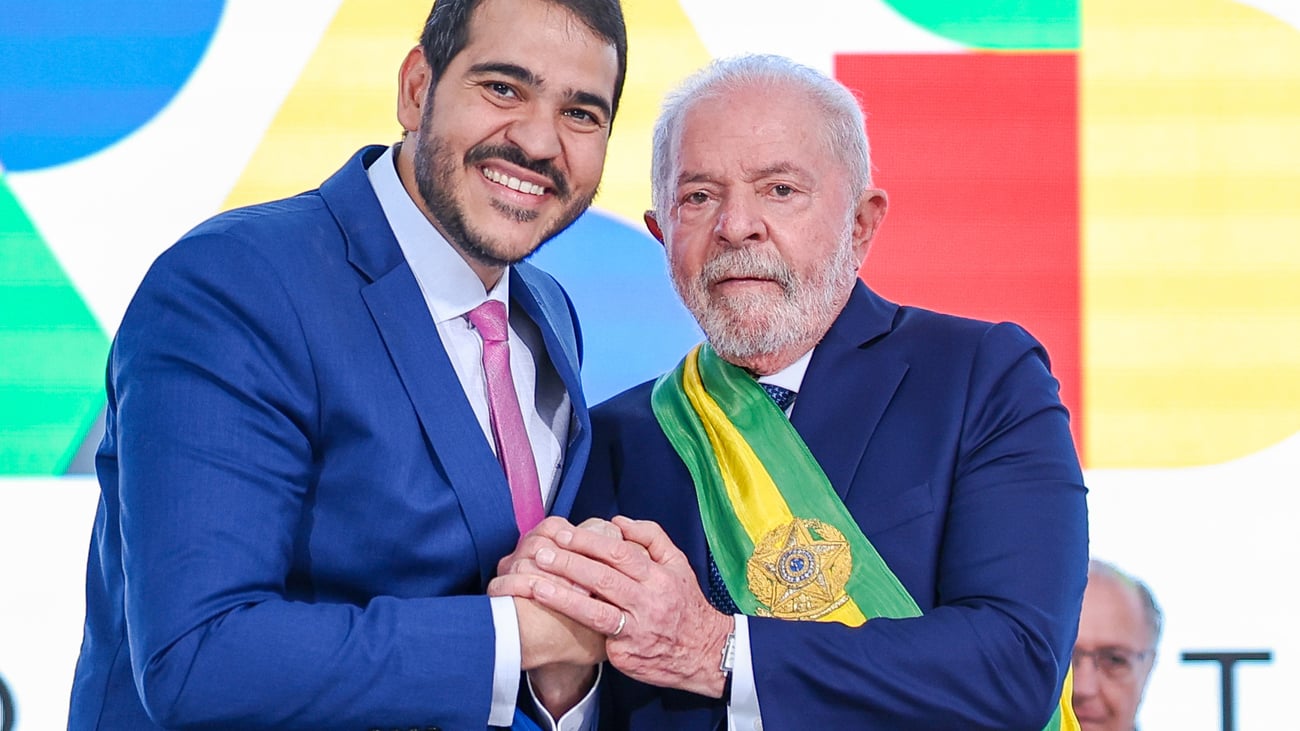
RIO DE JANEIRO (CN) — The Brazilian Senate on Wednesday rejected Jorge Messias, President Luiz Inácio Lula da Silva’s nominee for the country’s Supreme Court, in a 42-34 vote, handing Lula a historic defeat and blocking a presidential pick for the court for the first time in 132 years.
The vote followed an almost eight-hour confirmation hearing centered on judicial restraint and escalating tensions between Congress and the court.
Messias, Brazil’s attorney general and a trusted Lula ally, had been nominated to fill the seat left vacant by the retirement of Justice Luís Roberto Barroso. He needed at least 41 votes from the 81-member Senate in a secret ballot, but only 34 senators voted in favor of his nomination.
Before the full Senate vote, Messias appeared before the Constitution and Justice Committee, which approved him 16-11.
The vote capped a five-month fight over the nomination and an unusual 160-day process between Lula’s announcement and the confirmation hearing, the longest among the sitting Supreme Court justices.
Lula announced Messias’ nomination in November but only formally sent it to the Senate on April 1, amid resistance from Senate President Davi Alcolumbre, who preferred former Senate President Rodrigo Pacheco for the seat.
Gabriela Rollemberg, a lawyer, political scientist and co-founder of the nonprofit Brazilian Academy of Electoral and Political Law, said the rejection marked the rise of a more assertive Senate willing to confront both Lula and the Supreme Court.
“By blocking a nominee who was personally trusted by the executive branch, the Senate not only punished personalism but signaled an unprecedented willingness for institutional conflict,” Rollemberg said.
Rollemberg said the outcome might have been different had Lula nominated a woman to a court that currently has only one female justice. Such a choice, she said, would have raised the political cost of rejection.
During the hearing, Messias tried to overcome criticism from senators, especially allies of former President Jair Bolsonaro, who accuse the Supreme Court of encroaching on Congress’ powers.
Messias called the Supreme Court a “central institution” in Brazilian democracy but said it must remain open to institutional reform and subject to rules, transparency and public scrutiny.
“In a republic, every branch of government must be subject to rules and restraints,” Messias said in his opening statement. “For that reason, society’s demands for transparency, accountability and public scrutiny should not be treated as an affront by any democratic institution.”
He said changes to the court’s institutional practices and “course corrections” are not signs of weakness but ways to strengthen the judiciary.
Messias also criticized individual action by Supreme Court justices, one of the most sensitive issues for lawmakers who have pushed to limit single-justice decisions by the court. The more individualized the justices’ actions become, he said, the more the court’s institutional dimension shrinks.
“Rules protect society from arbitrary judicial action,” he said. He added that, in public policy, the judiciary should play a limited role, rather than act as “the protagonist” or replace elected officials.
Ana Paula de Barcellos, a constitutional law professor at Rio de Janeiro State University, said Messias had followed a common pattern in Supreme Court confirmation hearings, telling senators what they and their voters wanted to hear while trying not to alienate other political groups.
“Balance was a key word, and Messias sought that balance in his remarks,” Barcellos said.
But that balancing act was not enough to overcome one of the most delicate moments in the relationship between the Senate and the Supreme Court in recent years.
One of the main points of friction is the legal response to the Jan. 8, 2023, attacks, when Bolsonaro supporters invaded and vandalized the buildings of Congress, the presidential palace and the Supreme Court in Brasília, one week after Lula took office.
Questioned by Senator Flávio Bolsonaro, the son of the jailed former president and a potential presidential candidate, Messias said Congress should decide whether to grant amnesty to those convicted over the attacks.
Bolsonaro is serving a 27-year and three-month prison sentence after the Supreme Court convicted him in September 2025 of plotting a coup to remain in power after his 2022 election loss.
Messias also defended his actions as head of the Attorney General’s Office after the Jan. 8 attacks. He said his role was to protect federal public property, not to act as a criminal prosecutor.
He said he requested warrantless arrests for people caught committing crimes inside the public buildings during the invasion, not pretrial detention.
“I did not file charges. I did not ask for convictions. I did not judge. I did not determine sentences,” he said.
Another sensitive issue was abortion. Messias, who is evangelical, said he is “totally against abortion, absolutely,” but added that Congress has the authority to legislate on the issue.
He said that, as attorney general, he defended before the Supreme Court Congress’ authority to regulate abortion because it is a criminal law issue. Brazilian law currently allows abortion in cases of rape, risk to the pregnant woman’s life and fetal anencephaly.
Messias also tried to balance his religious identity with a defense of the secular state. In his opening remarks, he described himself as a “servant of God” and said his faith had “saved” his life, but added that a constitutional judge cannot place religious beliefs above the constitution.
“A judge who places his religious convictions above the constitution is not a judge,” he said. In another passage, he said it is possible to interpret the constitution “with faith, not by faith.”
The religious dimension of the nomination became a focus in the Senate. Messias received support from evangelical leaders and from Justice André Mendonça, who is also evangelical and was appointed to the Supreme Court by Bolsonaro. Even so, he faced resistance from part of the evangelical caucus, where many lawmakers are aligned with Bolsonaro.
The nomination was also criticized by groups that had pushed Lula to appoint a woman, especially a Black woman, to the Supreme Court. In its 134-year history, the court has had only three female justices and no Black women.
Had Messias been confirmed, the court would have continued to have only one woman among its 11 members, Justice Cármen Lúcia.
Messias was born in Recife, in the northeastern state of Pernambuco, and built his career in Brasília. He served as an attorney for the Central Bank, a federal tax attorney, legal adviser to the ministries of Education and Science, Technology and Innovation, an aide to Senator Jaques Wagner and deputy legal affairs chief in the presidential office during former President Dilma Rousseff’s administration.
As attorney general since 2023, Messias had become one of Lula’s closest legal aides. The government defended his nomination by portraying him as a technical and conciliatory figure, while opponents described it as another appointment of a personal ally of the president to the court.
Courthouse News reporter Marília Marasciulo is based in Brazil.
Subscribe to our free newsletters
Our weekly newsletter Closing Arguments offers the latest about ongoing trials, major litigation and rulings in courthouses around the U.S. and the world, while the monthly Under the Lights dishes the legal dirt from Hollywood, sports, Big Tech and the arts.
Additional Reads
 Fifth Circuit split on Trump's mandatory detention policy April 29, 2026
 Elon Musk claims Sam Altman 'stole a charity' in OpenAI feud April 29, 2026