
 Search Articles


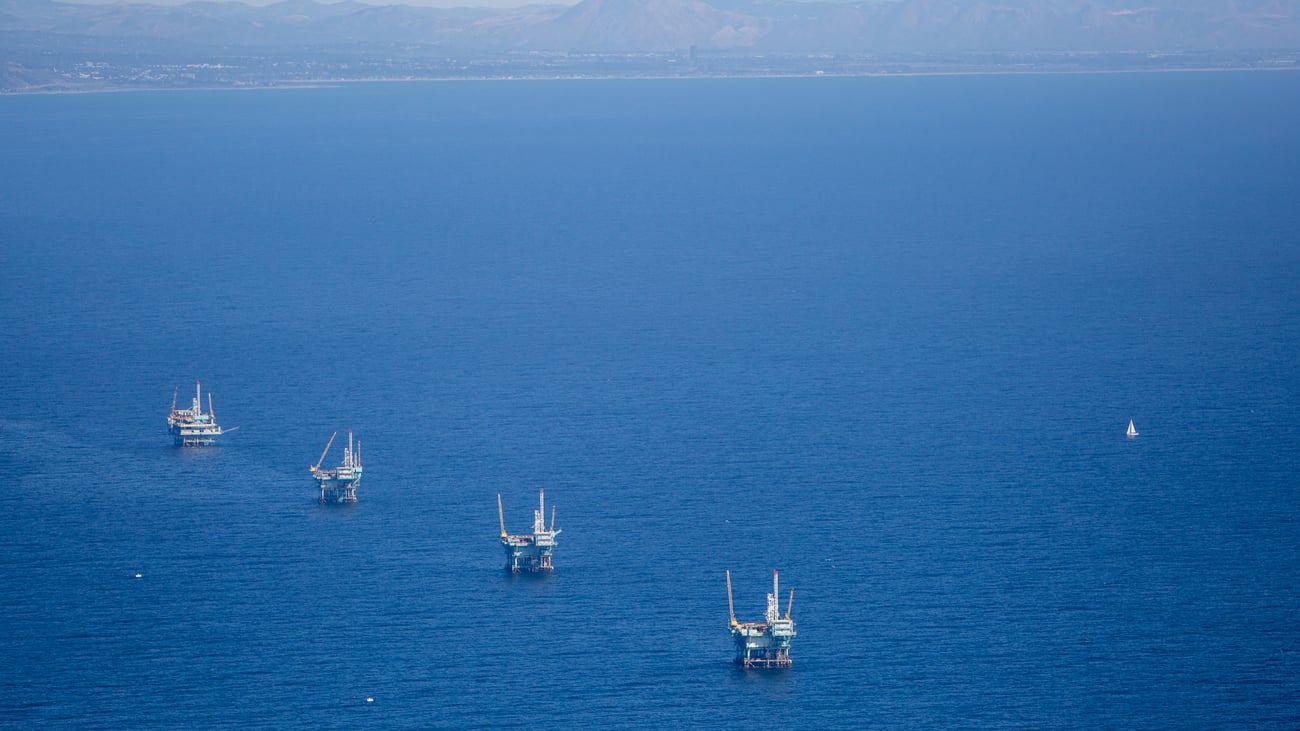
(CN) — A California appeals court on Wednesday affirmed a trial court’s order granting a preliminary injunction against an oil drilling company that would, in theory, prevent the company from repairing its oil pipeline. But the pipeline repairs have already been completed, and oil has been flowing for months, thanks to an intervention by the Trump administration.
Nonetheless, Wednesday’s ruling does mean that Sable Offshore Corp. is still on the hook for civil penalties.
The 122-mile Las Flores pipeline system connects three oil platforms, known as the Santa Ynez unit, off the coast of Santa Barbara, with a terminal in Kern County. In 2015, the pipeline, then owned by Plains All American, ruptured, sending more than 100,000 gallons of crude into the Pacific Ocean, killing hundreds of birds and marine mammals blackening miles of coastline. Following a jury trial, Plains All American was convicted of one felony and eight misdemeanors, and was forced to pay a criminal fine of $3.3 million. The company also agreed to pay $230 million to settle a class action.
The litigation over restarting the offshore drilling has been far more byzantine. Plains sold its pipeline to ExxonMobil in 2022, which then turned around and sold it to Sable in 2024. The company then began repairing the pipeline, with a view toward restarting operations. But the California Coastal Commission, an agency that controls all development near the state’s 1,100-mile coastline, cried foul, saying some of the repairs were unpermitted and required the commission’s approval.
The commission asked Santa Barbara County to take some sort of enforcement action, but the county was noncommittal, telling Sable in a letter the “pipeline anomaly repair work is authorized by the existing permits” that had been issued back in 1990, when the pipeline was first built. The Coastal Commission, meanwhile, sent Sable a cease and desist letter, while the county told the coastal commission in a letter the county “did not allow activity without a permit, nor did the County take an action on a permit or development application that may be appealable to the Coastal Commission.”
And so Sable sued the Coastal Commission, and the Coastal Commission sued Sable. In May 2025, Superior Court Judge Thomas Anderle agreed to issue a preliminary injunction, barring Sable from repairing and therefore restarting the pipeline. Sable appealed.
Then, in March, after global oil shipments were disrupted by U.S. and Israeli attacks on Iran, Energy Secretary Chris Wright ordered Sable to patch up and restart the pipeline. A new round of federal lawsuits followed, but the crude began to flow. A lawsuit by a pair of nonprofits was rejected, after a judge ruled they lacked standing. A different federal judge declined to issue a preliminary injunction that would have stopped the oil drilling.
But preliminary injunction issued by the state court judge remained active, although ignored. So, too, did the appeal against it. On Wednesday, a three-judge panel ruled, 2-1, that the injunction was the right call.
Sable had argued the Coastal Commission had no authority to halt the pipeline repairs, because Santa Barbara County had intervened. Two of the three appellate judges disagreed, finding the county hadn’t acted at all.
“We reject Sable’s statutory interpretation because it implausibly characterizes a county that declines to act as taking action,” wrote Justice Tari Cody. “Such conduct — the ‘act’ of declining to act — cannot itself prevent the Commission from issuing a cease and desist order.”
The ruling, also signed by Justice Hernaldo Baltodano drew a rather exasperated dissent from Justice Kenneth Yegan.
“First, a dose of reality,” Yegan wrote. “The repair work has been done. It is a ‘fait accompli.’ And, pursuant to federal intervention, oil is now flowing in the pipeline without incident. The supremacy clause of the United States Constitution takes precedence. The federal Government trumped the state’s Commission ‘cease and desist’ order and it trumps the preliminary injunction order.”
 Follow @hillelaron
Subscribe to our free newsletters
Our weekly newsletter Closing Arguments offers the latest about ongoing trials, major litigation and rulings in courthouses around the U.S. and the world, while the monthly Under the Lights dishes the legal dirt from Hollywood, sports, Big Tech and the arts.
Additional Reads



 Social Security theft convictions vacated June 17, 2026