
 Search Articles


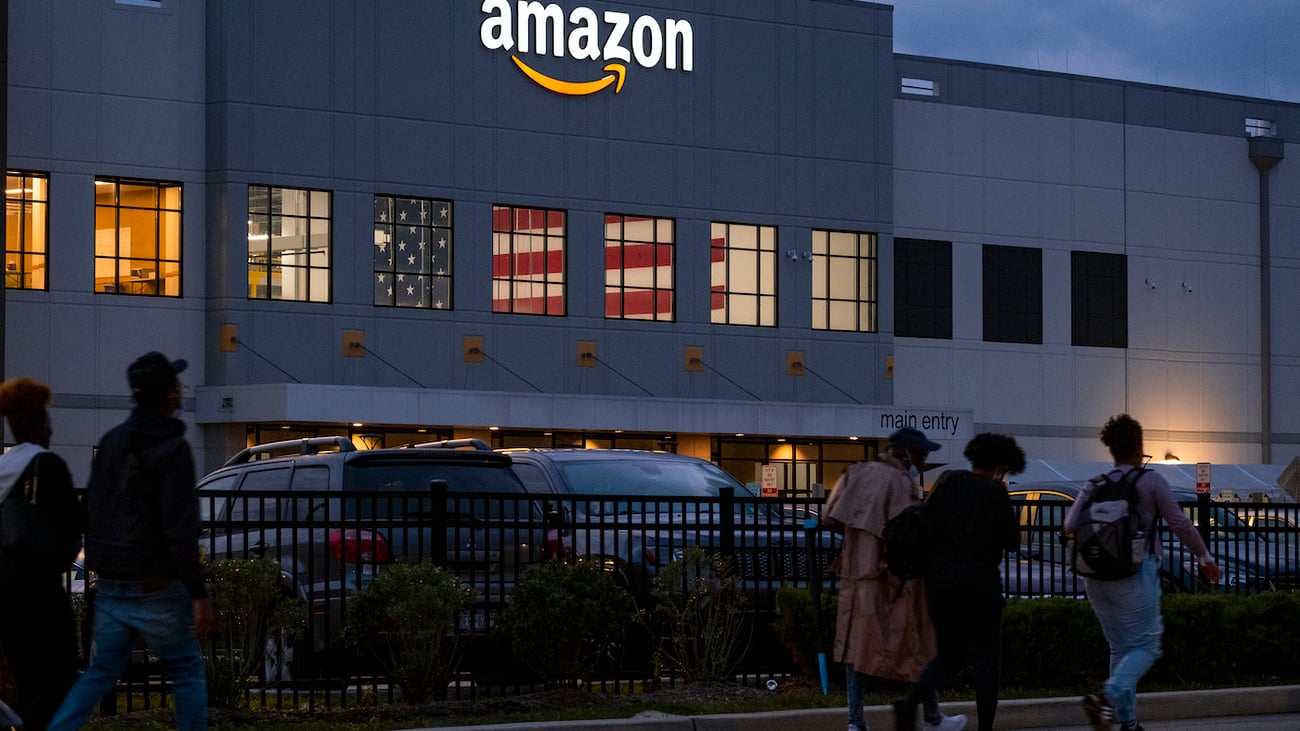
(CN) — Amazon asked an 11th Circuit panel Monday to set aside a landmark decision by the National Labor Relations Board declaring mandatory-attendance captive audience meetings for employees illegal.
A majority of the NLRB in November 2024 found that captive audience meetings, where employees are often urged to reject union representation, violate the National Labor Relations Act. Captive audience meetings break the law because “they have a reasonable tendency to interfere with and coerce employees in the exercise of their Section 7 right to freely decide whether or not to unionize, including the right to decide whether, when and how they will listen to and consider their employer’s views concerning that choice,” the board decided.
The decision unfairly “overrule[s] 75 years of precedent,” an attorney for Amazon told Monday’s three-judge panel. The company has argued the new rule against captive audience meetings is a content-based restriction on employer speech about unionization.
The decision arose from six consolidated labor complaint cases against Amazon out of Staten Island, New York. Workers at Amazon’s Staten Island fulfillment and storage centers accused the company of resorting to union-busting tactics, including holding captive audience meetings, after the Amazon Labor Union organized in April 2021.
At one point, Amazon held captive audience meetings at the fulfillment center every 45 minutes, six days a week.
Arguing on behalf of Amazon, attorney Elbert Lin of Hunton Andrews Kurth said the rule against captive audience meetings “violates both the First Amendment and the National Labor Relations Act.” Lin told the panel the “core of the rule” is an incorrect legal finding that “an employee has a right to be left alone in the workplace.”
“I don’t think [the law] says that. It says it’s a right to refrain from certain activities,” Lin argued. “I think if you were to agree with that, that would erase the essence of what it means to be employed: that in exchange for pay, the employer can direct the employee to be at certain places at certain times and do certain things.”
Amazon has argued in its briefs to the 11th Circuit that mandatory meetings about unionization are merely exercises in persuasion. But NLRB attorney Micah Jost told the three-judge panel the issue is rooted in coercion.
“It’s the order to attend on pain of discharge that interferes with [employees’] range of autonomy,” Jost said.
Jost added neither employers nor unions “can use economic coercion to force employees to participate in their campaign one way or another.”
But the attorney’s argument that it would also be an unfair labor practice for an employer to hold a mandatory meeting where executives expressed support for unionization was met with raised eyebrows.
“That’s crazy,” U.S. Circuit Judges Kevin Newsom and Adalberto Jordan both said.
Jordan, a Barack Obama appointee, said: “For someone to say that’s an unfair labor practice seems to me to sort of make mincemeat of the text of the act.”
Jost reminded the panel it could also throw out Amazon’s arguments based on lack of legal standing to challenge the rule, which has not yet been applied against the company.
“Amazon cannot show an imminent threat of enforcement,” Jost said.
Although Amazon was ordered to stop using union-busting strategies — like threatening workers with loss of benefits or wages if they chose union representation and promising workers improved benefits to discourage them from supporting the union — the board recognized its captive audience meeting decision went against decades of precedent and refused to immediately apply it against Amazon.
Instead, the NLRB announced it would find a violation of the law in future cases involving captive audience meetings.
“It is an exception that is done to avoid an injustice to the parties. It is an exception that Amazon asked the board to apply,” Jost said. “The board did what Amazon wanted. Amazon is refusing to take yes for an answer.”
The NLRB found that employers could still hold voluntary employee meetings to discuss unionization or other topics.
Although the NLRB’s general counsel, Crystal Carey, has since asked the board to reverse the decision, Lin argued the 11th Circuit should still step in with an advisory decision instead of waiting for an unfair enforcement action to force the issue.
“We are playing Russian roulette with whether we’re going to be the employer who’s subject to the enforcement action," Lin said.
Jordan and Newsom, a Donald Trump appointee, were joined on the panel by U.S. Circuit Judge Jill Pryor, an Obama appointee. The panel did not indicate when it would rule.
 Follow @KaylaGoggin_CNS
Subscribe to our free newsletters
Our weekly newsletter Closing Arguments offers the latest about ongoing trials, major litigation and rulings in courthouses around the U.S. and the world, while the monthly Under the Lights dishes the legal dirt from Hollywood, sports, Big Tech and the arts.
Additional Reads
 Non-compete far too sweeping May 18, 2026
 Probation officer failed to protect battered woman May 18, 2026