
 Search Articles


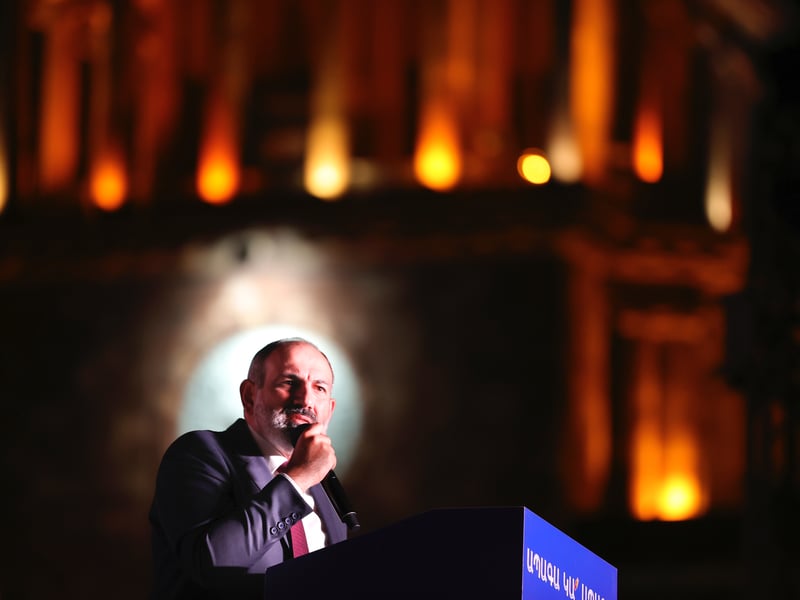
ISTANBUL (AFP) — Armenian Prime Minister Nikol Pashinyan was meeting President Recep Tayyip Erdogan in Istanbul on a rare visit to arch-foe Turkey, in what Yerevan describes as a “historic” step toward regional peace.
The talks began in the early evening at Istanbul’s Dolmabahce Palace, Erdogan’s office said.
Armenia and Turkey have never established formal diplomatic ties and their shared border has been closed since the 1990s.
Analysts said Pashinyan would make the case for speeding up steps towards normalization with Turkey in a bid to ease Armenia’s isolation.
Relations between the two nations have been historically strained over the World War I-era mass killings of Armenians in the Ottoman Empire — atrocities Yerevan says amount to genocide. Turkey rejects the label.
And they have been further complicated by Ankara’s close ties to Turkic-speaking Azerbaijan, and its support for Baku in its long-running conflict with Armenia.
Ahead of the talks, Pashinyan visited the Armenian Patriarchal Church and the Blue Mosque and met members of the Turkish Armenian community, he said on his official Facebook page.
But his visit sparked unease back home. Police rounded up “several dozen” opposition supporters in the capital Yerevan and beyond Friday, rights groups and a lawyers coalition said.
Armenia’s interior ministry did not comment on the detentions, but said police had acted on information about plans to disrupt the peace.
Normalization
“This is a historic visit, as it will be the first time a head of the Republic of Armenia visits Turkey at this level. All regional issues will be discussed,” Armenian parliament speaker Alen Simonyan told reporters on Thursday. “The risks of war (with Azerbaijan) are currently minimal, and we must work to neutralize them. Pashinyan’s visit to Turkey is a step in that direction.”
An Armenian foreign ministry official told AFP Pashinyan and Erdogan would discuss efforts to sign a comprehensive peace treaty as well as the fallout from the Iran-Israel conflict.
A day ahead of his visit, Azerbaijani President Ilham Aliyev was in Turkey to meet Erdogan, hailing the two nations’ alliance as “a significant factor, not only regionally but also globally.”
Erdogan repeated his backing for “the establishment of peace between Azerbaijan and Armenia.”
The two nations had agreed on the text of a peace deal in March, but Azerbaijan has since outlined a host of demands — including changes to Armenia’s constitution — before it will sign the document.
Pashinyan has actively sought to normalize relations with both Baku and Ankara.
“Pashinyan is very keen to break Armenia out of its isolation and the best way to do that is a peace agreement with Azerbaijan and a normalization agreement with Turkey,” Thomas de Waal, a senior fellow at Carnegie Europe told AFP.
The main thing blocking normalization with Turkey was Azerbaijan — a close ally of Ankara, he said.
“Turkey has a strategic dilemma here: on the one hand it wants to stay loyal to Azerbaijan; on the other, opening the Armenian border makes it a bigger player in the South Caucasus,” he said.
Pashinyan concession
Opening the border would help the economy in eastern Turkey, diminish Russian influence and likely improve Ankara’s ties with Washington and the West, among other things, he said.
“Pashinyan by himself won’t make this happen, it’s only when it moves higher up the Western agenda with Turkey that you might see change,” de Waal said.
Earlier this year, Pashinyan said Armenia would halt its campaign for international recognition of the 1915 mass killings of Armenians as genocide — a major concession to Turkey that sparked widespread criticism at home.
He has visited Turkey only once before, for Erdogan’s 2023 inauguration. At the time he was one of the first foreign leaders to congratulate him on his reelection.
Ankara and Yerevan appointed special envoys in late 2021 to lead a normalization process, a year after Armenia’s defeat in a war with Azerbaijan over then then-disputed Karabakh region.
In 2022, Turkey and Armenia resumed commercial flights after a two-year pause.
A previous attempt to normalize relations — a 2009 accord to open the border — was never ratified by Armenia and abandoned in 2018.
—
By HAZEL WARD Agence France-Presse
Subscribe to our free newsletters
Our weekly newsletter Closing Arguments offers the latest about ongoing trials, major litigation and rulings in courthouses around the U.S. and the world, while the monthly Under the Lights dishes the legal dirt from Hollywood, sports, Big Tech and the arts.