
 Search Articles


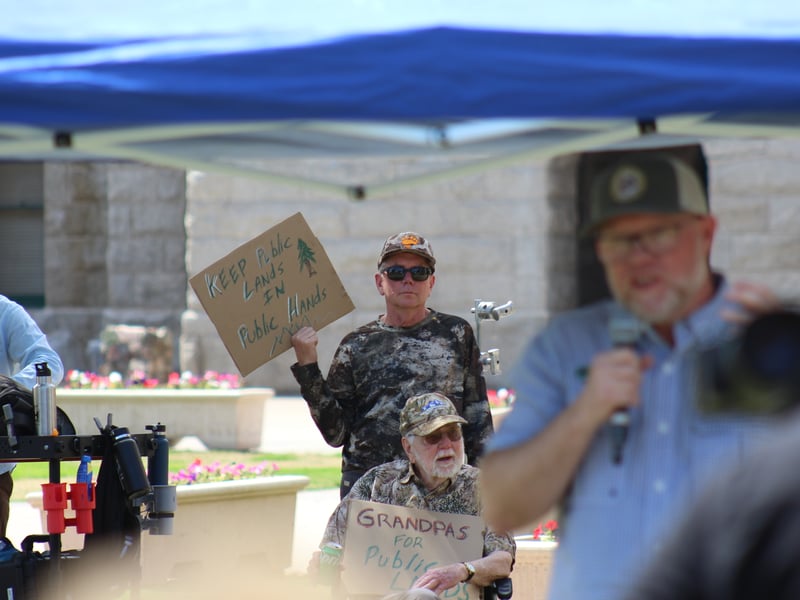
PHOENIX (CN) — Amid federal- and state-level threats to public land across the West, at least 200 people gathered at the Arizona capitol building to demand that lawmakers prevent the transfer of federal public land to state or private control.
“We are in a time where our public lands are going to be attacked,” Carletta Tilousi told a raucous crowd Thursday under the Phoenix afternoon sun.
Last week, President Donald Trump signed an executive order to boost the American mining industry, ordering the Department of the Interior to prioritize mining on mineral-rich federal lands over all other activities, harkening back to his “drill baby, drill,” messaging in his inaugural speech.
Trump also recently signed executive orders setting the U.S. on the path to becoming “the leading producer and processor of non-fuel minerals, including rare earth minerals,” and approving a 211-mile industrial road through Northwest Alaska to enable commercial mining for copper, zinc and other materials.
Last year, Utah made good on a decades-old promise to sue the federal government for control of the more than 70% of its land that’s currently governed by federal agencies.
Though the Supreme Court shot down the lawsuit, which the Arizona Legislature signed onto, Utah Republicans are working on a bill that would allow the state to sell off land managed by federal agencies. And in Montana, a bill that would pledge the state’s support to Utah’s attempted land grab is pending in the state Legislature.
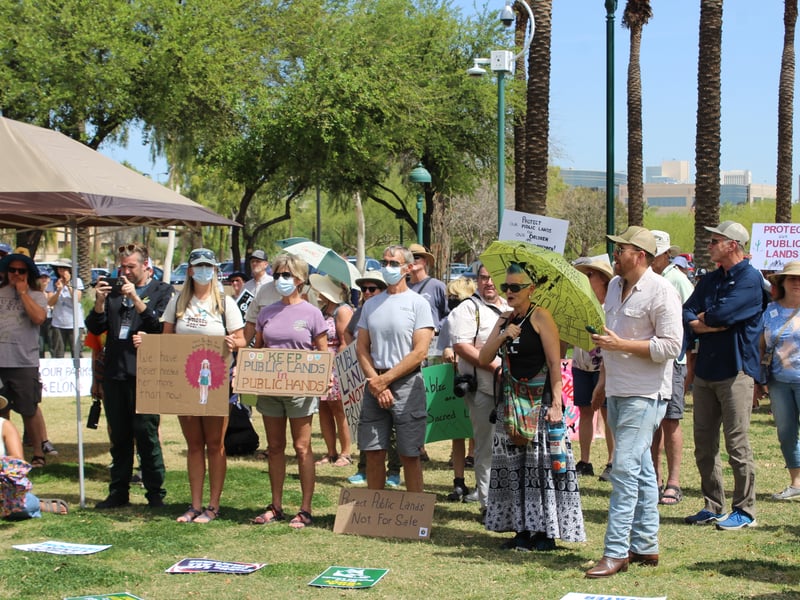
These trends have led conservationists across the country to fear the swift privatization of public lands that otherwise support countless recreational activities and economic opportunities for states and local communities.
“These places mean something to people because it’s where they find their solace,” said Land Tawney, a conservationist from Montana who helped organize Thursday’s Protect Our Public Lands rally. “There’s an outdoor economy that’s based around all this activity. And that’s $14 billion here in Arizona.”
Rebeca Rodriquez, a volunteer conservationist with the nonprofit Sonoran Insiders, said her job maintaining trails and removing invasive species was paused after the Forest Service was forced to cut off funding amid federal cuts made by Trump and Elon Musk’s Department of Government Efficiency organization.
More than 10% of federal land managers working for the Forest Service, Bureau of Land Management and other agencies were fired in the last few months, which Rodriguez warned will manifest in reduced trail quality, fewer rangers and shorter park hours.
“This could all be lost,” she told the crowd.
In Arizona, lawmakers are making their own attempts to reduce the federal government’s footprint within state borders.
Senate Bill 1068 would prohibit the transfer of state or private land to the federal government absent the majority vote of the Legislature and the governor’s signature. Similarly, House Concurrent Memorial 2012 would urge the U.S. Congress to exempt Arizona from the Antiquities Act, which gives the president power to designate national monuments.
Arizona Republicans are still burned over the 2023 designation of a national monument on the land surrounding the Grand Canyon, which protected indigenous ancestral homelands and halted new uranium mining projects that tribal members fear will poison the drinking water the way abandoned uranium mines have on the Navajo Nation.
Republicans sued then-President Joe Biden over what they called a “bureaucratic land grab,” to dampen the mining industry.
Tilousi, a member of the Havasupai Tribal Council, celebrated the designation of the monument but said she fears that it and other federal land will be taken away. She urged attendees to call their lawmakers and demand public land remains public.
“It’s our responsibility now,” she said. “It’s not just an indigenous people issue. It’s an Arizona people issue.”
 Follow @JournalistJoeAZ
Subscribe to our free newsletters
Our weekly newsletter Closing Arguments offers the latest about ongoing trials, major litigation and rulings in courthouses around the U.S. and the world, while the monthly Under the Lights dishes the legal dirt from Hollywood, sports, Big Tech and the arts.