
 Search Articles


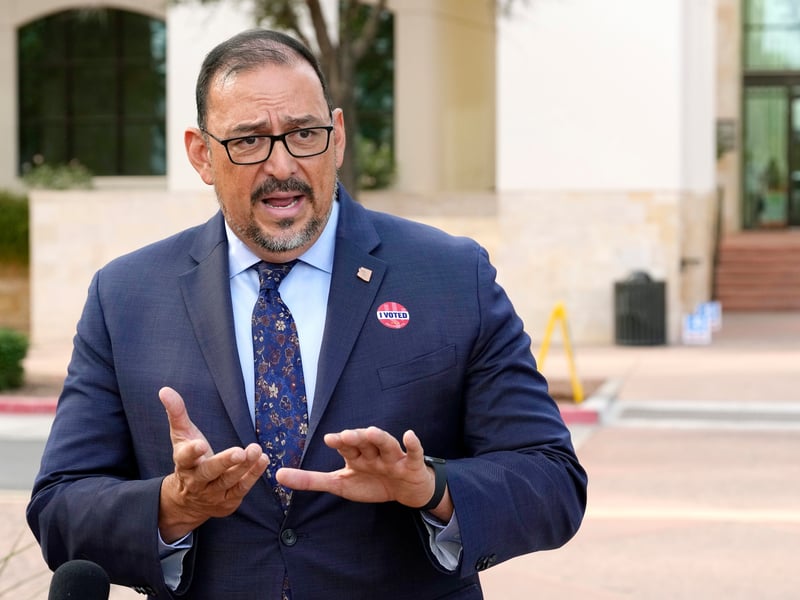
PHOENIX (CN) — A coalition of Republican voters argued before the Ninth Circuit Monday that Arizona’s bloated voter rolls may dilute their own votes, but the three-judge panel is skeptical of the speculative claim.
The plaintiffs claim that Secretary of State Adrian Fontes failed to remove up to 1.2 million voters from Arizona’s registration rolls, violating the National Voter Registration Act and allowing ineligible voters to cast fraudulent ballots.
Mark Pinkert, representing the plaintiffs, said there’s “a lot of evidence” of potential voter fraud stemming from inaccurate voter rolls but declined to provide specifics when asked.
“What evidence of impending harm is there?” U.S. Circuit Judge Richard Clifton asked Monday morning in a Phoenix courtroom. “There seems to be a complete void when it comes to whether ineligible people have voted.”
Pinkert, of Holtzman Vogel, said the more ineligible people on the rolls, the more likely voter fraud becomes.
Clifton, a George W. Bush appointee, wasn’t sold.
“The fear that somebody who might not be eligible votes, that doesn’t dilute anything,” he said. “Unless the other person votes, there’s no dilution.”
In addition to vote dilution, the plaintiffs claim they have lost confidence in election integrity, which may discourage future voting, and have spent resources on canvassing and voter education to counter the supposed fraud.
U.S. District Judge Dominic Lanza dismissed the complaint in 2024, finding the plaintiffs lacked standing and cognizable injury. The plaintiffs appealed months later.
Monday, U.S. Circuit Judge Eric Miller questioned the vote dilution claim, saying generalized fear is insufficient and that plaintiffs must show a specific group’s votes will not be diluted.
“This is not a generalized grievance because plaintiffs are concerned with the power of their own vote,” Pinkert countered. “That is concrete and personalized to them.”
Defending the state, attorney Kara Karlson said the plaintiffs’ arguments fall flat without evidence of past voter fraud, relying instead on a legal conclusion that Fontes has violated the National Voter Registration Act.
“That is not enough,” Karlson said. “They don’t bring actual facts. They don’t bring actual allegations.”
U.S. Circuit Judge Jay Bybee concurred.
“If you had history, that would make this far more compelling,” the George W. Bush appointee said. “I don’t see anything here.”
The National Voter Registration Act requires states to make reasonable efforts to remove ineligible voters from active voter rolls, most commonly when voters move out of state, change counties without responding to address notices, or die.
State law bars the immediate removal of voters who change addresses. Instead, those voters are placed on an inactive list for two election cycles and removed only if they fail to confirm their address by the second election.
In a motion to dismiss, Fontes said Arizona removed more ineligible voters in 2022 than any state except Washington and did so at a rate 4.5% higher than the national average. He added that the plaintiffs’ broad estimates of ineligible voters show they are merely guessing.
In Monday’s hearing, Karlson explained one way the data the plaintiffs are using may be unreliable. If a registered voter changes addresses within Arizona and a new voter moves into the first voter’s old house, the rolls may, for some time, show that both voters are registered to that address. In their complaint, the plaintiffs claim there are between 500,000 and 1.2 million ineligible voters on the rolls, which the state says proves the plaintiffs are simply guessing.
Despite widespread, unproven claims of voter fraud in the 2020 and 2022 elections, there have been no similar claims made about the most recent election in November.
It’s unclear when the panel will rule.
 Follow @JournalistJoeAZ
Subscribe to our free newsletters
Our weekly newsletter Closing Arguments offers the latest about ongoing trials, major litigation and rulings in courthouses around the U.S. and the world, while the monthly Under the Lights dishes the legal dirt from Hollywood, sports, Big Tech and the arts.