
 Search Articles


PHOENIX (CN) — Representatives of Arizona’s hemp industry will file a special action in the Arizona Court of Appeals Wednesday to protect retailers selling delta-9 and other non-marijuana THC products without a marijuana dispensary license.
The Hemp Industry Trade Association of Arizona says Democratic Attorney General Kris Mayes misinterpreted state and federal law when she declared all hemp products illegal to sell without a dispensary license and threatened retailers with civil and criminal enforcement beginning on April 24, and will ask the appellate court to stop enforcement pending litigation in Maricopa County Superior Court.
“They’re wanting to enforce what they wish the law was, but it’s not,” attorney Tom Dean said at a Hemp Industry Trade Association of Arizona press conference outside the state Capitol Wednesday morning.
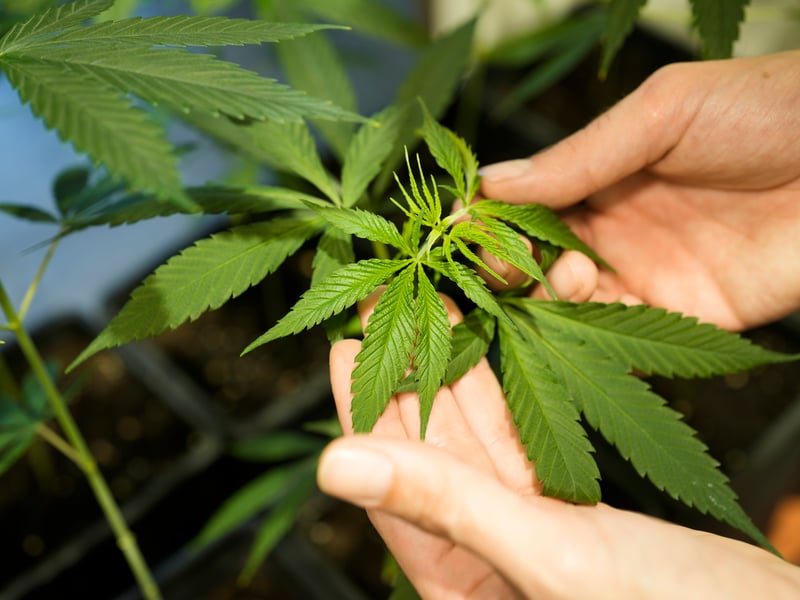
The 2018 Farm Bill drew a line in the sand between marijuana, containing a THC concentration of 0.3% or more, and hemp, which contains the psychoactive compound but in lesser concentrations. While both products are derived from the same plant, cannabis sativa, the Farm Bill legalized the lower THC hemp products at the federal level.
Because federal law distinguishes hemp from marijuana, the association argues that the sale of hemp products cannot be subject to state marijuana laws, and retailers selling them have therefore committed no violations.
Mayes says the state law applies to all THC products.
“Arizona law is clear: intoxicating THC products must be sold through licensed dispensaries, not convenience stores or smoke shops,” attorney general’s office spokesperson Richie Taylor said. “Protecting children from potent, untested substances is a critical responsibility, and Attorney General Mayes will enforce the law to keep Arizona communities safe.”
Proposition 207, which legalized the sale of marijuana in dispensaries across the state, defines marijuana as “all parts of the plant genus cannabis,” but at the same time says that definition does not include industrial hemp, even though it is part of the same plant.
The Legislature’s failure to clearly regulate hemp products may seem like a legal loophole, but the association says it has been trying for years to sponsor legislation to do just that.
“Prohibition is not the answer for safety. Regulation is,” said Muhammed Lotfy, owner of the Tempe-based Wake-N-Bakery, a THC-infused coffee shop. “We’re not asking for a loophole. We’re asking for a legal solution.”
Lotfy and other business owners at Wednesday’s press conference defended their products, which they sell only to those 21 and older, as low-potency, medicinal products like CBD oil. Tiffany Hernandez, owner of KannaKweens, said she sells her products to cancer patients and those with chronic pain.
“It does not promote public safety in any way,” A.J. Jacobs, executive director of the marijuana lobbying group Arizona NORML, said of Mayes’ enforcement threat. “It does not protect our children. It does not target cartels, it does not target violent crime. It criminalizes Arizona farmers and small businesses.”
Dean, of the law firm Full Spectrum Law Collective, said the Arizona hemp industry created more than $300 million in wages and more than 8,000 jobs in 2024.
The conflict between hemp retailers and Mayes’ office began in March 2024, when Mayes issued an advisory opinion on the legality of delta-8, a hemp product with a lower THC concentration than delta-9, or marijuana. Mayes wrote that Arizona law regulates the sale of all cannabis products to marijuana dispensaries, and that the Farm Bill’s classifications of hemp vs. marijuana doesn’t preempt state regulation.
A year later, on March 24, Mayes wrote a letter to retailers giving them one month to stop the sale of delta-8 and other hemp products.
The association sued last week, claiming that the threat violates state law and legislative intent not to require a retail license for hemp products.
“We think it should be revisited,” Dean said. “We like the idea of requiring licenses in this area. But right now, the state law does not require it. Just because the attorney general doesn’t like that doesn’t give them the right to go in and enforce what they think the law should be."
He said he would like to see Mayes come to the table and help push legislation to improve testing standards as well to create a safer product.
“Handle this civilly, rather than threaten these owners,” he added, addressing Mayes.
It’s unclear how soon the appellate court will rule on the special action. Maricopa County Superior Court Judge Randall Warner recently denied the association’s motion for temporary restraining order.
In the meantime, Mayes’ office says it hasn’t taken enforcement action against any retailers.
 Follow @JournalistJoeAZ
Subscribe to our free newsletters
Our weekly newsletter Closing Arguments offers the latest about ongoing trials, major litigation and rulings in courthouses around the U.S. and the world, while the monthly Under the Lights dishes the legal dirt from Hollywood, sports, Big Tech and the arts.