
 Search Articles


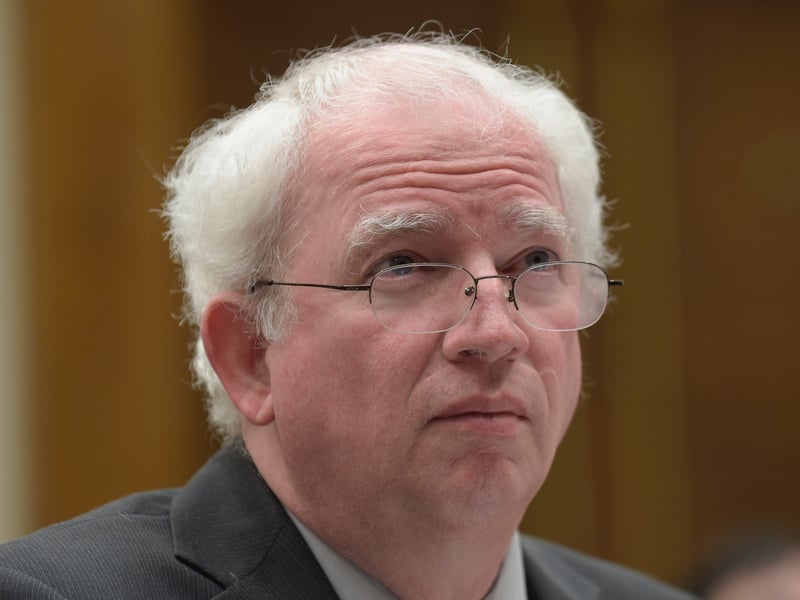
PHOENIX (CN) — The Arizona Republicans who submitted an “alternate slate” of presidential votes for Donald Trump in opposition to the state’s election results in 2020 say that their grand jury proceedings were irreversibly prejudiced by their state-coined moniker, “fake electors.”
Four of the so-called fake electors, indicted last year on fraud and forgery charges, argued Thursday afternoon that the case should be remanded to a new grand jury, which would essentially restart the case from scratch.
The defendants, including former Trump attorney John Eastman, Turning Point’s Tyler Bowyer, Republican politicians James Lamon and former Cochise County Republican Committee chair Robert Montgomery, say their grand jury proceedings, which stretched 18 days viewing 31 exhibits, were tainted from the start because prosecutors referred to the defendants as “fake electors.”
Because no Arizona law governs the electoral college, defense attorney Lacey Cooper said the word “fake,” apparently found more than 100 times in the grand jury transcript, is used only to testify to the defendants’ guilt.
Representing Lamon, a former U.S. Senate candidate, Cooper said it isn’t fair to call a defendant a forger 100 times and then ask a grand jury to remain neutral in deciding whether they agree.
“That alone requires a remand,” she told Maricopa County Judge Sam Myers.
11 Republicans who signed and submitted the election documents — which falsely hailed them as Arizona’s “duly elected” presidential electors, despite Joe Biden beating Trump in the state by 10,000 votes — and six other co-conspirators, including former New York Mayor Rudy Giuliani, have filed dozens of motions to dismiss and remand since their April 2024 indictment.
Mainly, the defendants argue that they submitted the votes to Congress as an “alternate slate” on the chance that the U.S. Supreme Court would overturn the presidential elections. They said in February that the documents, which didn’t include a state seal or governor’s signature, were intended only as a placeholder as election litigation was pending, and are therefore mischaracterized as fake.
State prosecutor Krista Wood told Myers that the fake elector moniker couldn’t have prejudiced the grand jury because it’s irrelevant to guilt. She said the Republicans were indicted not because they created a false document, but because of their underlying intent to defraud.
“There can be a false document,” she said. “That is not unlawful.”
Like filing taxes, she analogized, printing false information on an official document by accident is not a crime. It becomes one only if intent is present.
Wood added that the documents signed by the defendants were, in fact, “fake” because they hailed the “duly elected” electoral college voters for the state, when those in fact were the electors chosen by the Democratic party.
Cooper, of Schmitt, Schneck Even and Williams, argued that whether the documents can be deemed fake is a question for a trial jury, further pushing her point that treating it as an accepted fact poisoned the proceedings.
The defendants claim that their actions are justified by the Electoral Count Act of 1887, which allows for a state to submit two slates of electoral votes in the case of a disputed outcome. Hawaii did so in 1960, and four states did so in 1876.
Defense attorney Stephen Binhak, representing Bowyer, a conservative activist and Turning Point Action chief operating officer, said the state violated the law when it failed to explain the Electoral Count Act to the grand jury. In February, he contended that the act preempts the state from prosecuting this type of action. Myers has already rejected that argument.
Wood argued that because the defendants are not charged with any violation of the Electoral Count Act, the state had no obligation to explain it. She added that the act carries no protection for fraud, so it wouldn’t be relevant anyway.
Wood characterized the defendants’ complaints Thursday as “demands for perfection, not fairness” in the state’s prosecution. Binhack, of The Law Office of Steven James Binhak, conceded that the state need not be perfect, but must at a minimum play fair.
“Prosecutors are there to strike hard blows but fair blows,” he said.
The defendants also argued Thursday that prosecutors and investigators who testified misrepresented evidence and presented unqualified “experts” to pass opinions as legal conclusions. They also complained that prosecutors irresponsibly called then-pending election litigation “frivolous,” implying that the alternate elector slate could never have been justified.
As of date, none of said election litigation has yielded evidence of consequentially widespread election fraud.
These motions and many more are still pending before Myers while the state awaits a response from the Arizona Court of Appeals, which it asked to reverse Myers’ finding that the defendants meet preliminary standards for an anti-SLAPP motion.
If the higher court doesn’t appeal the decision, the state will be required to show why the violation of their first amendment right was legally justified, or else Myers may dismiss the case completely.
 Follow @JournalistJoeAZ
Subscribe to our free newsletters
Our weekly newsletter Closing Arguments offers the latest about ongoing trials, major litigation and rulings in courthouses around the U.S. and the world, while the monthly Under the Lights dishes the legal dirt from Hollywood, sports, Big Tech and the arts.