
 Search Articles


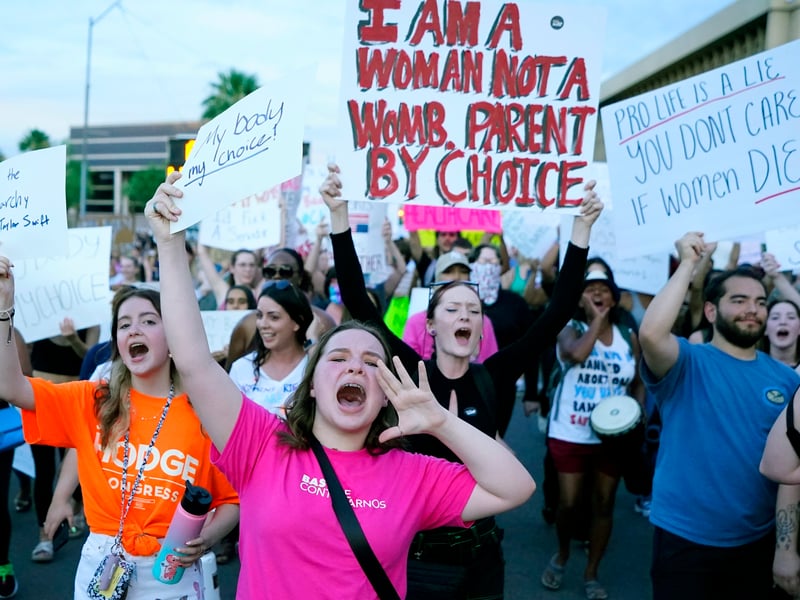
PHOENIX (CN) — Nearly a year after Arizonans enshrined the right to abortion into the state constitution, leading gynecologists and obstetricians are still fighting against a slew of leftover laws they say interfere with that right.
Dr. Paul Isaacson, a well-known supporter of Arizona’s 2024 Proposition 139, testified in state court Wednesday morning that certain laws requiring a 24-hour waiting period and multiple visits make it harder for women to receive necessary abortion care — and in some cases can push them past the legal deadline for both medication and procedural abortions.
A ban on abortions for certain reasons including fetal abnormalities has chilled honest communication between patients and providers, he added.
“They’ve advised their patients not to say anything when they come to us,” Isaacson said. “I can’t say what I want to say to them.
Arguing for intervenors looking to maintain the statutes, attorney Justin Smith said that because the number of abortions in Arizona has gone up since the laws — some of which were enacted as early as 2009 — they can’t be preventing women from receiving abortion care.
Nearly 17,000 abortions were conducted in Arizona in 2024 compared to only 10,000 in 2009. The state’s population has also grown by more than 1.3 million in that same time frame.
Isaacson sued the state over three groups of laws: the “reason ban,” which prohibits abortions based solely on fetal abnormalities, non-lethal fetal diagnoses, gender or race; the “two-trip scheme” and 24-hour delay, requiring a second clinic visit before an abortion can be performed an an ultrasound 24-hours beforehand; and the telehealth ban, prohibiting both diagnosis and prescription of abortion medication via phone or video call and the provision of abortion medication through the mail.
Isaacson, represented in court by the Center for Reproductive Rights, challenged the state laws in May soon after he voluntarily dismissed a federal challenge over the reason ban in April.
With Democratic Attorney General Kris Mayes having already disavowed any sort of abortion-related prosecutions of both patients and physicians, the state defendants have sided with Isaacson.
But Arizona House and Senate Presidents Steve Montenegro and Warren Petersen successfully intervened, taking over the role of defendant and arguing to keep the laws intact.
Wednesday was the first of a three-day evidentiary hearing over Isaacson’s motion for preliminary injunction. Maricopa County Judge Greg Como said Wednesday morning that he may consider this week’s arguments toward a permanent injunction as well, forgoing summary judgment or trial proceedings.
The two-trip scheme
Under the disputed laws, during a first visit, patients are required to receive an ultrasound and receive a pamphlet of state-mandated information regarding medication or procedural options, the gestational development of the embryo or fetus, and the risks involved with both receiving treatment and carrying the pregnancy to term.
“There are numerous falsehoods, inaccuracies within this document,” Isaacson said of the state-mandated pamphlet. Notably, it includes information on dilation and extraction, a process already banned at the federal level, and methotrexate, which Isaacson said is not prescribed by any physicians in the state for routine abortion care.
The information also promotes crisis pregnancy centers, which Isaacson describes as “unlicensed, unregulated facilities that put themselves out to be health care facilities without providing health care.” Those facilities are typically religious and discourage abortion in favor of other child care options.
“It puts me in a position to dissuade them from having an abortion,” he said regarding his requirement to share the pamphlet.
He added that ultrasounds are often not required for a medication abortion in the first trimester, especially if the patient has accurately tracked their sexual and menstrual history.
For the intervenors, Smith argued that the state-mandated materials aren’t harmful because physicians are allowed to give patients their opinions on the material. He added that an ultrasound would be a more accurate way to measure gestational age compared to a patient’s own menstrual recollection.
“Not always,” Isaacson pushed back.
The 24-hour delay
Similar to the two-trip scheme, Isaacson said the 24-hour delay has no medical basis, and only frustrates patients who want or need the procedure to be done as soon as possible.
Dr. Laura Mercer, who testified after Isaacson, added that the delay can exacerbate symptoms like pain and bleeding, require additional travel and childcare and can sometimes jeopardize the confidentiality of the procedure. Additionally, she said victims of sexual assault are especially frustrated when told they need to leave and come back to receive treatment.
Isaacson said the mandatory delay has occasionally pushed patients beyond the time limits to receive both medication and procedural abortions.
Isaacson did acknowledge that the challenged laws contain stipulations that waive the 24-hour waiting period in the case of a medical emergency, which his clinic has not had to deal with since before 2009.
The reason ban
Isaacson also testified that both patients to whom the reason ban applies to are those who wanted to get pregnant but later received an adverse fetal diagnosis or experienced other complications with their pregnancy.
Because patients fear their abortion will be denied, Isaacson said he now receives less information from both patients and their referring physicians, which could mean important medical information is left out of consultations.
Smith asked Isaacson whether he would perform an abortion for a patient who sites only gender or race as a reason.
Isaacson said he wouldn’t, but added “whether the state should have a law to prohibit it, I don’t think that’s necessary.” When asked, he said he would perform an abortion on a fetus diagnosed with Down syndrome.
“I believe in a woman’s right to choose,” he said.
Testimony in the three-day hearing will continue Thursday at 9:30 a.m. Como has made no indication of which way he may rule.
 Follow @JournalistJoeAZ
Subscribe to our free newsletters
Our weekly newsletter Closing Arguments offers the latest about ongoing trials, major litigation and rulings in courthouses around the U.S. and the world, while the monthly Under the Lights dishes the legal dirt from Hollywood, sports, Big Tech and the arts.