
 Search Articles


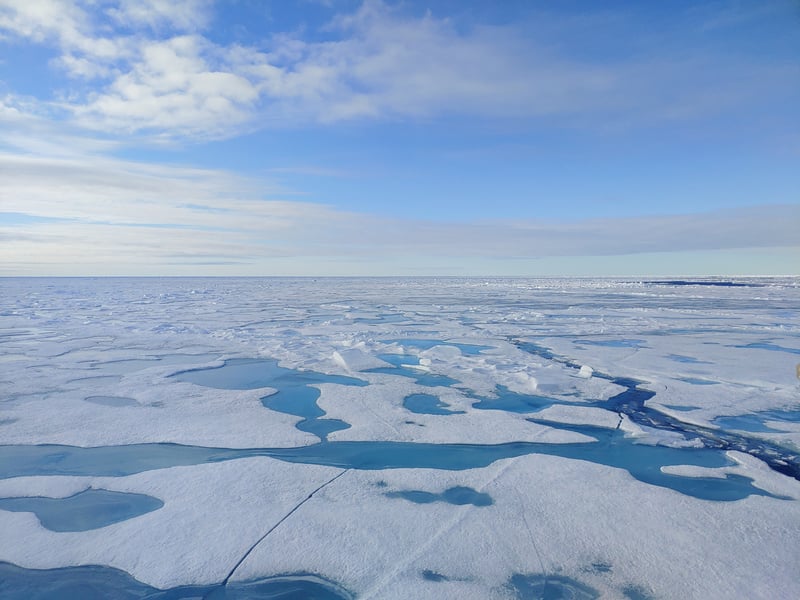
(CN) — The countdown to an ice-free Arctic is ticking, with the Arctic Ocean potentially experiencing its first ice-free summer as early as 2027, according to researchers in a new study.
The study, published Tuesday in Nature Communications, was conducted by climatologist Alexandra Jahn from the University of Colorado Boulder and Céline Heuzé from the University of Gothenburg.
They warn that this shift will have far-reaching effects beyond the polar regions, impacting weather patterns, ocean currents, and the global climate.
“The first ice-free day in the Arctic won’t change things dramatically,” Jahn said in a press release. “But it will show that we’ve fundamentally altered one of the defining characteristics of the natural environment in the Arctic Ocean, which is that it is covered by sea ice and snow year-round, through greenhouse gas emissions.”
According to researchers, since 1979, the Arctic has lost sea ice at an alarming rate of more than 12% per decade. In September 2023, the National Snow and Ice Data Center reported one of the lowest sea ice minima on record, marking a stark decline compared to the average ice coverage between 1979 and 1992.
When sea ice in the Arctic drops below 1 million square kilometers, scientists consider it “ice-free.”
Jahn’s previous research suggested that the Arctic might see its first ice-free month by the 2030s.
“Because the first ice-free day is likely to happen earlier than the first ice-free month, we want to be prepared,” Heuzé said in a press release. “It’s also important to know what events could lead to the melting of all sea ice in the Arctic Ocean.”
Using over 300 computer simulations, the researchers predict that the first ice-free day could occur within 9 to 20 years after 2023, regardless of the trajectory of greenhouse gas emissions. In the worst-case scenario, this day could come as soon as three years from now.
Researchers also discuss the possibility of rapid, extreme weather events that could accelerate the loss of sea ice. For example, a series of unusually warm falls, winters, and springs could melt millions of square kilometers of ice in just a few years, potentially triggering the first ice-free day.
In March 2022, parts of the Arctic experienced temperatures that were 50 degrees Fahrenheit warmer than average, with areas near the North Pole nearly melting. Such extreme warming events are expected to become more frequent and intense due to climate change, researchers say.
The loss of sea ice poses serious risks, like the ocean absorbing more heat and accelerating warming. But researchers say there’s still hope.
According to Jahn, drastically cutting greenhouse gas emissions could delay an ice-free Arctic and reduce the length of time the ocean remains ice-free.
“Any reductions in emissions would help preserve sea ice,” Jahn said.
Subscribe to our free newsletters
Our weekly newsletter Closing Arguments offers the latest about ongoing trials, major litigation and rulings in courthouses around the U.S. and the world, while the monthly Under the Lights dishes the legal dirt from Hollywood, sports, Big Tech and the arts.