
 Search Articles


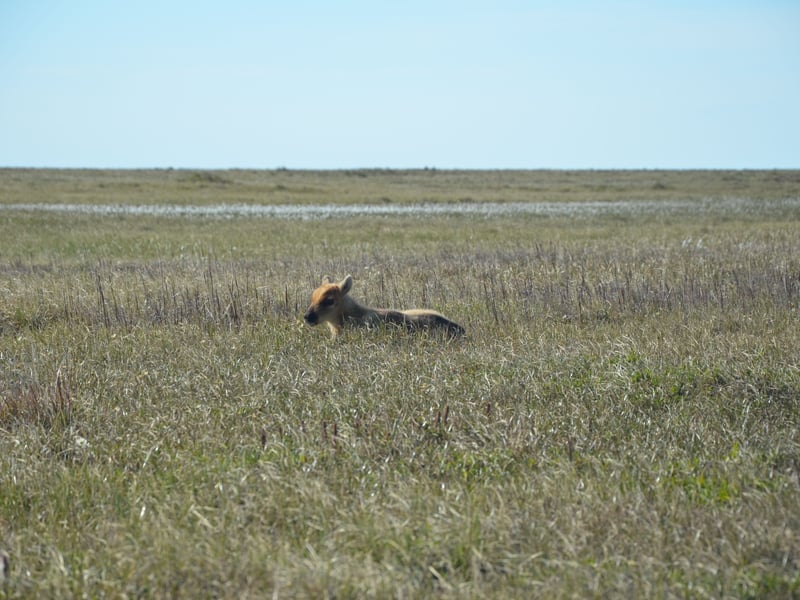
(CN) — For months, environmental groups have fought to stop heavy drilling equipment from crossing the fragile tundra near Teshekpuk Lake, Alaska, where delicate mosses and sedges support caribou herds and millions of migratory birds each spring. On Tuesday, they lost their fight.
A federal judge ruled that ConocoPhillips can proceed with its winter exploration program in the National Petroleum Reserve–Alaska, concluding that the Bureau of Land Management had properly planned to protect the Arctic ecosystem from industrial activity.
The main question for the court was whether the agency’s mitigation rules, including a requirement that snow cover average at least six inches, would prevent heavy vehicles from scarring vegetation that can take decades to recover in one of the harshest environments on Earth.
U.S. District Judge Sharon Gleason sided with federal regulators and the oil company, concluding that the agency reasonably relied on the six-inch snow standard along with other restrictions on when and how heavy equipment can traverse the landscape.
“Here, BLM conducted a reasonably thorough analysis of the impacts of the Winter Program on tundra in the project area on various types of vegetation,” Gleason wrote in her order.
The decision allows ConocoPhillips to drill four exploration wells and conduct seismic surveys across nearly 300,000 acres before the spring thaw.
The environmental groups, including Sovereign Iñupiat for a Living Arctic, the Center for Biological Diversity and the Wilderness Society, argued the rule at the heart of the case, known as Required Operating Procedure C-2, does not go far enough to protect the tundra. They pointed to scientific evidence showing that vehicle tracks can remain visible for up to 50 years, meaning the rule could allow industrial damage to last for decades.
But the judge, a Barack Obama appointee representing the District of Alaska, deferred to the agency’s expertise, citing the Naval Petroleum Reserves Production Act.
“BLM can satisfy the Reserves Act’s maximum-protection directive with mitigation measures that the secretary deems necessary or appropriate,” she said.
Gleason also found that the protective measure did more than simply require six inches of snow.
ROP C-2 “not only prohibits off-road travel when the soil is insufficiently frozen and snow depth is on average less than 6 inches, but also requires that off-road travel generally use low-ground-pressure vehicles, prohibits bulldozing tundra mat and vegetation to construct trails or seismic lines, and requires that vehicles be selected and operated so as to eliminate direct impact on the tundra,” she wrote.
The requirements also mandate that soil be frozen to at least 12 inches deep, with temperatures of 23 degrees Fahrenheit or colder at that depth, before operations can begin.
The National Petroleum Reserve–Alaska is governed by competing mandates. Created in 1923 as the Naval Petroleum Reserve, the 23.6 million-acre area on Alaska’s North Slope is both the nation’s largest single unit of public land and land set aside for oil development. Congress has directed the Interior Department to move quickly with competitive oil and gas leasing while also protecting areas with special ecological importance.
Much of ConocoPhillips’ planned activity would take place near Teshekpuk Lake, which is one of those specially protected areas. Federal law requires the government to provide maximum protection for the region’s subsistence resources, wildlife habitat and scenic values, a standard environmental groups argue the government didn’t meet.
The government’s own environmental assessment acknowledged that the proposed activities would likely cause both short- and long-term damage to vegetation, including the risk of irreversible erosion, ground subsidence and long-lasting scars across the landscape.
Gleason acknowledged these projections but found them insufficient to block the program.
“The NPRPA does not require BLM to prevent all impacts to surface resources in the TLSA or elsewhere in the NPR-A,” she wrote. “Expected impacts to vegetation would be minor and would be further minimized through applicable mitigation measures.”
She also accepted the agency’s conclusion that modern seismic techniques are less damaging than those used in the 1980s, when earlier surveys left lasting scars on the tundra. The Bureau of Land Management found that advances in survey methods and improvements in snow trail design and standards would likely reduce the environmental impact compared with the 1984–85 seismic work.
Environmental groups may appeal Tuesday’s decision to the U.S. Court of Appeals for the Ninth Circuit, though any appeal would not automatically stop the drilling. The winter season for Arctic operations is brief, typically lasting from late December through April. ConocoPhillips plans to complete its four-well exploration program and seismic survey before the spring thaw makes tundra travel impossible.
Representatives for Sovereign Iñupiat for a Living Arctic, the Center for Biological Diversity, the Wilderness Society and ConocoPhillips Alaska did not immediately respond to requests for comment.
 Follow @JeremyYurow
Subscribe to our free newsletters
Our weekly newsletter Closing Arguments offers the latest about ongoing trials, major litigation and rulings in courthouses around the U.S. and the world, while the monthly Under the Lights dishes the legal dirt from Hollywood, sports, Big Tech and the arts.