
 Search Articles


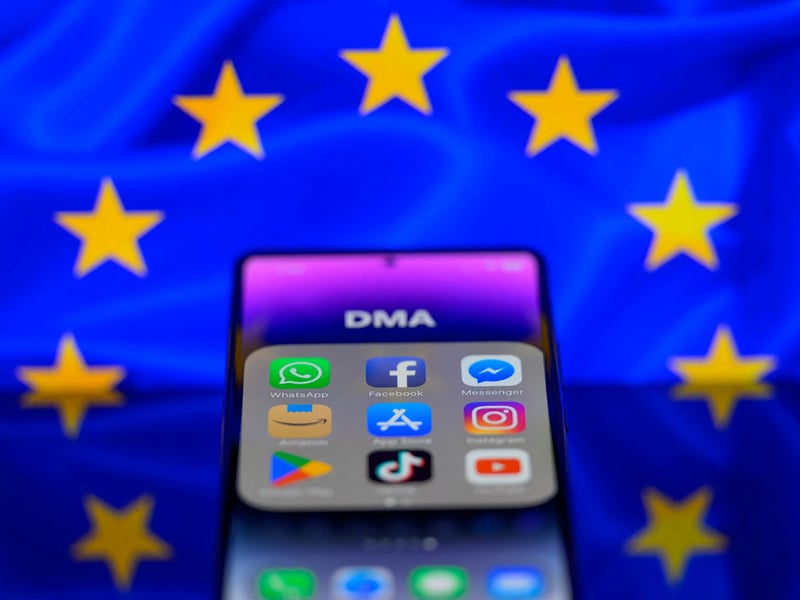
LUXEMBOURG (CN) — Apple and the European Commission squared off in Luxembourg on Tuesday in a high-stakes battle that could reshape how Big Tech operates in Europe.
At issue is Apple’s fight against its “gatekeeper” label under the EU’s Digital Markets Act, or DMA, a law designed to keep tech giants from locking users into their own ecosystems and to make digital markets fairer and more open.
The hearing brought together three related disputes between Apple and Brussels, all testing how far the EU can go in enforcing its new competition rulebook. One case targeted the decision to label Apple a “gatekeeper” under the DMA, while the others dealt with the EU’s scrutiny of its iMessage service.
The courtroom was filled with lawyers for EU institutions, Germany and digital rights groups, underscoring the political attention surrounding the case.
At the center of the fight is a simple but powerful question: how much control should Apple keep over its own digital world? The DMA, which took effect in 2023, was written to stop tech giants from acting as gatekeepers between businesses and users.
Once a company earns that label, it has to play by new rules meant to keep markets fair and competitive, including opening up its systems so rival products can actually work with them.
But Apple says the EU had gone too far. In its main challenge, the company asked judges to scrap parts of a 2023 decision that named its iPhone software and App Store as key “core platform services” under the law, meaning essential gateways between users and app developers. Apple argues that Brussels misread its own rulebook and is forcing the company to open up in ways that could weaken privacy, security and its control over its own technology.
Apple attorney Daniel Beard told the court that complying with the law’s interoperability demands would inevitably expose Apple’s intellectual property, from software code to trade secrets, and argued that “allowing someone access to that property is a deprivation of a key part of that right.”
Commission lawyers pushed back, arguing that Apple was twisting the meaning of the rules. They said lawmakers had already balanced competition and fundamental rights when drafting the DMA.
The commission added that Apple had failed to identify any concrete intellectual property that would actually be at risk under the law’s interoperability obligations.
Several intervening groups lined up behind the commission, including the European Parliament, the Council, the Free Software Foundation Europe and the Coalition for App Fairness.
The Free Software Foundation Europe countered that Apple’s concerns were misplaced, noting that the DMA already provides for interoperability and that Apple had not clearly identified which parts of its technology were genuinely at risk. The Coalition for App Fairness added that real interoperability is essential for developers to compete, warning that Apple’s selective approach would let it decide when and how others can connect to its devices.
Beyond the debate over interoperability, the hearing also zeroed in on how Apple defines its App Store. Apple argued that its stores for iPhone, iPad, Mac, Watch and TV each serve different audiences and shouldn’t all be treated as one. The commission pushed back, saying that for both users and developers the stores operate in the same way, effectively forming a single gateway to Apple’s ecosystem under EU rules.
Another key dispute centered on Apple’s messaging app. In 2023, the commission launched a probe into whether iMessage should fall under the DMA as what EU law calls a “number-independent interpersonal communications service” — basically, a messaging platform that works without using phone numbers.
Apple argued it shouldn’t, saying the app is free, has no ads and doesn’t use personal data for profit, so it doesn’t qualify as a paid service under EU law. The commission disagreed, countering that iMessage still brings in value indirectly by helping Apple sell more of its devices.
The judges spent much of the hearing testing how far the DMA can stretch. Apple argued its appeal was valid because the gatekeeper decision instantly set new duties in motion, while the commission said parts of the challenge targeted preparatory steps with no real legal impact.
A judgment is expected next year, but whatever the result, the back-and-forth exposed a bigger question beneath the surface: how courts should strike a balance between trusting lawmakers in such a technical field and making sure fundamental rights are protected. In the end, the debate was as much about who defines fairness in the digital world as it was about the rules themselves.
The cases mark a new phase in Europe’s battle with Big Tech, as the bloc’s new digital rulebook faces its first serious test in court.
For Apple, the outcome could determine how tightly it can control the App Store and its devices. For Brussels, it’s about proving that the DMA can stand firm under legal scrutiny and guide how far regulators can go in enforcing fair competition. And for other giants like Google, Amazon and Meta, the ruling will signal just how much room Europe’s toughest tech law leaves for their business models.
Courthouse News reporter Eunseo Hong is based in the Netherlands.
Subscribe to our free newsletters
Our weekly newsletter Closing Arguments offers the latest about ongoing trials, major litigation and rulings in courthouses around the U.S. and the world, while the monthly Under the Lights dishes the legal dirt from Hollywood, sports, Big Tech and the arts.