
 Search Articles


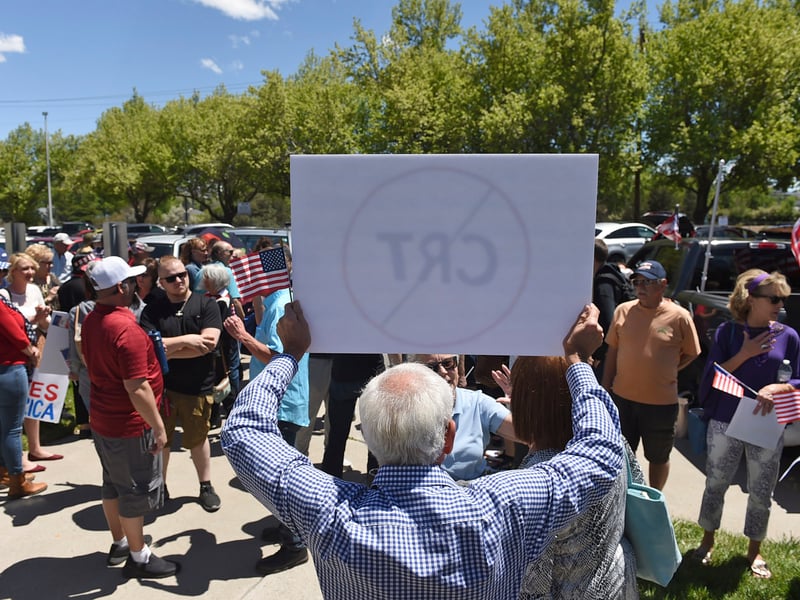
LOS ANGELES (CN) — The California State Court of Appeals found that the Temecula Valley Unified School District’s ban on the teaching of critical race theory is unconstitutionally vague and ordered the district court to issue a preliminary injunction, banning the policy.
The ban on teaching critical race theory “is unconstitutionally vague on its face because it employs ambiguous language, lacks definitions, is unclear in scope, is seemingly irreconcilable with state-mandated educational requirements, and contains no enforcement guidelines,” wrote Presiding Justice Kathleen O’Leary in the unanimous opinion published Monday.
“For more than two years, the board censorship of accurate American history has placed Temecula students at a tremendous disadvantage relative to their peers across the state,” said the plaintiff’s lawyer, Amanda Mangaser Savage of Public Counsel, at a press conference after the opinion.
Her colleague, Elizabeth Schilken of Ballard Spahr added: “The board knew that teachers would steer far clear of anything even remotely connected to the topics and the resolution, and that was the point, to censor viewpoints and interpretations of historical events that the board majority disagreed with on ideological grounds, and so we’re glad that the court recognized that.”
In December 2022, the conservative Temecula Valley school board passed two controversial resolutions the day a new majority was sworn in: one requiring that parents be notified if their child requests to be identified as having a gender that differs from the one assigned to them at birth and one that prohibits the teaching of critical race theory or “other similar frameworks.”
The resolution included five elements of critical race theory, including “Racism is ordinary, the usual way society does business.” It also listed eight doctrines of critical race theory, including: “An individual, by virtue of his or her race or sex, is inherently racist and/or sexist, whether consciously or unconsciously,” and “Individuals are either a member of the oppressor class or the oppressed class because of race or sex.”
A group of parents, teachers and students sued the school board in 2023, writing in their complaint: “The vague resolution hinders Temecula educators’ ability to teach state-mandated content standards, prepare for the coming academic year, and support rather than stifle student inquiry.”
Last year, Superior Court Judge Eric Keen denied the plaintiff’s motion for a preliminary injunction, finding that the resolution “seeks to limit instruction on the subject of critical race theory to a subordinate role within a larger instructional framework,” which he decided was reasonable. As to the charge that the resolution was too vague, the judge wrote: “A person of ordinary intelligence would have a reasonable opportunity to know what is prohibited as what is prohibited is set out specifically in the Resolution.”
The three-judge appellate panel disagreed, finding that Judge Keen had “ignored the entirety of Plaintiffs’ evidence documenting the District teachers’ ongoing harm.” The panel cited declarations from teachers who said they were afraid to teach certain books and topics for fear that the discussion would run afoul of the critical race theory ban.
One teacher was afraid to have her class read Martin Luther King Jr.’s “Letter from Birmingham Jail.” Another wasn’t sure if she could assign Toni Morrison’s “Beloved.” Another teacher had her class read “Roll of Thunder, Hear My Cry” by Mildred Taylor, but carefully avoided using the term “white” during classroom discussions about the 1977 novel, which takes place in the Jim Crow South.
“Unsure of what conduct is prohibited and fearful of arbitrary enforcement, teachers are erring on the side of caution and self-censoring,” Justice O’Leary wrote.
School board member Joseph Komrosky had stated, in a written declaration, that the board’s intention with the resolution was “to protect all students from racism and sexism" and insisted that teachers were still free to “teach on accurate historical events and individuals, such as Dr. Martin Luther King, the Holocaust, and slavery.”
But the appellate court remained unconvinced, finding that the resolution was indeed unlawfully vague, with “no guidelines for how a teacher should modify their curriculum.” Especially problematic was the prohibition on teaching “other similar frameworks.”
“Other similar frameworks leaves open for interpretation whether a teacher could be unwittingly implicated for teaching a topic wholly separate from racial inequities, but that could be categorized as having a similar framework by whoever is interpreting the Resolution,” O’Leary wrote. “Is instruction on gender inequality also prohibited by the Resolution? Age discrimination? This creates obvious issues of interpretation, which leaves the Resolution enforcement subject to arbitrary practices.”
The resolution was also missing an enforcement mechanism, or a process for an accused teacher to defend themselves.
California Attorney General Rob Bonta praised the ruling, writing in a statement: “Every student deserves the right to feel seen, valued, and welcome in their learning environment. This decision reinforces the principle that all students should have access to inclusive, affirming curricula that reflects the diversity of their communities and the richness of our shared history."
As to Temecula Valley’s policy on informing parents about a change in preferred gender identity, the panel dismissed that issue as moot since the California legislature, in 2024, banned what LGBTQ+ activists refer to as “forced outing.” That law was upheld by a federal judge earlier this year.
The critical race theory case remains live and can still proceed toward a trial. In the meantime, the resolution can’t be enforced.
“We don’t think this case needs to continue, and we would like to call on the board to drop what is essentially a sideshow,” Savage said.
 Follow @hillelaron
Subscribe to our free newsletters
Our weekly newsletter Closing Arguments offers the latest about ongoing trials, major litigation and rulings in courthouses around the U.S. and the world, while the monthly Under the Lights dishes the legal dirt from Hollywood, sports, Big Tech and the arts.