
 Search Articles


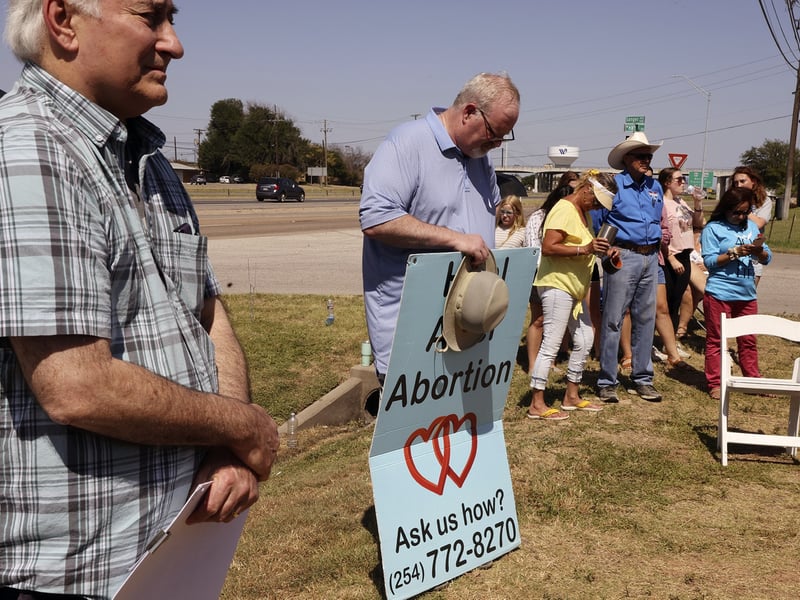
SAN DIEGO (CN) — The city of San Diego can’t prove that demonstrations outside of schools have caused any disruption to students’ learning before, therefore an anti-abortion activist should be allowed to hand out leaflets to children without any restrictions, the activist argued at a hearing in San Diego federal court on Friday.
“What is the matter with a demonstration or picketing?” said Catherine Short of Life Legal Defense Foundation, arguing on behalf of her client, Dan Blythe, at a hearing on the city’s motion to dismiss. “How is it causing a problem?”
In 2024, the city of San Diego updated a 1997 ordinance that created buffer zones extending 100-feet away from the entrances and exits of schools, medical facilities and religious institutions.
In those buffer zones, protesters can’t display signs. The ordinance also bans demonstrators from approaching people entering and exiting the buildings within eight feet in order to talk to them or hand them leaflets or literature, unless they have the consent of the person they’re approaching.
Last year, Blythe, an anti-abortion activist who has demonstrated across California, sued San Diego claiming the city’s ordinance violates his and other activists’ First and Fourteenth Amendment rights to free speech and to demonstrate by preventing them from handing out literature to students on public sidewalks at Patrick Henry High School in San Diego as they leave school.
But Matthew Zollman, the city’s attorney, said Friday that the ordinance allows Blythe or anyone else to do whatever they want outside of the buffer zone, including setting up a table on the sidewalk with his literature.
The ordinance just prevents him from doing it in a narrowly restricted area in order to avoid having students be essentially forced to hear Blythe’s message, the attorney added.
in their motion to dismiss, the city argued that prior case law recognizes that municipalities can impose content neutral restrictions that balance free speech rights with the need to protect students and other vulnerable populations, like people entering and exiting medical facilities and religious institutions, from “unwanted communication,” harassment and intimidation.
The ordinance does just that, the city said.
And it does that especially at schools, where students are by-law supposed to attend and where students moving in and out of the school at the start of the day and at dismissal can create bottlenecks of traffic.
Without the ordinance, “anybody can look up the school schedule and camp themselves outside of schools and have a captive audience,” Zollman said. “There’s no way to avoid this bottleneck issue.”
But Blythe and other anti-abortion activists’ goal isn’t to harass students, Short said, adding that there’s already laws on the books making that illegal.
“The goal is just to get this leaflet into as many hands as possible ,” Short said. “If you don’t want it, there’s another kid behind you who might.”
As for why Blythe is particularly interested in handing out flyers to students, Short said that’s where kids who might not have fixed ideas about abortion yet are.
“Is this something the court can and could consider about students’ rights to not hear unwanted speech about abortion?” asked U.S. District Judge Gonzalo P. Curiel, a Barack Obama appointee.
Anti-abortion speech can’t itself be deemed unwanted communication, Short said. Besides, she added, unwanted communication only applies to speech someone might not want to hear in their own home.
It also applies to unwanted speech at work, Curiel replied. This case, he added, rests on whether it also applies to schools wanting to maintain environments that are conducive to learning without distraction from people’s messages they don’t want to engage with.
“Kids take sides and they have opinions on public concerns, but that’s not a reason to restrict free speech rights,” Short said. “The city has no evidence of any problems outside schools.”
The city points to the Supreme Court’s 2000 ruling in Hill v. Colorado , in which the court found that a Colorado law restricting anti-abortion protests in front of healthcare facilities did not violate the First Amendment.
San Diego’s ordinance, the city argues, is modeled on Colorado’s own law.
During the hearing, Short said she believed Hill was wrongly decided.
When asked by Curiel if the Hill ruling was still the law though, Short replied “yes, it has not been overturned yet.”
Curiel said he’d take the matter under submission.
In his complaint, Blythe asks the court to declare the city’s ordinance unconstitutional and award him damages after a jury trial.
Subscribe to our free newsletters
Our weekly newsletter Closing Arguments offers the latest about ongoing trials, major litigation and rulings in courthouses around the U.S. and the world, while the monthly Under the Lights dishes the legal dirt from Hollywood, sports, Big Tech and the arts.