Search Articles


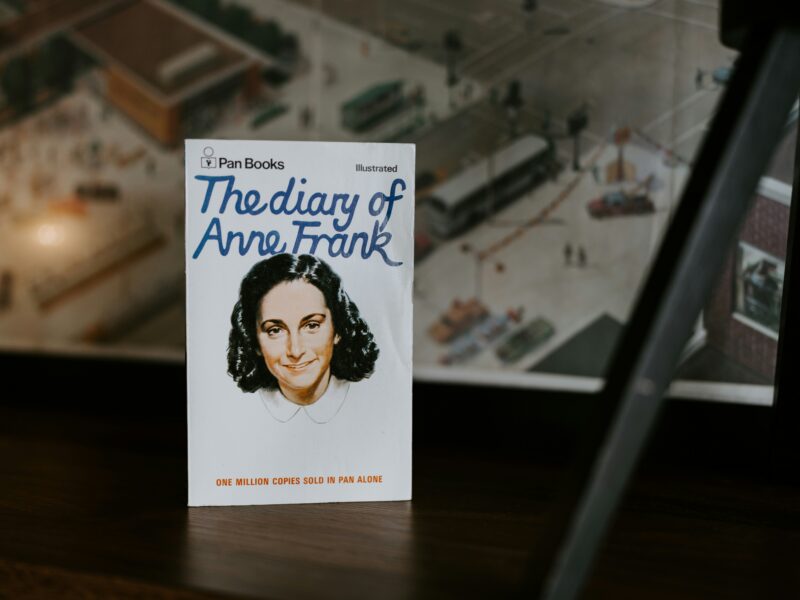
(CN) — A VPN may open the door to Anne Frank’s diary, but it doesn’t automatically make its online publication unlawful, Europe’s top court ruled Thursday.
The Court of Justice of the European Union sided broadly with the Dutch academic and cultural institutions behind a scholarly online edition of Anne Frank’s manuscripts, finding that Dutch readers’ ability to bypass geoblocking does not, by itself, violate copyright. The Anne Frank Fonds, which holds Dutch copyright in parts of the diary until 2037, had asked courts to order the website offline.
Anne Frank’s writings entered the public domain years ago in several EU countries, including Belgium, but remain protected in the Netherlands. In 2021, the institutions published a free scholarly edition on a Belgian-hosted website, blocked access from countries where copyright still applies and displayed a notice explaining why Dutch visitors could not enter the site.
That is enough, the judges said, provided the geoblocking uses state-of-the-art technology. “The possibility of such circumvention cannot, in itself and in all circumstances, be a decisive factor in finding those measures to be inadequate and, therefore, ineffective.”
Instead of asking whether every determined user can find a workaround, the court focused on whether the publisher took reasonable steps to keep the website out of countries where the work remains protected. Publishers cannot ignore territorial copyright rules, but they are not expected to make online barriers impossible to defeat.
The judges also said lawful VPN providers are not responsible when users bypass ineffective geoblocking. If copyright is infringed because the safeguards fall short, liability rests with the publisher that made the work available online.
Anne Frank, a Jewish teenager who hid from Nazi persecution in Amsterdam, kept her diary between 1942 and 1944 before dying in a concentration camp. Published by her father, Otto Frank, in 1947, it has become one of the world’s best-known accounts of the Holocaust.
The online edition was published by the Anne Frank Stichting, the Royal Netherlands Academy of Arts and Sciences and the Association for Research in and Access to Historical Texts. Users connecting from the Netherlands instead saw a message saying the site was unavailable because of copyright restrictions.
After Advocate General Athanasios Rantos reached the same conclusion in January, Stef van Gompel, a professor of intellectual property law at Vrije Universiteit Amsterdam, said treating VPN workarounds alone as infringement would go too far. “Otherwise, this would mark the end of online territorial licensing of copyright in the EU and jeopardize the free flow of information online,” he said.
Representatives for both the Anne Frank Fonds and the institutions behind the website did not immediately respond to requests for comment.
The case now returns to the Dutch Supreme Court, which must decide whether the geoblocking used here was genuinely state of the art. The EU court’s ruling cannot be appealed. If the Dutch court finds the technology met that standard, the online publication does not infringe Dutch copyright.
Courthouse News reporter Eunseo Hong is based in the Netherlands.
Subscribe to our free newsletters
Our weekly newsletter Closing Arguments offers the latest about ongoing trials, major litigation and rulings in courthouses around the U.S. and the world, while the monthly Under the Lights dishes the legal dirt from Hollywood, sports, Big Tech and the arts.