
 Search Articles


WASHINGTON (AP) — Ancient DNA has revealed a genetic link between the cultures of ancient Egypt and Mesopotamia, according to research published Wednesday in the journal Nature.
Researchers sequenced whole genomes from the teeth of a remarkably well-preserved skeleton found in a sealed funeral pot in an Egyptian tomb site dating to between 4,495 and 4,880 years ago.
Four-fifths of the genome showed links to North Africa and the region around Egypt. But a fifth of the genome showed links to the area in the Middle East between the Tigris and Euphrates Rivers, known as the Fertile Crescent, where Mesopotamian civilization flourished.
“The finding is highly significant" because it “is the first direct evidence of what has been hinted at” in prior work,” said Daniel Antoine, curator of Egypt and Sudan at the British Museum.
Earlier archeological evidence has shown trade links between Egypt and Mesopotamia, as well as similarities in pottery-making techniques and pictorial writing systems. While resemblances in dental structures suggested possible ancestral links, the new study clarifies the genetic ties.
The Nile River is “likely to have acted as an ancient superhighway, facilitating the movement of not only cultures and ideas, but people,” said Antoine, who was not involved in the study.
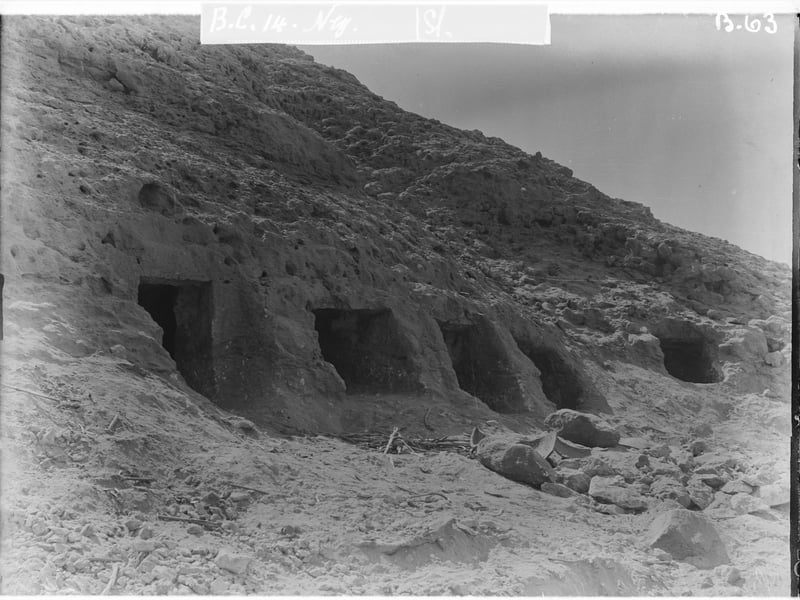
The skeleton was found in an Egyptian tomb complex at the archaeological site of Nuwayrat, inside a chamber carved out from a rocky hillside. An analysis of wear and tear on the skeleton — and the presence of arthritis in specific joints — indicates the man was likely in his 60s and may have worked as a potter, said co-author and bioarchaeologist Joel Irish of Liverpool John Moores University.
The man lived just before or near the start of ancient Egypt’s Old Kingdom, when Upper and Lower Egypt were unified as one state, leading to a period of relative political stability and cultural innovation — including the construction of the Giza pyramids.
“This is the time that centralized power allowed the formation of ancient Egypt as we know it,” said co-author Linus Girdland-Flink, a paleogeneticist at the University of Aberdeen.
At approximately the same time, Sumerian city-states took root in Mesopotamia and cuneiform emerged as a writing system.
Researchers said analysis of other ancient DNA samples is needed to obtain a clearer picture of the extent and timing of movements between the two cultural centers.
By CHRISTINA LARSON AP Science Writer
The Associated Press Health and Science Department receives support from the Howard Hughes Medical Institute’s Science and Educational Media Group and the Robert Wood Johnson Foundation. The AP is solely responsible for all content.
Subscribe to our free newsletters
Our weekly newsletter Closing Arguments offers the latest about ongoing trials, major litigation and rulings in courthouses around the U.S. and the world, while the monthly Under the Lights dishes the legal dirt from Hollywood, sports, Big Tech and the arts.