Search Articles


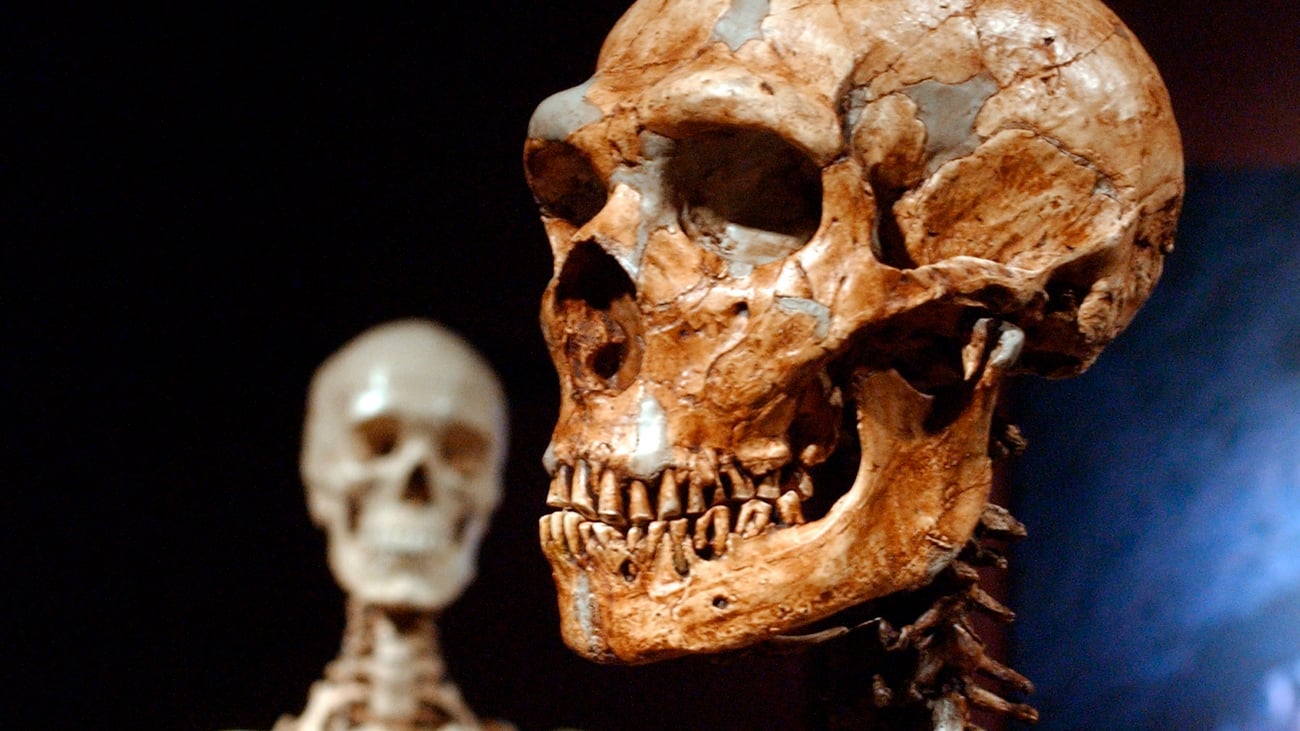
(CN) — Neanderthals were a lot cleverer than most people give them credit for — from excelling at hunting to even performing the first ever recorded dental procedures, according to a study published Wednesday in PLOS One.
First discovered in 2016, a single molar from the Chagyrskaya Cave in Russia’s Altai Mountains caught the eye of researchers from the Russian Academy of Sciences’ Peter the Great Museum of Anthropology and Ethnography, who were studying the cultural and physical adaptations of Neanderthals who lived in the area tens of thousands of years ago.
Upon closer examination by anthropologist and dental pathologies expert Alisa Zubova, the tooth — estimated to be around 59,000 years old — was found to have a deep hole extending into the pulp cavity in its center.
“We were intrigued by the unusual shape of the concavity on the tooth’s chewing surface,” Zubova said in a press release. “It differed from the normal morphology of the pulp chamber and did not match the typical pattern of carious lesions seen in Homo sapiens.”
Tests were then performed on three modern human teeth, showing that drilling with a stone point can produce holes with matching shapes and groove patterns. The presence of such holes and grooves was a dental trait found in other members of the same population, despite being rare among other Neanderthals, which researchers say shows that this Neanderthal group knew how to identify tooth infections and possessed the ability to drill away the affected area.
“This finding currently represents the world’s oldest evidence of successful dental treatment,” the authors said in a press release.
This is the first time such conduct has been documented outside of Homo sapiens.
Despite the procedure’s high level of pain and complexity, the infection and tooth pain were ultimately alleviated through the neanderthal group’s careful detection, treatment and execution, which researchers suspect was intentional and occurred more than once.
“We believe this was not a one‑time, isolated attempt,” researcher Kseniya Kolobova told Courthouse News. “Such a complex intervention, performed under conditions of severe pain, strongly suggests that the Neanderthals involved understood that their actions would lead to healing, or at least to significant relief.”
Kolobova said that the study’s findings may sway individuals who view Neanderthals as “brutish, simple or driven purely by instinct.”
“So, rather than being a footnote in our evolutionary past, Neanderthals emerge as thoughtful, resourceful and caring individuals who took active steps to alleviate suffering,” Kolobova said. “That changes the conversation from ‘how different were they from us’ to ‘how much we truly share."
Subscribe to our free newsletters
Our weekly newsletter Closing Arguments offers the latest about ongoing trials, major litigation and rulings in courthouses around the U.S. and the world, while the monthly Under the Lights dishes the legal dirt from Hollywood, sports, Big Tech and the arts.