
 Search Articles


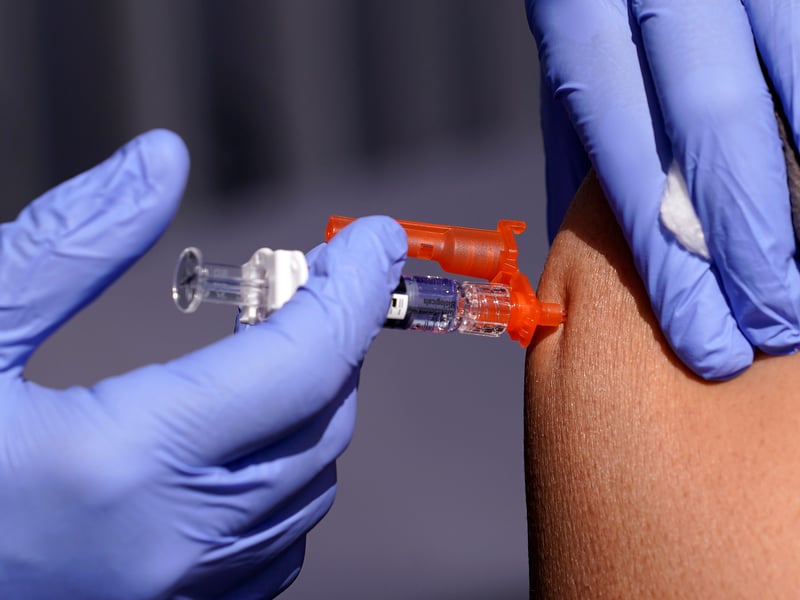
MANHATTAN (CN) — A Second Circuit panel appeared skeptical Monday to give Amish New Yorkers another crack at their lawsuit challenging the state’s lack of religious exemptions for the vaccination of their school-aged children.
In a bid to revive their now-dismissed 2023 claim, a group of plaintiffs comprised of Amish parents and schools asked the panel to consider where in the U.S. Constitution it states that religious exemptions are inferior to medical ones.
“The state has determined that it’s OK to spare a child vaccination for the sake of their immune system, but it’s not OK to spare a child vaccination for the sake of their soul,” the plaintiffs’ attorney Shannon Grammel told the panel Monday “And that’s the kind of value judgment the First Amendment does not allow.”
New York removed its religious exemption option for school immunizations in 2019. It is currently one of five states that does not allow nonmedical exemptions for vaccination requirements.
That’s an affront to the Amish lifestyle, the parents and schools claim.
“The Amish are religiously committed to living separate and apart from modern society,” Grammel said. “Their faith requires them to educate their children in private Amish schools. It also requires them to reject vaccination.”
But Grammel ran into immediate friction when she argued that nearly every other state in the country accommodates the Amish with a religious exemption from school vaccination laws.
“Does the Constitution require that those states accommodate them?” asked U.S. Circuit Judge Richard Wesley, a George W. Bush appointee.
Grammel replied that it may in certain circumstances. She said that under existing precedent, a state would need a “very compelling interest” to strip the Amish of such a fundamental way of their life. As such, she argued that the religious exemption ban would need to pass the strict scrutiny constitutionality test.
Wesley remained hesitant, however. He acknowledged that those seeking a religious exemption are asking for more than those seeking a medical one, heightening the risk of disease for the general population.
“The religious exemption is general as to all vaccines,” Wesley said. “Medical exemption is specific as to one vaccine; they don’t get an exemption from all vaccines.”
Earlier this year, U.S. District Judge Elizabeth Wolford, a Barack Obama appointee, dismissed the complaint in the Western District of New York. Wolford found that their claims are similar to a comparable case against the lack of religious exemptions for vaccination requirements in Connecticut.
In that case — We the Patriots USA Inc. v. Connecticut Office of Early Childhood Development — the plaintiffs made a similar free exercise claim against Connecticut’s enforcement of the Covid-19 vaccination in its school systems. But the case was dismissed, and that dismissal upheld by the Second Circuit, which Wolford said was enough to show that the Amish plaintiffs’ case should be dropped, too.
Grammel lamented the comparison on Monday.
“This is an applied challenge, whereas We the Patriots was a facial challenge,” Grammel argued. “On a facial challenge, they were requesting for all of the claimants across the state, anyone who would want this religious exemption. We’re requesting just for our Amish plaintiffs.”
Grammel added that the fact that her clients are Amish differentiates the cases, too. She claimed that prior case law gives the Amish more substantial legal protections for their way of life than Catholics, for instance.
Mark Grube, who represents state defendant New York Health Commissioner Dr. James McDonald, disagreed.
“It’s the same as Patriots ,” Grube said. “There’s an overriding interest in public health. And there’s a particular interest in the safety of children.”
U.S. Circuit Judges Jose Cabranes, a Bill Clinton appointee, and Eunice Lee, a Joe Biden appointee, rounded out the panel. They did not indicate when or how they will rule.
 Follow @Uebey
 Follow @uebey.bsky.social
Subscribe to our free newsletters
Our weekly newsletter Closing Arguments offers the latest about ongoing trials, major litigation and rulings in courthouses around the U.S. and the world, while the monthly Under the Lights dishes the legal dirt from Hollywood, sports, Big Tech and the arts.