
 Search Articles


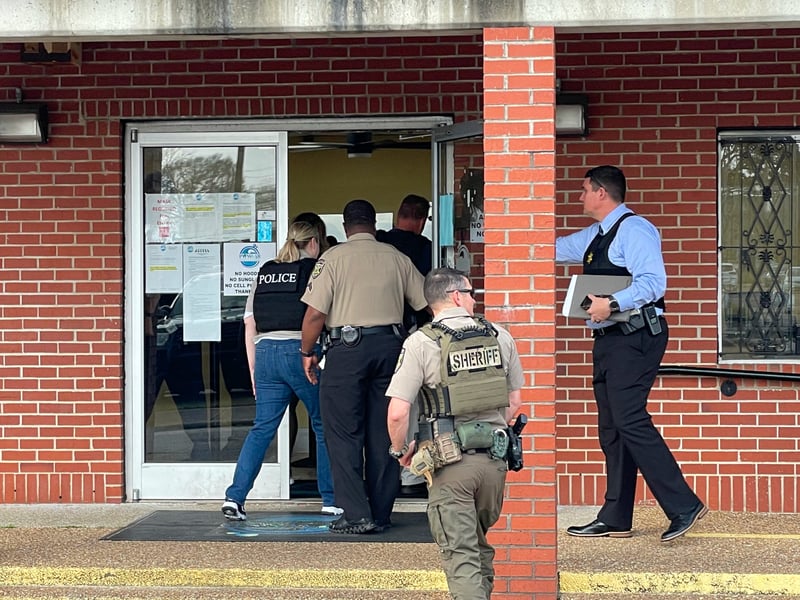
PRICHARD, Ala. (CN) — Even before the federal indictments, water users in the city of Prichard were already anxious about high rates and substandard service. The city’s Water Works & Sewer Board had earned bad press for years, as officials issued boil-water notices, residents complained about low water pressure and sewage spills fouled local waterways.
But chronic issues at the water board hit a new low in 2022, as authorities arrested four current and former employees over accusations of millions in misspent funds. Among them were the board’s controversial former operations manager, Nia Bradley.
Residents have sued to contest their water bills. In November, after a bank expressed concerns about the utility’s ability to repay a $55 million bond, Mobile County Circuit Court Judge Michael Youngpeter handed over management of the troubled public board to a receiver. With Bradley and other employees awaiting trial on felony charges, there’s still no end in sight to the legal fights.
Concerns about clean and affordable water are just one part of this saga. Roger Varner, a Mobile-based attorney who’s representing dozens of water users in two separate lawsuits, accuses city and water-board leaders of conspiring to let Prichard’s Alabama Village neighborhood fall into disrepair, so that residents could be relocated and the property redeveloped.
While some blame corruption and theft for the water board’s woes, Varner doesn’t think it’s that simple. As early as 2002 — long before Bradley’s tenure — an engineer wrote a letter to the board complaining of “terrible pipes and water pressure problems,” he said.
“This isn’t something new,” Varner said. “They’ve known about this for over 20 years.” Worse, he thinks the chronic water issues have curtailed economic development for the city. “This is a situation that is just obviously sad.”
For Prichard, the scandal at its water board is just the latest in a long history of injustices and plain bad luck. Just a few miles north of downtown Mobile, the predominantly Black city is among the poorest in Alabama, with a median household income just over $36,000 and more than 30% of its population below the poverty level.
It was once a thriving town — but as the local shipbuilding industry dried up and white flight increased, Prichard was in terminal decline by the 1980s. The tax base dwindled, potholes went unrepaired, crime increased and vacant houses crumbled or burned. Meanwhile, the water and sewer system became so compromised the utility could not even map all the leaks.
By 2014, water service in Prichard was so unreliable that state legislators proposed a ballot measure to dissolve the water board altogether.
Under that plan, Prichard’s water board assets would be taken over by the nearby Mobile Area Water and Sewer Service, which is larger and more financially stable. Fifty-two percent of county voters approved the plan. But the Prichard board sabotaged the plan, signing a contract with a management company, Severn Trent Water, that critics called a “poison pill.”
With that new contract, the Mobile utility would be on the hook for almost $33 million in additional management expenses. Unsurprisingly, the utility backed out of the deal. The management contract also began a relationship between the Prichard water board and Bradley, who started as a contractor with Severn Trent and would eventually be hired outright as the Prichard utility’s operations manager.
At first, things seemed to go well under Bradley. By 2019, she’d secured a $55 million bond for the utility with the goal of completing vital repairs, introducing a new electronic metering system and possibly even drilling new water wells. New wells would eliminate the board’s need to purchase water from the Mobile utility — its largest monthly expense.
But reliability issues persisted, and some customers began receiving bills that were more than 10 times their monthly average. Residents tried to dispute or resolve their bills, but for months those efforts went nowhere: Water board members had opted to take a year-long hiatus during the Covid-19 pandemic, leaving the public with little recourse for their complaints.
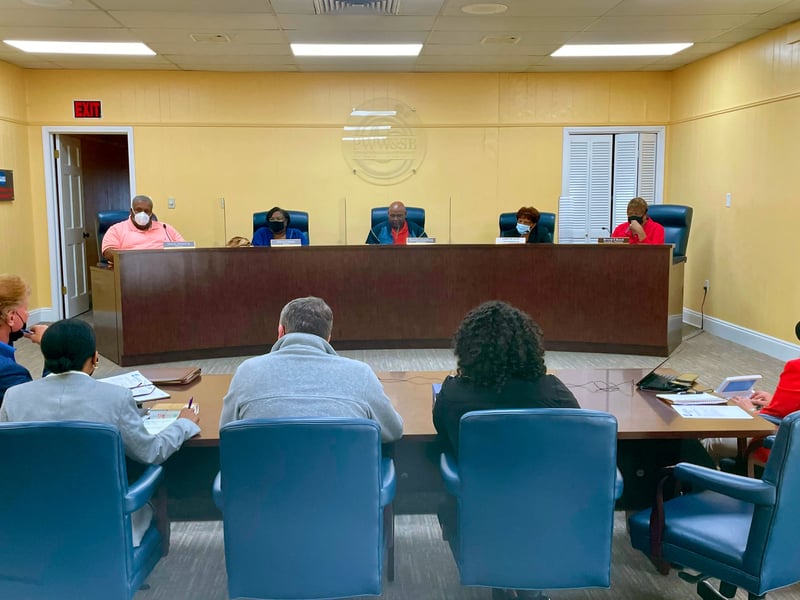
With nowhere to turn, customers began lobbying Prichard City Council, which appoints the water board, to do something. The city council replaced two of the five water board members, and the new members convened to study financials.
They started to notice some strange charges.
According to current water board chairman Russell Heidelberg, who demanded a review of the utility’s expenses, Bradley and other supervisors used company credit cards to purchase luxury goods from Gucci and Louis Vuitton, as well as first-class airfare and five-star accommodations in New York, Chicago, Miami, Atlanta and New Orleans.
That was on top of other personal luxuries like streaming subscriptions, gift cards and colored contact lenses. In addition, tens of thousands of dollars in public funds had been spent on vague invoices with no vendor names, in a scandal that the local press soon took to calling “Guccigate.” (Bradley did not respond to requests for comment for this story.)
Fast forward to today, and the court system is still trying to untangle the mess of alleged corruption, dubious customer bills, legal challenges and general water problems.
Bradley and other indicted former employees have pleaded not guilty to fraud and theft charges. A trial is scheduled for later in January.
Synovus, a Georgia-based bank that issued the $55 million bond, successfully petitioned the court to appoint a receiver to manage Prichard’s water services — though the city water board has contested the arrangement with the Alabama Supreme Court. Judge Youngpeter gave the parties until July 2024 to develop a master plan for the water board’s future.
In the meantime, these water issues have spilled beyond Prichard, including to the neighboring city of Chickasaw. With a population of only around 6,400 compared to Prichard’s population of 19,300, Chickasaw has long relied on Prichard to provide its water services.
Understandably, Chickasaw wants out. Twice in recent years, the city of Chickasaw has offered to purchase its assets from Prichard in order to create its own water and sewer system. The Prichard water board never put the proposal on its agenda.
In a phone interview, Barry Broadhead, Chickasaw’s current mayor, said Chickasaw officials would “continue to strive to have our own independent system,” calling it “the right decision for [Chickasaw] citizens and our continued growth.”
The five-member board is exclusively appointed by Prichard City Council, Broadhead noted — leaving the city of Chickasaw with no representation. Like Varner, he expressed concerns that years of mismanagement were crippling economic development.
When water service is unreliable and “you don’t have the upgrades,” Broadhead said, “that has to be a factor in anyone’s mind who wants to make a sizable investment in the city.” Now, as the legal fights continue, he said “the jury is still out” on “the future of the utility.”
After the water board defaulted on its bond payments, Judge Youngpeter appointed John Young as receiver. In making his ruling, the judge cited Young’s previous experience performing similar duties for embattled water utilities in Birmingham, Alabama, Flint, Michigan and Puerto Rico.
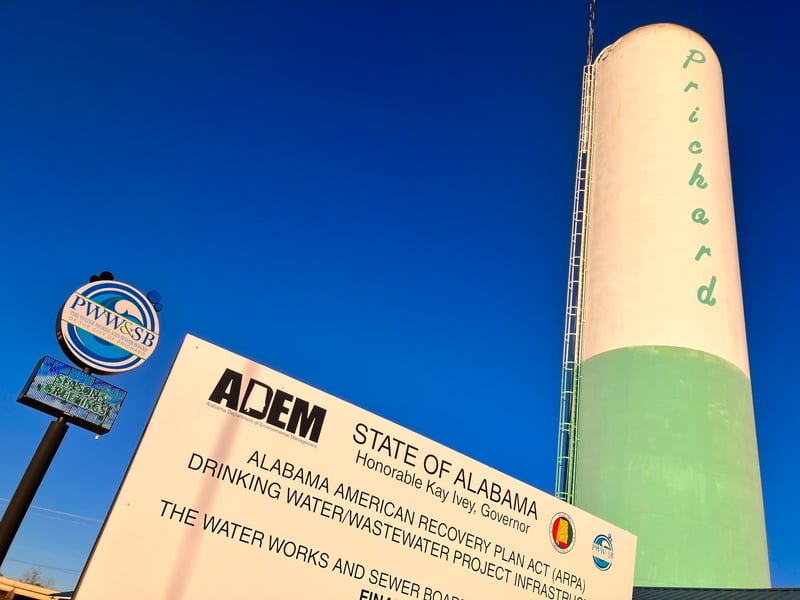
In a phone interview in November, Young promised to turn over a new leaf at the water board.
“The primary priority is to protect public health and provide reliable service,” he said. “The infrastructure in this system is old and it has had very little investment in the past few decades.”
In his efforts to resolve the board’s chronic issues, Young said he was exploring all options — including the possibility of selling the board’s assets to other cities and dissolving the utility completely. He also said he was trying to find compromises between water users and investors, with the goal of bringing long-term sustainability to the long-troubled board.
Resolving issues at Prichard’s water board, though, will also require rebuilding trust with concerned residents. “There’s a lack of trust in the whole system,” said John Eads, a local resident who also runs a nonprofit Christian ministry in Prichard’s Alabama Village neighborhood.
Alabama Village “has never been a great place,” Eads said in a phone interview in December — but in recent years, conditions in the low-income neighborhood have gotten even worse. “Roads have been neglected, lots are overgrown, water is ponding all the time,” he said. “Of the few houses that are still standing, [several] are burned beyond repair.”
Viewed in that light, Eads said, problems with local water are just one of “a cacophony of issues.” Recently, he said, city representatives have looked into using eminent domain to relocate the few households that still remain in Alabama Village, after residents were told the utility loses about $82,000 per month on water leaks in the neighborhood.
Gabriel Dortch, who founded and runs the nonprofit Prichard Boxing Academy, expressed similar concerns. Over the years, he has advocated for water board members to be elected rather than appointed. He also lobbied the Alabama Public Service Commission to supervise the utility. State and local officials never considered either proposal.
“There is a lack of urgency in this city,” he said in a phone interview. “It’s frustrating, but they always find excuses not to fix things that are broken.” Dortch tried to be part of the solution: In 2019, he accepted a volunteer appointment to the city’s finance committee. But he resigned less than a year later, claiming he was unable to get financial data or make recommendations.
Dortch says his own water bills have been manageable — but at the same time, he’s gone to lengths to limit his water use. He uses laundromats, for example, because he says it’s cheaper than washing clothes at home.
Yet Dortch says he’s seen exorbitant water bills that were sent to neighbors — with the water board only offering relief through payment plans or nominal bill credits. “You really don’t have to be that bright to see all the bullshit,” he said. “There needs to be some liability. I know the DA and AG probably have a full plate, but if all they can come up with is four people to indict, then somebody is not doing their job. Because there should be a busload of people going to prison.”
Russell Heidelberg, a 22-year member of the Prichard water board and its current chairman, worked for the water board before and during the Guccigate scandal. He claims Bradley never allowed him to review the financials of the system and at times even prevented him from entering the building. He says that former board members enabled the fraud and theft but stressed those members have since been replaced.
In his own defense after the scandal broke, Heidelberg released letters he sent to the attorney general’s office and state ethics commission in 2018 complaining of financial irregularities and urging an investigation. He said those complaints were never acted upon.
“A fraud was committed, but those responsible don’t work here anymore,” Heidelberg said in a phone interview in December. Still, for Prichard residents who feel let down and used by their water utility, it could take time to rebuild trust.
 Follow @gabetynes
Subscribe to our free newsletters
Our weekly newsletter Closing Arguments offers the latest about ongoing trials, major litigation and rulings in courthouses around the U.S. and the world, while the monthly Under the Lights dishes the legal dirt from Hollywood, sports, Big Tech and the arts.