
 Search Articles


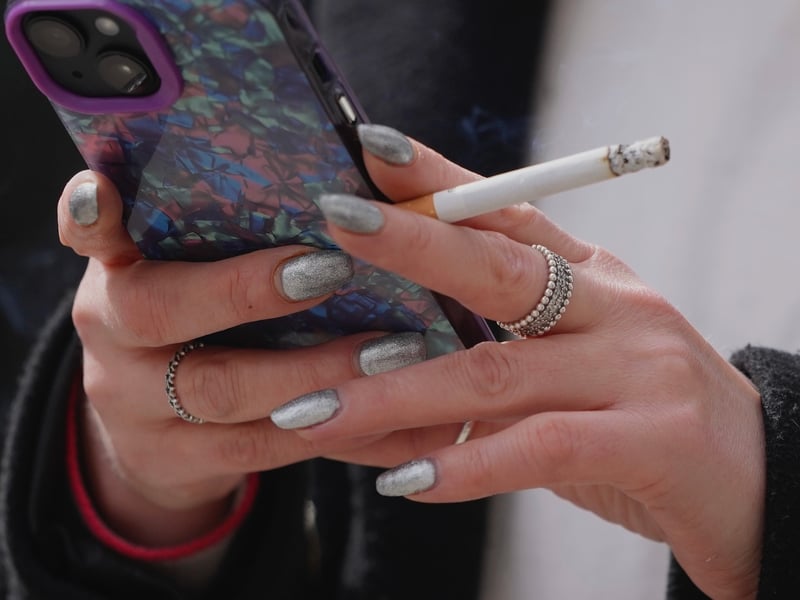
DENVER (CN) — If everyone who bought a package of American Spirits thinking they were less harmful than other cigarettes wanted to make a claim in a class action, the trial would last a decade, the brand’s owners argued to a 10th Circuit panel on Wednesday.
“If we have to look at every individual person to see if they bought the product, that’s millions of inquiries,” attorney Noel Francisco said on behalf of the Santa Fe Natural Tobacco Company, asking the panel to reject a class of certified by a lower court.
Consumers spanning a dozen states sued Santa Fe and R.J. Reynolds Tobacco in 2015, saying they purchased American Spirit cigarette products during the mid-2010s believing the brand’s claims of being “additive-free” and “natural” meant they were less harmful than other cigarettes on the market.
On appeal, Santa Fe asked the 10th Circuit to reject all classes and split the litigation into individual, small dollar lawsuits.
“Predominance means as a practical matter when you litigate the case are you going to be entwined in individual questions over common issues,” Francisco, of Jones Day in D.C., explained. “You have to ask yourself how is this case going to be tried?”
Using two theories of deception — one based on the idea that no menthol cigarettes can be “additive-free” and the other that American Spirit was seen as safer than other brands — the plaintiffs has asked U.S. District Judge James Browning in New Mexico federal court to certify more than two dozen classes spanning consumers who purchased American Spirit products in California, Colorado, Florida, Illinois, Massachusetts, Michigan, New Jersey, New Mexico, New York, North Carolina, Ohio and Washington.
In September 2023, Browning penned a 423-page order addressing both parties’ motions to exclude evidence and experts, as well as the proposed certification of classes. Browning accepted classes based the menthol theory, but rejected the safer cigarette theory as a bureaucratic nightmare to prove.
Senior U.S. Circuit Judge David Ebel questioned whether the tobacco companies were raising the issue of proving damages too early.
“My biggest concern is are we taking liability issues that will have to be delt with at trial, and we are moving it to the certification stage,” the Ronald Reagan appointee said.
U.S. Circuit Judge Veronica Rossman asked whether the plaintiffs could save administrative trouble by submitting claims by affidavit.
“The premise of your argument is that there is only one path,” the Joe Biden appointee said.
Francisco said his client intended to challenge every claim that didn’t come with a receipt, making affidavits no less burdensome. At the end of the day, Francisco said he saw the massive proposed class as a means to force a settlement.
Consumer class attorney Matthew Wessler argued this was the simplest way to reach as many impacted class members as possible, calling Santa Fe’s concerns about proving claims, “the dog that never barks.”
Wessler said the issue of forcing Santa Fe to sort through individual claims wasn’t going to arise, since a jury would ultimately award fixed damages sum calculated by how many packs the cigarette company sold and the premium earned off the misleading health claim.
“This court has already held that a defendant does not have a right to challenge individual claimants right to recovery out of a common fund,” argued Wessler who practices with the D.C. firm Gupta Wessler.
U.S. Circuit Judge Timothy Tymkovich, a George W. Bush appointee, also presided over the hearing. The panel did not indicate when or how they would decide the case.
This isn’t the first time a court has been asked to review American Spirit’s claims of being “safer” than the other cigarettes. In 2000, Santa Fe Tobacco entered a consent decree with the Federal Trade Commission settling claims of deception tied to the original tagline “100% additive-free natural tobacco.” The deal required American Spirit to print the disclaimer, “no additives in our tobacco does NOT mean safer.”
Despite this, American Spirit’s $223 million marketing campaign was so successful, according to the plaintiffs, the brand tracked an 86% increase in sales from 2009 to 2014, during a period in which overall cigarette use fell 17%. In 2015, the year the suit was filed, the company sold 4.8 billion cigarettes to millions of people.
 Follow @bright_lamp
Subscribe to our free newsletters
Our weekly newsletter Closing Arguments offers the latest about ongoing trials, major litigation and rulings in courthouses around the U.S. and the world, while the monthly Under the Lights dishes the legal dirt from Hollywood, sports, Big Tech and the arts.