
 Search Articles


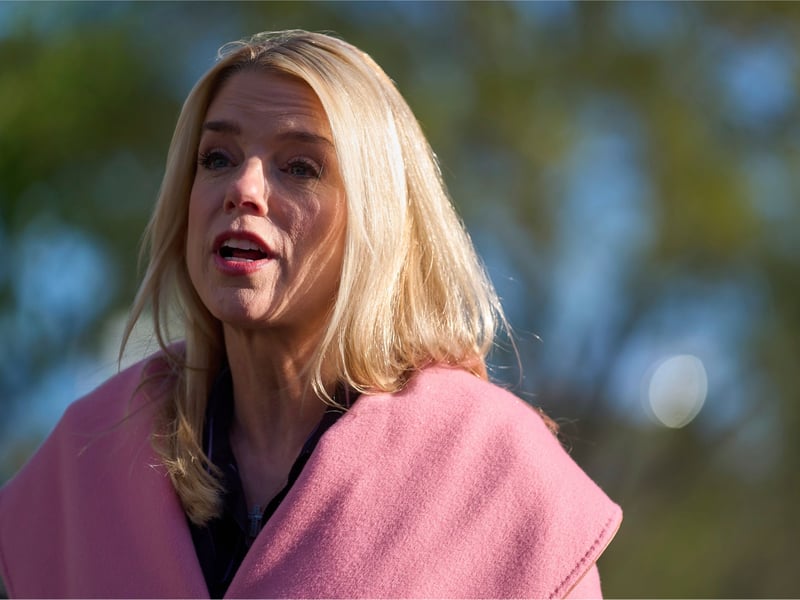
WASHINGTON (CN) — The American Bar Association on Wednesday offered a scathing rebuke to the Justice Department after Attorney General Pam Bondi effectively cut the legal organization out of the process for selecting federal judicial nominees under the Trump administration.
It was a long-awaited retort from the ABA, which has remained silent since Bondi announced late last month that the organization would no longer get special access to information about White House court nominees that it has used for decades to vet the qualifications of would-be federal judges under presidential administrations of both major political parties.
In a letter to the attorney general published Wednesday evening, American Bar Association President William Bay gave a spirited defense of his organization’s process for evaluating nominees and warned the Trump administration’s decision to excise the ABA from judicial nominations was based on inaccurate information.
In a May 29 post on X, Bondi shared a letter she had purportedly sent to Bay in which the attorney general informed the association that the White House would no longer permit it access to non-public information of judicial nominees. Bondi accused the organization of being “activist” and unfairly favoring nominees offered by Democratic presidents.
But in his reply to the attorney general, Bay said that the ABA had never formally received her letter and that the organization had only seen it on social media. Still, he said, he was “surprised and disappointed” that the Justice Department had moved to cut the ABA out of the nominations process.
“The changes that the Justice Department is apparently imposing will likely result in less transparency in the process of confirming nominees to lifetime appointments on the federal bench and appear to be based on incorrect information set forth in your letter,” Bay told Bondi.
The ABA president rebuked the attorney general’s central argument, pointing out that his organization’s evaluations are designed primarily to ensure that judicial nominees have the professional qualifications to handle the responsibility of a lifetime appointment to the federal bench. The association does not advocate for any nominees, nor does it consider a nominee’s “ideology or judicial philosophy,” he wrote.
“No other organization provides this important nonpartisan information to the White House or the Senate Judiciary Committee during the confirmation process,” Bay added.
Bay also argued that Bondi’s claim of political bias at the ABA is not borne out by the data. The organization’s standing committee, he said, has rated nearly 97% of nominees in every administration over the last 20 years as either qualified or well-qualified — including those under the first Trump administration.
“Your letter does not assert that any nominee has refused or been reluctant to participate in Standing Committee interviews or to disclose information as has been the practice for 72 years,” said Bay, adding that it was “difficult to believe” any nominees would be reluctant to do so given the ABA’s record of providing good ratings to court appointees across presidential administrations.
Bay also accused the Justice Department of restricting its access to judicial nominees “without justification or basis,” calling the move “deeply disturbing.”
He claimed that Bondi’s instructions to limit the ABA’s access to nominees’ non-public information — such as bar records, and her direction to nominees to ignore information and interview requests from the organization — would result in the omission or relevant information “that should have been considered before confirming anyone for a lifetime appointment as a federal judge.”
The ABA president urged Bondi to reconsider her decision, pointing out that the organization’s access to nominee information provides both the White House and the Senate with “important insights” otherwise not available.
“Knowing that relevant professional information has been considered before confirming any judicial nominees also helps bolster the public’s trust and confidence in our federal courts,” Bay wrote.
The ABA has for decades provided ratings for White House judicial nominees. Until Former President George W. Bush, the organization even got advance notice of new appointments before they were sent to the Senate for consideration. Bush stopped that practice, which was only briefly revived under former President Barack Obama.
Bondi’s move last month, though, effectively cuts the association out of the process entirely, denying it access to information about nominees even after they are sent to the Senate.
Despite that, lawmakers are pressing forward with Trump administration judicial nominees without ABA’s input. The Senate Judiciary Committee held its first nominations hearing last week with a panel of judges who had not received any sort of rating from the legal professional organization.
Republicans on the panel were happy to see the ABA removed from the equation. Missouri Senator Eric Schmitt called it an “ideologically captured organization” and accused it of staying silent on nominees during the Biden administration.
Utah Senator Mike Lee said it was “stunning and alarming” that the ABA had ever been allowed to participate in the judicial selection process, adding that the organization was “about as ideologically evenhanded as the Democratic National Committee.”
The Trump administration has already put forward several controversial nominees for federal court vacancies, including Emil Bove, the former acting deputy attorney general tapped to join the Third Circuit; and Whitney Hermandorfer, director of strategic litigation for the Tennessee attorney general and the president’s nominee to the Sixth Circuit.
 Follow @BenjaminSWeiss
Subscribe to our free newsletters
Our weekly newsletter Closing Arguments offers the latest about ongoing trials, major litigation and rulings in courthouses around the U.S. and the world, while the monthly Under the Lights dishes the legal dirt from Hollywood, sports, Big Tech and the arts.