
 Search Articles


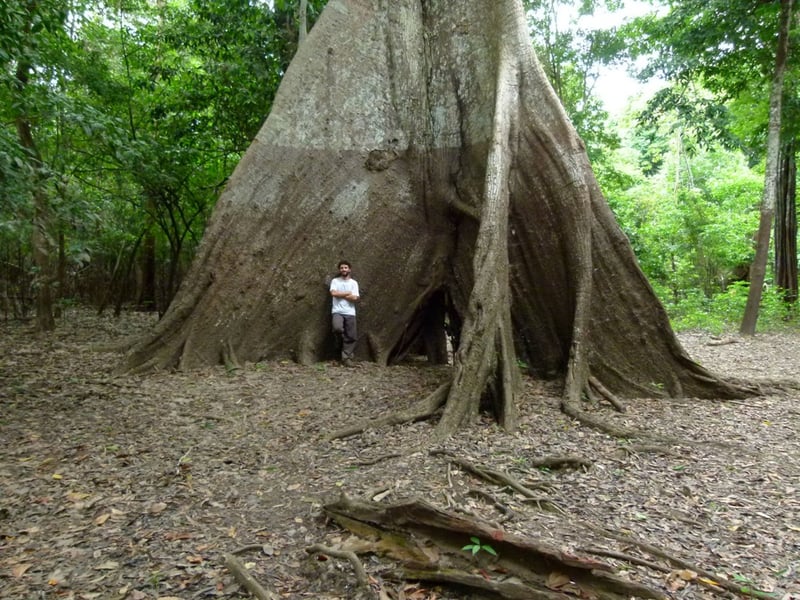
(CN) — The Amazon rainforest is experiencing a dramatic shift in its rainfall patterns, with wet seasons growing wetter and dry seasons becoming increasingly arid, according to new research. By analyzing tree rings from two Amazonian species, scientists found that wet season rainfall has surged by 15–22%, while dry season rainfall has dropped by 5.8–13.5% since 1980 — a trend that could worsen flooding, droughts and ecological disruptions.
Published Tuesday in Communications Earth & Environment, the study reveals how rising Atlantic and Pacific Ocean temperatures are altering atmospheric circulation, amplifying seasonal extremes. While natural climate variability plays a role, the study suggests human-driven global warming is likely accelerating the shift.
The international team — led by researchers from the University of Leeds, University of Leicester and Brazil’s National Institute for Amazon Research (INPA) — used oxygen isotopes in tree rings from Cedrela odorata and Macrolobium acaciifolium to reconstruct decades of rainfall data. Unlike traditional climate records using rain gauges and other observations, this method captures long-term trends across the vast Amazon basin.
The Amazon’s rainfall cycle is a linchpin of global climate systems, regulating carbon storage and weather patterns, according to co-author Bruno Cintra. But the study warns that intensifying swings between deluge and drought could destabilize ecosystems and jeopardize water and food security for Indigenous and traditional populations.
“The Amazon’s hydrological cycle is becoming more extreme,” co-author Roel Brienen of the University of Leeds said in a statement. “Increased wet season rainfall can lead to more frequent and severe flooding, while reduced dry season rainfall exacerbates drought conditions, impacting forest health and biodiversity.”
Ongoing drought has left parts of the region parched in recent years, while another recent study considered the implications of an Amazon rainforest without rain. Cintra suggested that policymakers who attend the UN’s climate conference in Belem, Brazil, in November prioritize the Amazon’s protection.
The researcher’s analysis isolated oxygen isotopes from cellulose in the targeted trees. Heavier seasons were marked by the presence of diluted oxygen atoms, while drier seasons left behind concentrated oxygen atoms. The ratio of these isotopes in tree rings serves as a fingerprint of past rainfall conditions and is more reliable than meteorological data collected in recent decades across the vast, remote Amazon.
“While traditional climate datasets may underestimate these changes, the tree ring isotope data offer a more integrated, large-scale perspective,” said Arnoud Boom, another of the study’s co-authors. “Our unique approach combining oxygen isotope ratios in tree rings from non-flooded and from flooded Amazon forests allowed us to separately estimate wet and dry seasons rainfall trends.”
In response to the study, Jochen Schöngart, a researcher at the National Institute for Amazon Research in Manaus, Brazil, emphasized that urgent human intervention is necessary to reverse the trend.
“This is of relevant concern as the intensification of the hydrological cycle impacts the functioning of ecosystems,” he said.
 Follow @gabetynes
Subscribe to our free newsletters
Our weekly newsletter Closing Arguments offers the latest about ongoing trials, major litigation and rulings in courthouses around the U.S. and the world, while the monthly Under the Lights dishes the legal dirt from Hollywood, sports, Big Tech and the arts.