
 Search Articles


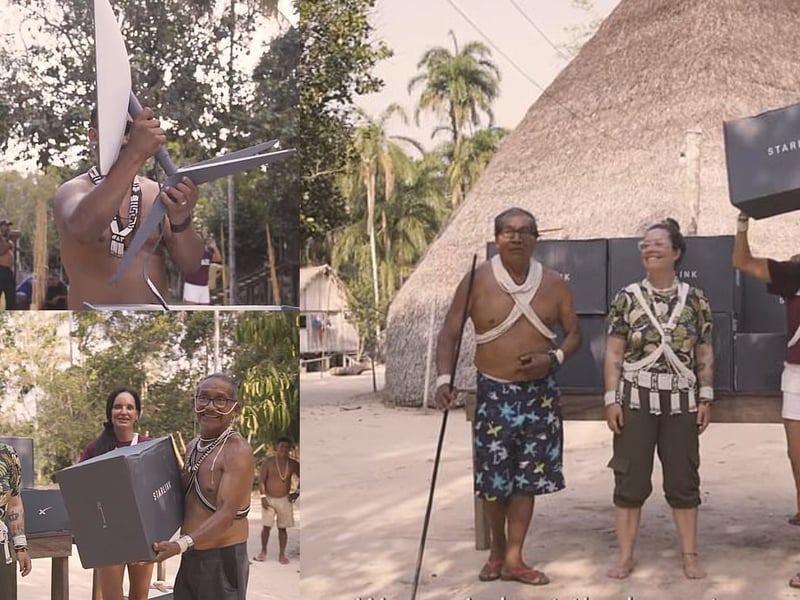
LOS ANGELES (CN) — The Marubo Tribe of the Javari Valley has sued The New York Times and TMZ for defamation, following a flurry of news stories about the sudden effects of satellite internet had on the remote Indigenous community living deep within the Amazon rainforest in Brazil.
The Marubo tribe includes about 2,000 members living in communal huts among 20 different villages scattered over hundreds of miles along the Ituí River. Some villages are so isolated they take weeks to get to. In 2022, the tribe received a generous gift: 20 Starlink antennas, worth about $15,000 apiece, which gave the isolated tribe a high-speed connection to the outside world.
Two years later, a New York Times reporter and photographer hiked more than 50 miles through the Amazon jungle to document the effects of sudden internet access on the Marubo. The results were, perhaps predictably, mixed. Members of the tribe could now keep in touch with faraway relatives and call for help in case of emergencies. But the modern world also brought about some jarring changes.
“After only nine months with Starlink, the Marubo are already grappling with the same challenges that have racked American households for years: teenagers glued to phones; group chats full of gossip; addictive social networks; online strangers; violent video games; scams; misinformation; and minors watching pornography,” wrote New York Times reporter Jack Nicas. One tribal leader, who had become a vocal opponent of the internet, told Nicas: “Everyone is so connected that sometimes they don’t even talk to their own family.” The man worried most about pornography and said, in Nicas’ own words, “some leaders had told him they had already observed more aggressive sexual behavior from young men.”
The story went viral, as it were, and was picked up by dozens of other media outlets, many of which rewrote the story with more salacious headlines. TMZ’s story blared: “Tribe’s Starlink hookup results in porn addiction!!!” The Times never said anything about addiction, and such was the frenzy that followed the stories, Nicas felt compelled to write a follow-up, headlined: “No, a remote Amazon tribe did not get addicted to porn.” The story quoted an Instagram video posted by Enoque Marubo (all members of the tribe use the surname Marubo), one of the leaders who helped bring Starlink to the Javari Valley, saying: “These claims are unfounded, untrue and reflect a prejudiced ideological current that disrespects our autonomy and identity.”
On Tuesday, Enoque Marubo and Flora Dutra, a Brazilian activist who also helped bring Starlink to the tribe, filed a lawsuit against The New York Times, TMZ and Yahoo in Los Angeles Superior Court. Their claims include defamation, negligence, fraudulent inducement, intentional infliction of emotional distress and intrusion of seclusion.
“The NYT portrayed the Marubo people as a community unable to handle basic exposure to the internet, highlighting allegations that their youth had become consumed by pornography shortly after receiving access,” the plaintiffs say in their complaint. “These statements were not only inflammatory but conveyed to the average reader that the Marubo people had descended into moral and social decline as a direct result of internet access. Such portrayals go far beyond cultural commentary; they directly attack the character, morality, and social standing of an entire people, suggesting they lack the discipline or values to function in the modern world.”
According to the complaint, Nicas and his photographer were invited to stay at one of the Marubo villages for one week but left after less than 48 hours — “barely enough time to observe, understand, or respectfully engage with the community.”
The plaintiffs claim the Times defamed the tribe as a whole and Marubo and Dutra specifically, since they were the ones who brought the new technology to the tribe. The story, they say, fueled “a global media storm that subjected plaintiffs to humiliation, harassment, and irreparable harm to their reputations, safety, and standing both within their own people and on the world stage.” The two say they’ve received “thousands of hostile and hateful and threatening messages,” including “death threats, racist and misogynistic abuse, and reputational smears that circulated globally across social media platforms, news aggregators, and comment sections.”
As to the TMZ story, it included video footage of Dutra and Enoque Marubo distributing Starlink antennas to members of the tribe.
“By placing their images directly alongside such defamatory commentary, TMZ created the unmistakable impression that plaintiffs Flora Dutra and Enoque Marubo had introduced harmful, sexually explicit material into the community and facilitated the alleged moral and social decay,” they say in the complaint.
The news stories, including dozens of others, had deeply harmed both the tribe and the two named plaintiffs, they say.
“The Marubo people became the subject of international ridicule, reduced to memes and headlines that mocked their youth, misrepresented their traditions, and portrayed them as morally degraded,” the plaintiffs say in their complaint. “Flora Dutra, in particular, endured a global wave of hate, harassment, and psychological torment so severe that it triggered a serious health crisis.”
Dutra says she developed cancer and has had surgery. She also claims that a “socially conscious” startup she cofounded, NAVI Global, once valued at $3 million, has been ruined. Following the wave of news stories about the Marubo, “NAVI Global was subjected to institutional withdrawal and reputational blacklisting. Foundations rescinded committed grants, partnerships were suspended, and planned speaking engagements, such as with the European Parliament, were abruptly canceled. The organization’s name became inextricably linked to the false narrative that it had introduced pornography into Indigenous communities. Within weeks, NAVI Global was forced to cease operations, terminate staff, and dissolve its core programs. A leading force for Indigenous digital sovereignty was thus extinguished due to reckless and irresponsible journalism.”
The tribe seeks $180 million in damages, including $100 million for punitive damages.
In an email, a New York Times spokesperson pointed out that the original news story “does not say or infer any members of the tribe were addicted to pornography. This was incorrectly reported by other media outlets.
“Any fair reading of this piece shows a sensitive and nuanced exploration of the benefits and complications of new technology in a remote Indigenous village with a proud history and preserved culture. We intend to vigorously defend against the lawsuit.”
 Follow @hillelaron
Subscribe to our free newsletters
Our weekly newsletter Closing Arguments offers the latest about ongoing trials, major litigation and rulings in courthouses around the U.S. and the world, while the monthly Under the Lights dishes the legal dirt from Hollywood, sports, Big Tech and the arts.