
 Search Articles


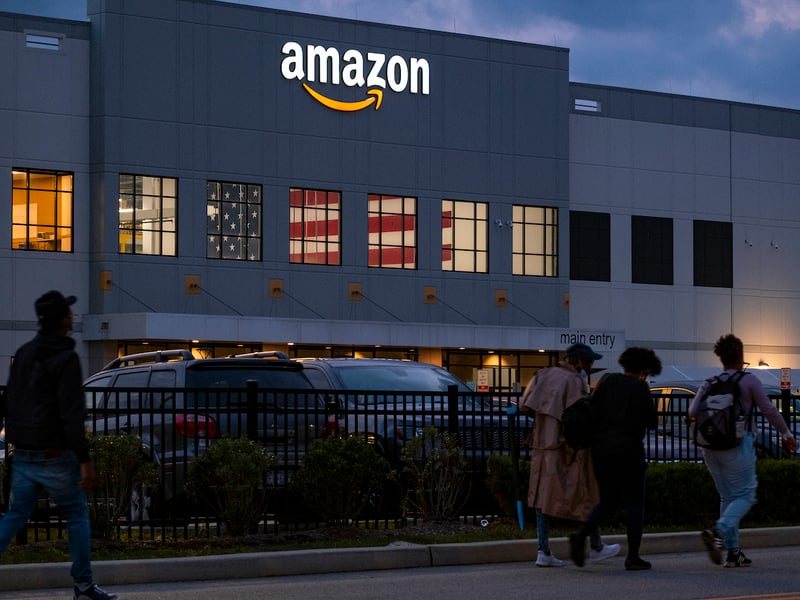
MANHATTAN (CN) — A trio of Connecticut Amazon employees sought to revive a fair wages class action against the e-commerce giant on Tuesday, arguing at the Second Circuit that they should have been paid for mandatory security screenings whenever they left the warehouse.
The security checks, a preventative measure implemented to keep workers from stealing merchandise, could take between 10 and 20 minutes each day, the plaintiffs say. They took place any time workers wanted to leave, including at the end of the day and on unpaid meal breaks.
The workers say they were told to clock out prior to the screenings and were never paid for their time, despite being forced to stay on the company’s premises. They estimated that they lost out on 50 to 90 minutes per week in security lines and are seeking millions in compensation for their fellow Connecticut Amazon workers.
But a lower court last year granted summary judgment to Amazon, citing a 2014 ruling from the U.S. Supreme Court in favor of Amazon that found that employers don’t have to compensate workers for “preliminary” and “postliminary” activities under the Portal-to-Portal Act of 1947.
The plaintiffs contended Tuesday that Connecticut never actually adopted that federal law, and that state laws differ in their favor.
“We define wages as hours worked,” plaintiff attorney Richard Hayber told the Second Circuit. “We have no exclusions in our statute, like the Portal-to-Portal Act has. There is no such thing as a Connecticut Portal-to-Portal Act. We have never adopted it expressly.”
Hayber rejected Amazon’s notion that the Connecticut General Assembly “silently” and “implicitly” adopted the act in 1967 when it passed own Wage Act. U.S. Circuit Judge Myrna Perez, a Joe Biden appointee, appeared skeptical.
“What do we do about the fact that several Connecticut state courts have relied on the FLSA (Fair Labor Standards Act) and the PTPA (Portal-to-Portal Act)?” she asked. “Are they getting it wrong?”
Hayber distinguished his clients’ case from previous ones, which sought to define what “work” meant, saying in this case the court should be looking to define the meaning of “hours worked.”
“If the court takes up the question, ‘What does hours worked mean?’ and it means all time required to remain on the premises, there is nothing to look to the federal court for,” Hayber said. “There is nothing to interpret.”
U.S. District Judge Kari Dooley defied that reasoning when she handed Amazon a win last year.
“The relevant definition at issue is not ‘hours worked’ but, rather, ‘work,’” Dooley ruled. “The Connecticut Supreme Court has directed that when Connecticut wage laws are silent on a particular issue, courts should consider federal statutes and precedent on that issue.”
Amazon’s attorney Alison Silvera contended that Dooley got it right. She argued that historically, when Connecticut law has no explicit stance, the state defers to federal law.
“There is no such regulation here saying we don’t follow the Portal-to-Portal Act,” Silvera said.
She added that the entire claim is de minimis anyway because workers can get through Amazon’s security “without breaking stride,” so long as they leave their metal objects outside of security as Amazon recommends.
If they do that, Silvera claimed, walking through exit security “took no time at all.”
The three-judge panel didn’t immediately rule on the arguments Tuesday. In addition to Perez, Biden-appointee U.S. Circuit Judge Alison Nathan and George W. Bush-appointee U.S. Circuit Judge Debra Ann Livingston heard the case.
 Follow @Uebey
 Follow @uebey.bsky.social
Subscribe to our free newsletters
Our weekly newsletter Closing Arguments offers the latest about ongoing trials, major litigation and rulings in courthouses around the U.S. and the world, while the monthly Under the Lights dishes the legal dirt from Hollywood, sports, Big Tech and the arts.